
The indica vs sativa label on a dispensary shelf is a starting point, not a guarantee. What actually determines how a product feels is its chemical profile: the cannabinoids present, the dominant terpenes, the dose, and how you consume it. Before you buy anything, ask for the Certificate of Analysis (COA) or check the terpene breakdown on the product page. That one habit will serve you better than any label ever will.
This article covers the science behind the labels, what terpenes and cannabinoids actually do, how to read a COA, and how to dose safely. It’s built for US dispensary shoppers who want to stop guessing and start choosing by lab data.
Table of Contents
- What does “Indica” actually mean at a dispensary?
- What does “Sativa” mean, and where does it break down?
- Why most products are hybrids, and what “landrace” means
- What truly determines how a cannabis product feels
- How terpenes change the experience
- How to read a Certificate of Analysis (COA)
- Practical buying and safe-use checklist
- The genetic and evolutionary background of indica and sativa
- How growing conditions shape plant traits and effects
- Side effects and contraindications to know before you consume
- Key Takeaways
- The label conversation we should be having
- Shop lab-tested cannabis at Saylessny, The Bronx’s licensed dispensary
- Useful sources and further reading
What does “Indica” actually mean at a dispensary?
Historically, Cannabis indica referred to shorter, bushier plants native to the Hindu Kush mountain region. In retail culture, the term became shorthand for a specific cluster of effects. Here’s what that shorthand typically signals:
Physical traits associated with indica plants:
- Shorter, stockier stature (often under 6 feet)
- Broad, dark green leaves with wide leaflets
- Dense, compact buds with heavier resin production
- Faster flowering cycle than sativa varieties
Commonly reported effects in retail culture:
- Deep physical relaxation and body sedation
- Reduced muscle tension
- Drowsiness or sleep support
- Appetite stimulation
Typical use cases buyers cite:
- Nighttime wind-down
- Chronic pain or muscle soreness
- Insomnia
- Anxiety relief in low doses
The caveat matters here. Large-sample analyses found no consistent chemical difference that maps neatly onto indica versus sativa labeling. A product labeled “indica” at one dispensary may have a cannabinoid and terpene profile nearly identical to something labeled “sativa” at another. The label describes a retail tradition, not a guaranteed chemistry.
What does “Sativa” mean, and where does it break down?
Cannabis sativa plants grow tall, sometimes exceeding 12 feet, with narrow, light-green leaves and looser, airier buds. In retail, the sativa label carries a very different set of associations than indica.
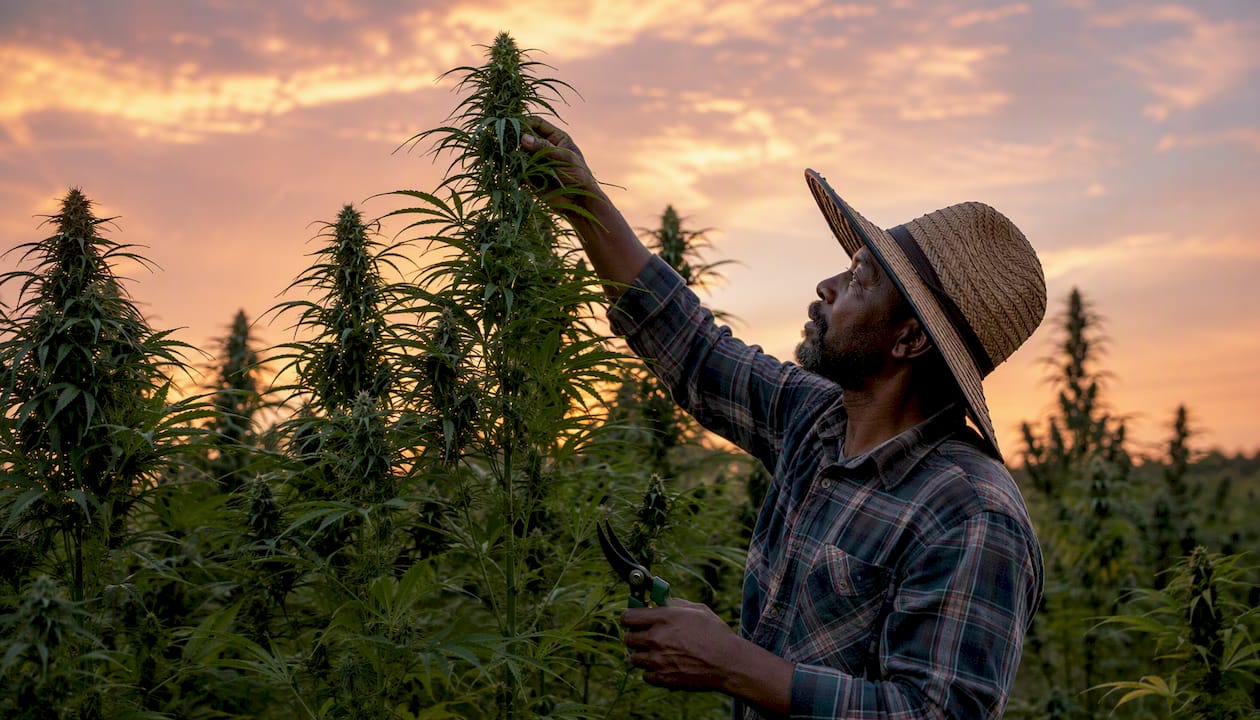
Reported effects typically include an energizing, cerebral lift: heightened focus, creative thinking, and a mood boost that WebMD describes as the “upper” to indica’s “downer.” Common use cases are daytime activity, social settings, creative work, and situations where sedation would be unwelcome.
The problem is the same one that undercuts indica labeling. Research published in Nature Plants found little genome-wide genetic distinction between dispensary-labeled indica and sativa samples. A small set of terpene synthase genes explained much of the labeling difference, meaning the labels track aroma more than they track any reliable effect profile. A sativa-labeled product high in myrcene can feel just as sedating as an indica. The energizing vs. relaxing split is real as a consumer experience, but it comes from the terpene and cannabinoid mix, not the plant’s leaf shape.
Why most products are hybrids, and what “landrace” means
Two terms come up constantly once you start reading dispensary menus more carefully.
- Landrace strain: A cannabis variety that evolved in geographic isolation over centuries, with a relatively stable genetic profile tied to a specific region (Hindu Kush, Durban, Acapulco Gold). These are the closest thing to “pure” indica or sativa that exists botanically.
- Hybrid: Any strain produced by crossing two or more varieties, which describes the overwhelming majority of commercial cannabis today.
Decades of intentional cross-breeding have blurred the botanical lines almost completely. Dr. Ethan Russo and colleagues note that most commercial cannabis is the product of extensive hybridization, meaning morphology no longer maps cleanly onto chemistry. When a dispensary labels something “Sativa-dominant” or “Indica-dominant,” it’s communicating a rough lean, not a precise genetic or chemical claim. Think of it as a flavor direction, not a formula.
Labels persist because they’re simple, marketable shorthand that retailers can communicate at scale. They’re a useful starting conversation, especially for new consumers. Just don’t let them be the last word.
What truly determines how a cannabis product feels
The short answer: cannabinoids, terpenes, dose, and method of consumption. The label is downstream of all four.
Primary cannabinoids and their typical roles:
- THC (tetrahydrocannabinol): The main intoxicating compound. Higher concentrations generally intensify psychoactive effects, euphoria, and, at excess doses, anxiety.
- CBD (cannabidiol): Non-intoxicating. At meaningful concentrations, it can modulate THC’s intensity and reduce anxiety in some people.
- CBG (cannabigerol): Often described as clear-headed and mildly energizing; present in smaller amounts in most commercial flower. More detail on minor cannabinoids like CBG and CBN is worth reading if you’re curious about the full spectrum.
- CBN (cannabinol): A degradation product of THC, associated with mild sedation in some studies.
Dose scales every one of these effects. A low THC dose tends to produce mild relaxation or focus; a high dose of the same product can trigger anxiety, paranoia, or disorientation. The “start low, go slow” principle isn’t just cautious advice; it’s the most reliable way to find your personal threshold before you overshoot it.
Consumption method matters for onset and duration:
- Inhalation (smoking or vaping): Effects begin within minutes, peak around 15–30 minutes, and typically subside within 1–3 hours. Easier to titrate because feedback is fast.
- Edibles: Onset ranges from 30 minutes to 2 hours depending on metabolism and food intake. Effects can last 4–8 hours and are often more intense than inhalation at equivalent doses. This is where most overconsumption happens.
- Tinctures (sublingual): Onset is 15–45 minutes, duration is moderate. More predictable than edibles for most people.
How terpenes change the experience
Terpenes are the aromatic compounds that give cannabis its smell, and they do more than that. Research and industry analysis from Cannigma argues that terpene profiles combined with cannabinoid ratios offer better effect prediction than any morphology-based label. Dr. Ethan Russo’s work makes the case even more directly: you cannot reliably guess a plant’s biochemical content from its morphology, and biochemical assays are what consumers and clinicians actually need.
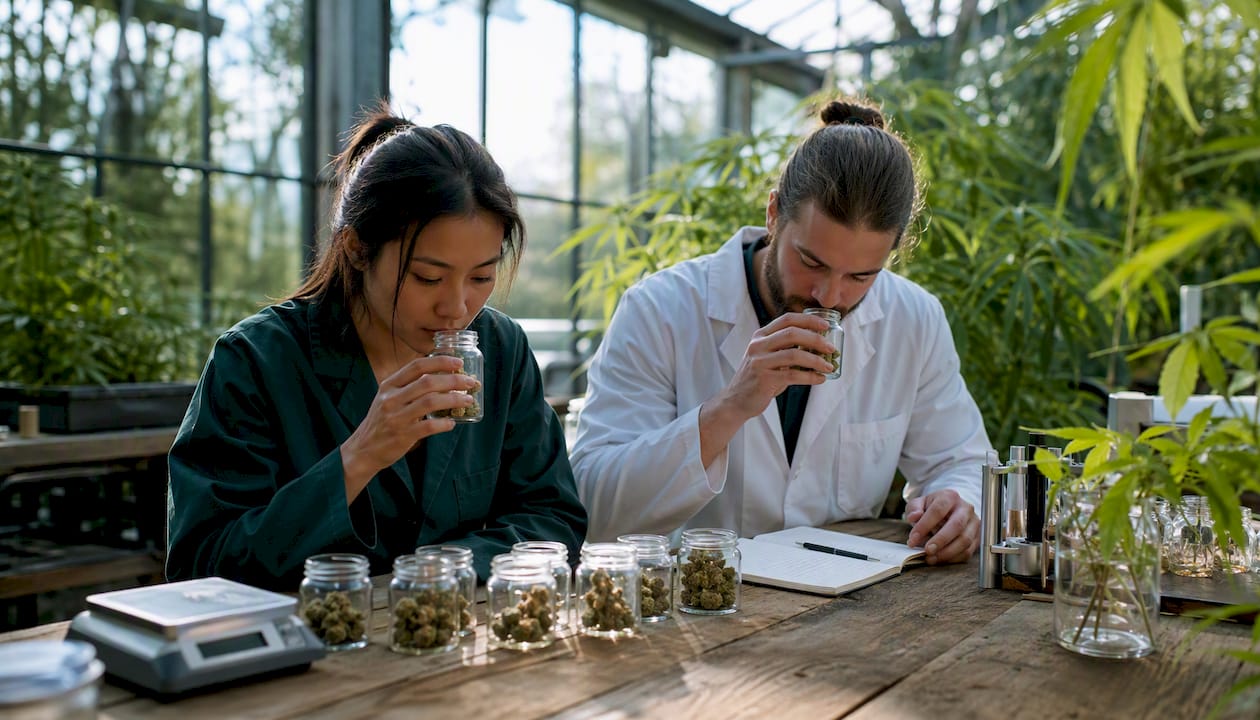
The “entourage effect” is the mechanism behind this. THC, CBD, and terpenes interact in ways that modify the overall experience, which is why a terpene-rich product at moderate THC can feel more nuanced than a high-THC isolate. For a deeper look at how terpenes and cannabinoids work together, the distinction is worth understanding before you shop.
Quick-reference terpene guide:
- Myrcene: Earthy, musky. The most common terpene in commercial cannabis. Associated with sedation and the classic “couch-lock” effect attributed to many indicas.
- Limonene: Citrusy, bright. Linked to elevated mood, stress relief, and the uplifting quality associated with sativa-labeled products.
- Pinene: Pine and fresh air. Associated with alertness, memory retention, and a counterbalancing effect on THC-induced short-term memory impairment.
- Caryophyllene: Spicy, peppery. Unique in that it binds directly to CB2 receptors; associated with anti-inflammatory effects and anxiety reduction.
- Linalool: Floral, lavender-like. Linked to calming and sedative effects, often found in indica-leaning products.
- Terpinolene: Floral and herby with a slightly fruity edge. Associated with uplifting, energizing effects; common in many sativa-labeled strains.
Pro Tip: When reading a COA, find the terpene table and identify the top two or three by percentage. Those dominant terpenes will tell you more about the likely experience than the strain name or the indica/sativa label.
How to read a Certificate of Analysis (COA)
A COA is a third-party lab report that tells you what’s actually in the product: cannabinoid concentrations, terpene percentages, and results for contaminants like pesticides and heavy metals. Industry guidance consistently recommends selecting by chemovar (specific cannabinoid/terpene ratios) rather than strain name, and the COA is where that information lives.
What to check on a COA:
- Batch ID: Matches the number on the product packaging. If it doesn’t match, the COA isn’t for what you’re holding.
- Testing lab: Should be an accredited third-party lab, not the producer’s in-house facility.
- Total THC and CBD: Expressed as a percentage of dry weight (flower) or milligrams per serving (edibles). This is your potency baseline.
- Terpene table: Lists individual terpenes by percentage. Prioritize the top two or three.
- Contaminant results: Pesticides, heavy metals, residual solvents, and microbials should all show “Pass” or “ND” (not detected).
Red flags to watch for:
- No COA available, or the brand won’t share one on request
- Batch ID on the COA doesn’t match the product
- Failing results on any contaminant category
- Terpene section is blank or lists only one compound
- COA is dated more than a year before purchase
A product like the Guava strain at Saylessny shows how terpene and potency data can be presented clearly at the retail level, giving shoppers a real chemical picture before they commit.
Practical buying and safe-use checklist
Buying checklist
- Decide on your goal first: sleep, focus, pain relief, social ease, creativity.
- Ask your budtender for the dominant terpenes and the cannabinoid ratio, not just the strain name.
- Pull up the COA and confirm the batch ID matches.
- Choose a consumption method that fits your timeline (fast onset vs. longer duration).
- For flower, check the Birthday Cake strain page as an example of how a hybrid’s terpene and potency data is presented, then apply the same lens to whatever you’re considering.
Starter dosing by method
| Method | Suggested starting amount | Onset | Duration |
|---|---|---|---|
| Inhalation (flower/vape) | 1–2 puffs | 5–15 min | 1–3 hours |
| Edibles | 5 mg THC | 30 min–2 hours | 4–8 hours |
| Tincture (sublingual) | 5 mg THC | 15–45 min | 2–4 hours |
Wait the full onset window before redosing. With edibles especially, the most common mistake is assuming the first dose didn’t work and taking more before the first dose has peaked.
Safety considerations:
- Cannabis can interact with blood thinners, sedatives, and some antidepressants. Consult a physician if you take prescription medications.
- Avoid combining cannabis with alcohol; the combination amplifies impairment unpredictably.
- Do not drive or operate machinery after consuming.
- Keep all products out of reach of children and pets.
- High THC doses can trigger anxiety or paranoia, particularly in new consumers or in unfamiliar settings. If that happens, CBD, black pepper (caryophyllene), or simply lying down in a calm space can help.
A note on legal variation: COA availability and labeling standards differ across US states. New York requires licensed dispensaries to sell lab-tested products, but requirements vary elsewhere. Always buy from a licensed retailer to ensure testing compliance.
The genetic and evolutionary background of indica and sativa
The two-species framework has a long history. Carl Linnaeus classified Cannabis sativa in 1753; Jean-Baptiste Lamarck described Cannabis indica in 1785 based on plants from India that looked and behaved differently from European hemp. For two centuries, botanists debated whether these were distinct species or varieties of one.
Modern genomic research has largely settled the question in a way that complicates the retail narrative. A study published in Nature Plants found that genome-wide genetic variation does not cleanly separate dispensary-labeled indica from sativa samples. What does show genetic clustering is a set of terpene synthase genes, which explains why the labels loosely track aroma but not overall genetic similarity. Indica and sativa likely diverged from a common ancestor and adapted to different geographic environments, but centuries of human cultivation and hybridization have scrambled those original genetic boundaries.
Research in Cannabis and Cannabinoid Research supports the view that the current binary classification is botanically imprecise and practically misleading. A more useful framework groups cannabis by chemotype: the specific combination of cannabinoids and terpenes a plant produces, regardless of its leaf shape or growth habit.
How growing conditions shape plant traits and effects
A cannabis plant’s environment shapes it in ways that can override its genetic baseline. Light cycle, temperature, humidity, soil composition, and nutrient availability all influence how a plant expresses its genetics, a phenomenon called phenotypic plasticity.
A sativa-genetics plant grown in a cool, short-season environment may develop shorter, denser buds that visually resemble an indica. Terpene expression is particularly sensitive to environmental stress: UV exposure, temperature swings, and water stress can increase or decrease specific terpene concentrations in the same genetic line. This is one reason why two batches of the same named strain from different grows can smell, taste, and feel noticeably different.
For consumers, this reinforces the COA argument. The batch-specific lab report reflects what that particular harvest actually produced, not what the strain is theoretically supposed to produce. Genetics set the ceiling; environment determines where the plant lands within it.
Side effects and contraindications to know before you consume
Both indica-leaning and sativa-leaning products carry overlapping risk profiles, because the side effects come from the cannabinoids and terpenes, not the label.
Common side effects across cannabis types:
- Dry mouth and dry eyes (very common at any THC level)
- Increased heart rate, particularly in the first 30 minutes after inhalation
- Short-term memory impairment during intoxication
- Impaired coordination and reaction time
Effects more commonly reported with high-THC sativa-leaning products:
- Anxiety, racing thoughts, or paranoia, especially in new consumers or at high doses
- Overstimulation or difficulty sleeping if consumed late in the day
Effects more commonly reported with high-myrcene indica-leaning products:
- Excessive sedation or “couch-lock,” particularly with edibles
- Grogginess the following morning at high doses
Contraindications worth taking seriously:
- Cardiovascular conditions: THC temporarily raises heart rate. People with heart disease or arrhythmias should consult a cardiologist before using cannabis.
- Mental health history: High-THC products may worsen symptoms in people with schizophrenia, bipolar disorder, or a personal or family history of psychosis.
- Pregnancy and breastfeeding: No safe level of cannabis use has been established during pregnancy or lactation.
- Adolescents: Regular cannabis use during adolescent brain development is associated with cognitive effects in research literature.
This article provides general information, not medical advice. Confirm any health-related decisions with a qualified healthcare provider.
Key Takeaways
The single most useful thing you can do before buying cannabis is read the COA and identify the dominant terpenes, not just the indica or sativa label.
| Point | Details |
|---|---|
| Labels are shorthand, not science | Indica and sativa labels track retail tradition and aroma; they don’t reliably predict chemical composition or effects. |
| Terpenes and cannabinoids drive effects | Dominant terpenes (myrcene, limonene, caryophyllene) and cannabinoid ratios explain most of the variance in how a product feels. |
| Always read the COA | Check batch ID, total THC/CBD, terpene table, and contaminant results before purchasing any cannabis product. |
| Start low, go slow | Begin with a small inhaled dose or a low milligram THC dose for edibles; wait the full onset window before redosing. |
| Saylessny carries lab-tested inventory | Saylessny stocks COA-backed flower, pre-rolls, vapes, and edibles in The Bronx, available for same-day pickup or NYC delivery. |
The label conversation we should be having
The indica vs sativa debate is one of those cases where the industry got ahead of the science and the science never quite caught up in the public conversation. Most consumers still walk into a dispensary and ask “do you have any good indicas?” the way someone might ask for a red wine versus a white. It’s a reasonable shortcut when you don’t have better information. The problem is that better information exists and most people aren’t using it.
What strikes me about the research is how consistent it is. The Nature Plants genomics study, Russo’s biochemical argument, the Cannigma terpene analysis: they all point the same direction. The labels track aroma loosely because terpene synthase genes do cluster somewhat by label, but they don’t track the full chemical experience. A high-myrcene “sativa” will sedate you. A low-myrcene “indica” with limonene and pinene might sharpen your focus. The label told you nothing useful.
The practical shift is small but meaningful: instead of asking “is this indica or sativa,” ask “what are the top two terpenes and what’s the THC-to-CBD ratio?” Any budtender worth their salt can answer that. Any product worth buying has a COA that confirms it. The consumers who make that switch consistently report fewer surprises and more satisfying sessions, because they’re choosing by what the product actually contains rather than what the label implies it might do.
Shop lab-tested cannabis at Saylessny, The Bronx’s licensed dispensary
Saylessny is the dispensary for NYC buyers who want to shop by chemistry, not guesswork. Every product on the menu comes from licensed, lab-tested brands with COAs available, so you can verify terpene profiles and cannabinoid ratios before you buy, not after.

The curated inventory includes premium flower and pre-rolls from CRU Cannabis, terpene-rich options from Florist Farms, and a full range of vapes, edibles, concentrates, and tinctures from brands vetted for potency and purity. Staff are trained to ask about your use case, your tolerance, and your preferred onset window, then match you to a product by its actual chemical profile. Browse the full curated brand lineup online, place an order for same-day delivery anywhere in NYC, or stop into the Bronx location for an in-person consultation.
Useful sources and further reading
- The Cannabis sativa Versus Cannabis indica Debate: An Interview with Ethan Russo, MD
- Cannabis labelling is associated with genetic variation in terpene synthase genes | Nature Plants
- Indica vs. sativa: Science suggests there’s not actually a difference | National Geographic
- Beyond Indica, Sativa, and Hybrid: Why Cannabis Terpene Profiles Are the Future of Classification | The Cannigma
- Indica vs. Sativa: What’s the Difference? | WebMD
- Chemovar-based dispensary guidance | Journal of Cannabis Research (Springer)
- Cannabis and Cannabinoid Research: Russo et al. | PubMed Central
- Terpenes: Why THC percentage isn’t everything | Saylessny