
If you want a short answer: Green Crack, Sour Diesel, Jack Herer, Durban Poison, Super Lemon Haze, and Super Silver Haze are the most consistently reported energizing cannabis strains, based on user data and terpene profiles that favor alertness over sedation. These strains tend to carry limonene, alpha-pinene, and terpinolene as dominant terpenes — a combination linked to clearer, less anxious experiences compared to myrcene-heavy options.
Two caveats before you shop:
- Dose shapes the experience more than the strain label. THC has biphasic dose effects — a small amount can feel stimulating while a larger amount from the same jar can feel sedating. Start low.
- Your baseline state matters. Tired, anxious, or caffeinated? The same strain hits differently depending on where you start. Terpene profile and personal sensitivity to THC both shift the outcome significantly.
Table of Contents
- Why some cannabis strains feel energizing and others don’t
- Which terpenes and cannabinoids should you look for?
- The best weed strains for energy: six picks worth knowing
- How to use energizing strains safely and effectively
- Risks, side effects, and who should be cautious
- How to pick the right energizing strain at a dispensary
- Where to buy energizing strains in NYC: Saylessny curated picks
- Key Takeaways
- The part most strain guides skip
- Saylessny makes it easy to find energizing strains in NYC
- Useful sources
Why some cannabis strains feel energizing and others don’t
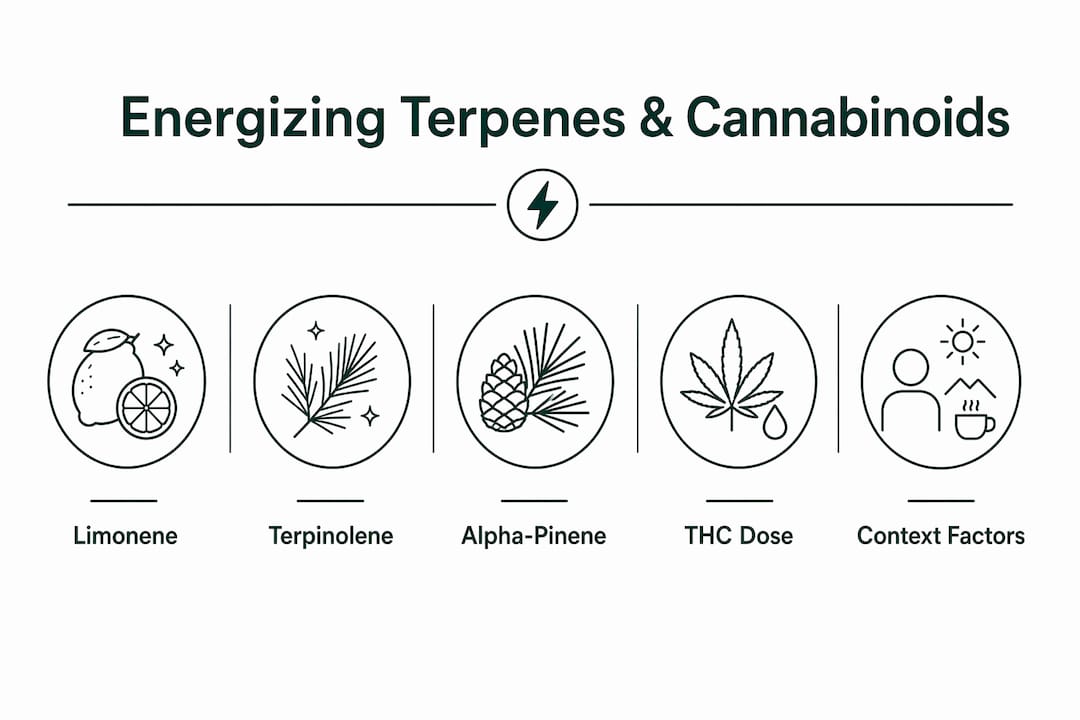
The energizing effect isn’t baked into a strain name. It’s the result of three things working together: the dose of THC, the terpene mix, and your starting state when you consume.
THC’s dose-dependent biphasic effects are well-documented in controlled human studies. At lower doses, THC tends to produce stimulant-like effects; at higher doses, the same compound shifts toward sedation. That’s why the same strain can feel like a morning boost at two puffs and a couch lock at six.
Terpenes add another layer. In a randomized human trial, vaporized d-limonene selectively reduced THC-induced anxiety without changing THC blood levels, meaning the terpene altered the subjective experience without affecting how much THC was in the system. That’s real entourage-effect evidence, not folklore. A large real-world dataset from the Releaf App found that 91.94% of users reported decreased fatigue after consuming cannabis flower, with average symptom intensity dropping by 3.48 points on a 0–10 scale. Still, a minority of users reported feeling more tired or couch-locked, which confirms that individual response varies.
Context shapes outcomes too. Time of day, your tolerance level, whether you’ve eaten, and even personality traits like extraversion all interact with THC’s effects. Morning use on an empty stomach with a low dose tends to produce cleaner, more alert experiences than evening use after a heavy meal.
Pro Tip: If your goal is productivity, start with one or two inhalations, wait 10 minutes, and assess before taking more. That 10-minute window is where most people make the mistake of doubling down too early.
Which terpenes and cannabinoids should you look for?
When you’re reading a lab panel at a dispensary, the terpene section tells you more about the likely experience than the THC percentage does. Three terpenes consistently show up in strains people describe as energizing and clear-headed.
Limonene is the most evidence-backed. Human trial data confirms it reduces THC-linked anxiety when co-administered, and it’s the dominant terpene in most of the strains on this list. Alpha-pinene is associated with mental clarity and may counteract some of THC’s short-term memory effects. Terpinolene appears in strains like Jack Herer and Super Silver Haze and is linked to uplifting, slightly cerebral effects in user reports. Myrcene, by contrast, is the terpene most associated with sedation and the “couch-lock” effect — a strain with myrcene as the top terpene is probably not your best daytime pick.
Beyond the big three terpenes, minor cannabinoids are worth checking when the lab panel includes them. CBG and THCV both appear in some sativa-leaning cultivars and are associated with clearer, more alert effects. You can read more about CBC and THCV’s roles in focus on the Saylessny site. Understanding why terpenes matter beyond THC percentage is the single most useful shift you can make as a cannabis shopper.
Key finding: In the d-limonene human trial, 30 mg THC combined with 15 mg d-limonene produced significantly lower anxiety ratings than 30 mg THC alone — and d-limonene alone was no different from placebo. The anxiety reduction was terpene-specific, not a general sedative effect.
Terpene panel checklist for energizing strains:
- Limonene listed as #1 or #2 terpene
- Alpha-pinene or terpinolene in the top three
- Myrcene absent or listed third or lower
- THC in a moderate range (roughly 15–22% for most consumers)
- CBD present even at low levels (1–2%) can soften anxiety edges
- Check for CBG or THCV if the panel includes minor cannabinoids
| Terpene | Effect association | Found in |
|---|---|---|
| Limonene | Uplifting, anxiety-reducing with THC | Green Crack, Sour Diesel, Super Lemon Haze |
| Alpha-pinene | Mental clarity, alertness | Jack Herer, Durban Poison |
| Terpinolene | Cerebral, creative | Jack Herer, Super Silver Haze |
| Myrcene | Sedating, body-heavy | Avoid as dominant terpene for daytime use |
| Ocimene | Light, uplifting | Some sativa hybrids |
The best weed strains for energy: six picks worth knowing
These six strains appear consistently across consumer strain guides and real-world user reports as top picks for daytime use, focus, and physical energy. Terpene profiles and THC ranges vary by grower and harvest, so always check the lab panel on the specific product you’re buying.
Green Crack
Sharp mental focus with a fast onset. Green Crack typically carries limonene and myrcene in roughly equal measure, though the better daytime batches lean limonene-forward. Typical THC range is generally moderate to moderately high. Best for: sustained energy and task focus. Who it fits: moderate-tolerance consumers who don’t run anxious; the higher-THC cuts can tip into overstimulation for sensitive users.
Sour Diesel
One of the most recognizable energizing strains in the country, Sour Diesel delivers a cerebral, fast-acting effect that most users describe as mentally activating without much body weight. Dominant terpenes: caryophyllene, myrcene, limonene. Typical THC is generally moderate to moderately high. Best for: creative work and social energy. Worth noting: myrcene appears in the profile, so dose control matters more here than with some other picks.
Jack Herer
Named after the cannabis activist and author, Jack Herer is a classic for a reason. Its terpene profile leans terpinolene and alpha-pinene, which together produce a clear-headed, slightly euphoric effect that many users find ideal for morning routines. Typical THC is generally moderate to moderately high. Best for: focus and mood lift. Who it fits: beginners to intermediate consumers; the moderate THC ceiling makes it more forgiving than Green Crack.
Durban Poison
A pure landrace sativa from South Africa, Durban Poison has one of the cleanest energizing profiles of any strain on this list. Terpinolene is usually dominant, with ocimene and myrcene following. Typical THC is generally moderate to moderately high. Best for: physical energy and outdoor activity. The relatively lower THC ceiling and terpinolene dominance make it a good pick for anxiety-sensitive consumers who still want a real lift.
Super Lemon Haze
A limonene-forward strain with a bright, citrusy profile that matches its name. Super Lemon Haze is a cross of Super Silver Haze and Lemon Skunk, and it tends to produce an upbeat, social energy rather than a locked-in focus state. Typical THC is generally moderate to moderately high. Best for: creative tasks and daytime socializing. The high limonene content makes it one of the more anxiety-friendly picks on this list, based on the terpene trial data.
Super Silver Haze
A three-time Cannabis Cup winner, Super Silver Haze combines Skunk, Northern Lights, and Haze genetics into a terpinolene-dominant profile with a long, gradual onset. Typical THC is generally moderate to moderately high. Best for: sustained creative energy over several hours. The slower onset means it’s easier to accidentally over-consume — start with less than you think you need.
Comparison table:
| Strain | Best for | Typical THC range | Dominant terpenes | Who it’s best for |
|---|---|---|---|---|
| Green Crack | Sustained energy, focus | 17–24% | Limonene, myrcene | Moderate tolerance, low anxiety sensitivity |
| Sour Diesel | Creative work, social energy | 18–26% | Caryophyllene, limonene | Experienced consumers |
| Jack Herer | Focus, mood lift | 15–24% | Terpinolene, alpha-pinene | Beginners to intermediate |
| Durban Poison | Physical energy, outdoor use | 16–20% | Terpinolene, ocimene | Anxiety-sensitive consumers |
| Super Lemon Haze | Creative tasks, socializing | 16–22% | Limonene, caryophyllene | Most tolerance levels |
| Super Silver Haze | Sustained creative energy | 18–23% | Terpinolene, myrcene | Intermediate; slow titration needed |
Honorable mentions: Candyland (a sativa-leaning hybrid with a sweet terpene profile and reliable uplifting effects), Strawberry Cough (limonene-forward, smooth onset, good for anxiety-prone consumers), and Trainwreck (fast-acting, high-energy hybrid for experienced consumers).
How to use energizing strains safely and effectively
The safest path to a productive cannabis experience is start-low-go-slow, and inhalation gives you the most control over titration. Here’s how to approach it practically.
- Choose your route first. Inhalation (vaporizing or smoking) produces effects within minutes, which makes it far easier to find your dose than edibles. Edibles can take 45–90 minutes to peak and are much harder to titrate, especially for daytime use.
- Start with one or two inhalations. One to two draws from a vaporizer or pre-roll is a real starting dose, not a warmup. Wait 10 minutes before deciding whether to take more.
- For microdosing: aim for a single inhalation from a moderate-THC product (15–20% THC flower). The goal is a subtle shift in focus and mood, not an obvious high. If you feel obviously intoxicated, the dose was too high for a productive session.
- Time it relative to your task. Effects from inhalation typically peak within 15–30 minutes and taper over 1–3 hours. Consume 15–20 minutes before the task you want to focus on, not during it.
- Hydrate before and during. Dry mouth and mild dehydration can amplify anxiety and reduce concentration. A glass of water before and during the session makes a measurable difference.
- Eat a light snack beforehand. An empty stomach intensifies THC absorption and can push a moderate dose into overstimulation territory. A small meal or snack buffers the onset.
Understanding how temperature affects terpenes during vaporizing vs. combustion is worth a few minutes of reading if you’re choosing between a vaporizer and a joint. Lower vaporizer temperatures (around 325–375°F) tend to preserve more of the lighter terpenes like limonene and terpinolene that drive the energizing profile.
Pro Tip: Vaporize at a lower temperature setting for your first session with a new strain. Higher temps extract more THC faster, which makes it easy to overshoot the dose you actually wanted.
Risks, side effects, and who should be cautious
The main risks with energizing strains are anxiety and overstimulation, cognitive impairment while intoxicated, cardiovascular effects, and — for a minority of users — increased fatigue rather than relief. The motivation research is clear that acute cannabis use can reduce willingness to exert effort while you’re high, even if non-acute use shows mixed or neutral effects on motivation.
Who should be especially cautious:
- History of panic disorder or anxiety: high-THC strains can trigger acute anxiety episodes, even in experienced consumers
- Cardiovascular conditions: THC temporarily increases heart rate; people with heart disease or arrhythmia should consult a physician before use
- Pregnant or breastfeeding: cannabis use is not recommended
- Anyone driving or operating machinery: impairment is real regardless of how functional you feel
- People on medications with CYP450 interactions (certain antidepressants, blood thinners, antiepileptics): THC and CBD both affect drug metabolism
Warning: Never drive or operate heavy machinery after consuming cannabis, regardless of dose or strain. Impairment affects reaction time and judgment even when you feel alert. This applies to energizing strains just as much as sedating ones.
If you feel overstimulated or anxious after consuming, the most effective steps are: stop consuming immediately, find a calm environment, stay hydrated, and if available, try a CBD-only product, which can blunt THC’s anxiogenic effects. The Releaf App data showed that fewer than 24% of users reported fatigue-like negative effects, but that minority is real and worth acknowledging before you assume energizing strains work the same for everyone.
This article is general information, not medical advice. Confirm current regulations and consult a qualified healthcare provider for your specific situation.
How to pick the right energizing strain at a dispensary
Prioritize the terpene profile, a moderate THC range, and a recent lab test over the strain name printed on the jar. Strain names are inconsistent across growers; the lab panel is the actual product.
Decision checklist:
- Read the terpene panel: limonene or terpinolene should appear in the top two terpenes
- Check that myrcene is not the dominant terpene
- Look for THC in the 15–22% range for most consumers (higher isn’t better for focus)
- Check the harvest or test date: terpenes degrade over time, so fresher is better
- Look for minor cannabinoids (CBG, THCV) if the panel includes them
- Ask the budtender which products have the most recent lab results available
Questions to ask a budtender:
- “What’s the dominant terpene in this batch?”
- “Do you have anything with high limonene or terpinolene for daytime use?”
- “Is there a recent lab panel I can see for this product?”
Quick example: You’re choosing between two options. Option A is a Green Crack at 24% THC with myrcene as the top terpene. Option B is a Super Lemon Haze at 19% THC with limonene dominant. For a focused, anxiety-free morning session, Option B is the better pick. The lower THC and limonene-forward profile will almost certainly produce a cleaner, more manageable experience, even though Option A looks stronger on paper.
Pro Tip: The “sativa” label on a jar tells you almost nothing reliable about the effect. A large real-world study found that labeled plant phenotype did not predict fatigue relief — terpene profile and consumption method did. Read the panel, not the label.
Where to buy energizing strains in NYC: Saylessny curated picks
Saylessny curates lab-tested flower and carries several of the energizing strains and bright hybrids covered here, with same-day delivery and in-store pickup available across NYC from The Bronx.
A few product categories worth checking on the Saylessny menu:
- Florist Farms carries premium full-spectrum flower with detailed terpene panels — a good starting point if you want to verify limonene or terpinolene dominance before buying.
- CRU Cannabis offers infused pre-rolls and flower with consistent lab testing, useful for consumers who want a predictable dose in a ready-to-use format.
- Hudson Cannabis sources regenerative, sun-grown flower — worth exploring if you prefer craft outdoor-grown options with distinct terpene expression.
- Cannabals covers vapes and flower for consumers who want inhalation options with clear terpene labeling.
How to order from Saylessny:
- Visit the online menu at saylessny.com
- Filter by flower or pre-rolls and check product pages for lab results and harvest dates
- Look for terpene panels on individual product pages before adding to cart
- Choose pickup at the Bronx location or same-day delivery within NYC
Every product on the Saylessny menu is licensed and lab-tested, which means you’re getting the actual terpene and cannabinoid data, not a guess based on a strain name.
Key Takeaways
The most reliable path to an energizing cannabis experience is a limonene- or terpinolene-dominant strain at a moderate THC dose, consumed via inhalation with careful titration.
| Point | Details |
|---|---|
| Terpenes over strain names | Prioritize limonene, alpha-pinene, and terpinolene; avoid myrcene-dominant products for daytime use. |
| Dose determines direction | THC has biphasic effects — low doses tend to energize, high doses tend to sedate, even from the same strain. |
| Inhalation for control | Vaporizing or smoking lets you titrate in real time; edibles are too slow and unpredictable for productivity goals. |
| 91.94% reported fatigue relief | In a large real-world dataset, most cannabis flower users reported reduced fatigue, but individual response varies. |
| Saylessny for NYC shoppers | Saylessny carries lab-tested, terpene-forward flower and offers same-day delivery across NYC from The Bronx. |
The part most strain guides skip
Here’s what I keep coming back to after reading through the research on this: the “sativa = energy” shortcut can be genuinely misleading, and most strain listicles quietly reinforce it without saying so. Modern cultivars are almost all hybrids. The phenotype label on the jar reflects the plant’s physical structure, not its chemical profile. Two products both labeled “sativa” can have completely different terpene compositions and produce completely different experiences.
What actually predicts an energizing outcome is dose control and terpene profile, in that order. The d-limonene human trial data is the most useful piece of evidence I’ve seen on this topic because it’s not theoretical — it’s a controlled experiment showing that a specific terpene changed the subjective anxiety experience of THC without changing how much THC was in the bloodstream. That’s the kind of signal worth shopping around.
The practical takeaway: if you’ve tried a strain labeled “sativa” and felt anxious or couch-locked, the problem was probably dose or a myrcene-heavy terpene profile, not the strain category. Try a lower dose of something with a confirmed limonene or terpinolene panel before writing off daytime cannabis entirely.
Track your results simply. After each session, note the strain, the dose, the time of day, and three words describing how you felt 30 minutes in. After four or five sessions, patterns emerge fast.
Saylessny makes it easy to find energizing strains in NYC
Finding a genuinely energizing strain in New York City used to mean guessing at unlabeled product. Saylessny changes that equation. As The Bronx’s licensed recreational dispensary, Saylessny carries lab-tested flower, pre-rolls, and vapes from curated brands with real terpene panels on product pages, so you can shop by limonene content rather than by jar art.

Same-day delivery covers NYC, and in-store pickup is available at the Bronx location. The menu includes terpene-forward options from brands like Florist Farms and CRU Cannabis, both of which carry flower suited to the energizing profiles covered in this guide. Every product is licensed and tested, which means the lab data you read on the product page reflects what’s actually in the jar.
Browse the Saylessny menu at saylessny.com, check the terpene panel on any flower product, and order for same-day delivery or pickup today.
Useful sources
The claims in this article draw on peer-reviewed human studies and large real-world datasets. Here are the primary sources worth reading if you want to go deeper.
- Vaporized D-limonene and THC-induced anxiety (PubMed): A randomized, double-blind human trial showing that d-limonene selectively reduced THC-linked anxiety without altering THC pharmacokinetics. The most direct human evidence for limonene’s role in modulating cannabis experience.
- Biphasic THC dose effects (PubMed): Controlled human study demonstrating that THC produces both stimulant and depressant effects depending on dose, personality, and starting state. The scientific basis for the start-low-go-slow rule.
- Cannabis flower and fatigue relief (Karger/Releaf App): Analysis of 3,922 real-world sessions showing 91.94% of users reported decreased fatigue, with route of administration and product characteristics predicting outcomes better than sativa/indica labels.
- Cannabis and motivation review (Current Behavioral Neuroscience Reports): Systematic review finding that the “amotivational syndrome” is not uniformly supported; acute use reduces effort-based motivation while non-acute studies show mixed results.
- Energizing strain descriptions (Healthline): Consumer-facing guide listing Sour Diesel, Jack Herer, Durban Poison, Green Crack, Super Lemon Haze, and Super Silver Haze as top energizing picks based on user reports and terpene profiles.