
Hybrid cannabis can genuinely help many people fall asleep faster and stay asleep longer, but the outcome depends heavily on the specific chemotype, terpene profile, and how you dose it. Naturalistic studies show indica-dominant and indica-leaning hybrids outperform both CBD-only and sativa-dominant strains at reducing insomnia symptoms. The mechanism is real: cannabinoids inhibit ENT-1, raising brain adenosine levels and triggering the same sleepiness signal that builds up naturally across a waking day.
That said, hybrid cannabis is not a universal sleep fix. A few things to check before you try it:
- Individual variation is significant. The same strain can sedate one person and mildly energize another, depending on tolerance, body chemistry, and dose.
- Dose and timing matter more than strain name. Too much THC too close to bedtime can fragment sleep or increase anxiety.
- Chronic use carries withdrawal risk. Regular nightly use can lead to tolerance and rebound insomnia when you stop.
- Legal status varies by U.S. state. Always purchase from a licensed dispensary with lab-tested products. Saylessny carries lab-tested hybrid options with full cannabinoid and terpene data available before you buy.
Table of Contents
- How hybrid cannabis affects your sleep biology
- Indica-leaning vs. sativa-leaning hybrids: which ones actually help you sleep?
- Hybrid strains people commonly use for sleep and why
- Forms, dosing, and timing: how to actually use hybrid cannabis for sleep
- Risks, side effects, and what to know before you start
- How to pick a sleep-friendly hybrid at a dispensary
- What the research actually says about hybrids and sleep
- Key Takeaways
- What we actually tell customers about hybrids and sleep
- Saylessny has lab-tested hybrid options ready for NYC pickup or delivery
- Useful sources for further reading
How hybrid cannabis affects your sleep biology
The short version: cannabinoids like THC and CBD interact with your endocannabinoid system (ECS) and with adenosine, the brain’s primary sleep-pressure molecule. Here is how each piece fits together.
Key mechanisms:
- CB1 receptor activation in the basal forebrain and pons is directly linked to sleep induction; this is why THC-dominant products often produce drowsiness.
- Adenosine elevation via ENT-1 inhibition. Both THC and CBD competitively inhibit ENT-1, the transporter that clears adenosine from synapses. More adenosine means stronger sleep pressure, even at lower THC doses.
- Orexin and MCH neuron modulation. Cannabinoids suppress orexin (the wake-promoting neuropeptide) and may enhance MCH neuron activity, which supports sleep onset.
- Sleep architecture effects. Acute THC use tends to reduce REM sleep and can shorten sleep latency. CBD at certain doses may actually increase slow-wave sleep (SWS). A double-blind clinical trial found that a CBD-terpene formulation increased the combined percentage of SWS and REM sleep versus placebo by a mean of 1.3%; top responders gained up to 48 minutes of restorative sleep per night.
- Tolerance and withdrawal. Chronic cannabinoid use can blunt these effects over time and produce rebound insomnia when discontinued.
Terpenes add another layer. Myrcene and linalool are the most studied sedative candidates. Myrcene is associated with muscle relaxation and sedation; linalool appears in lavender and has been linked to sleep and exhaustion relief. The entourage effect — the interaction between cannabinoids and terpenes — likely explains why two products with identical THC percentages can feel completely different. Clinical proof of terpene synergy is still limited, but the signal is consistent enough that practitioners prioritize terpene profiles over THC percentage alone. You can read more about how terpenes and cannabinoids interact on the Saylessny blog.
Pro Tip: THC percentage on a label tells you potency, not sedation potential. A 16% THC flower with high myrcene and linalool will often outperform a 26% THC product with a stimulating terpene profile for sleep purposes.
Indica-leaning vs. sativa-leaning hybrids: which ones actually help you sleep?
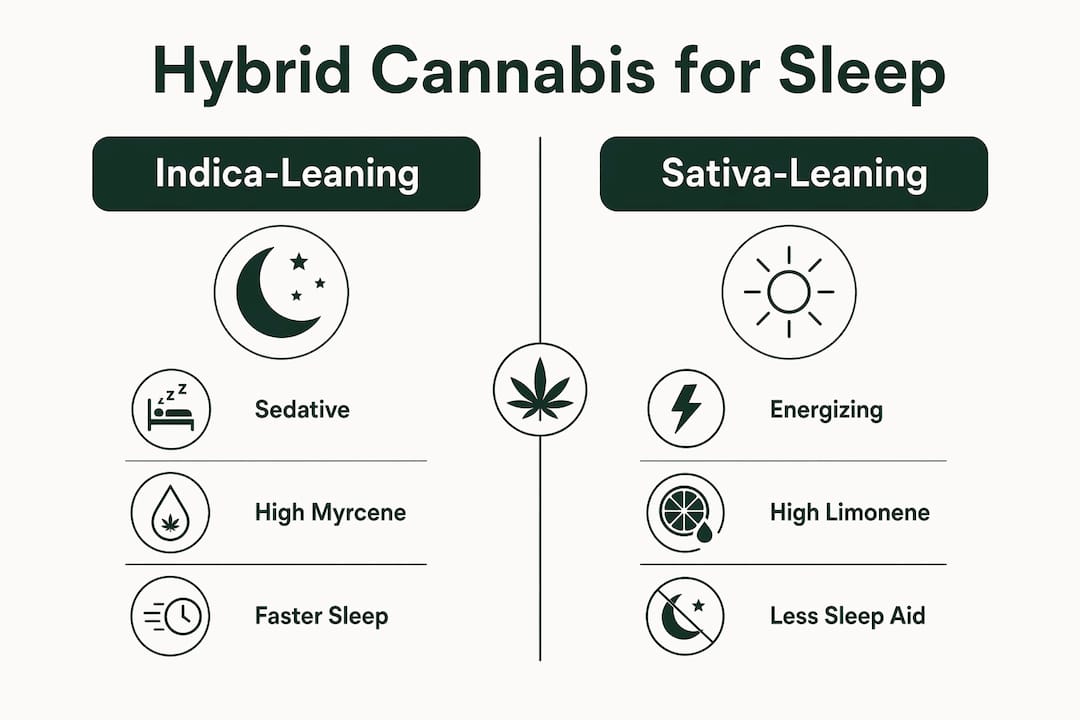
Indica-leaning hybrids are the safer bet for sleep for most people. That is not marketing language — it is what self-selection data from medicinal users consistently shows: people targeting insomnia gravitate toward indica-dominant or indica-leaning hybrids, and those strains report better outcomes than sativa-leaning options.
Rules of thumb when reading a product label:
- Look for “indica-leaning” or “indica-dominant” designations, but do not stop there. The chemotype (actual cannabinoid and terpene breakdown) matters more than the marketing label.
- A moderate THC level (roughly 15–20%) with some CBD present tends to produce steadier sedation than very high THC alone.
- Sativa-leaning hybrids often carry higher levels of terpenes like terpinolene and ocimene, which are associated with uplifting, energizing effects. These are the wrong direction for sleep.
Terpene cues to look for on a lab report or product page:
- Myrcene (earthy, musky): the most common sedative terpene in cannabis; high myrcene content is a strong sleep signal.
- Linalool (floral, lavender-like): linked to relaxation and reduced sleep latency.
- Caryophyllene (peppery): interacts with CB2 receptors and may reduce anxiety that interferes with sleep.
- Bisabolol (light floral): emerging evidence for calming properties.
Avoid products where limonene or terpinolene dominate the terpene profile if your goal is sleep. Those tend to be more alerting. The difference between terpenes and cannabinoids is worth understanding before you shop.

Hybrid strains people commonly use for sleep and why
Strain names are marketing. What actually predicts sleep benefit is the chemotype and terpene profile behind the name. That said, certain strain archetypes come up repeatedly in sleep contexts because they tend to carry the right combination of characteristics.
- OG Kush-type hybrids: Typically indica-leaning with high myrcene and caryophyllene. Users report heavy body relaxation and reduced racing thoughts. THC levels vary widely, so always check the COA.
- Granddaddy Purple-type crosses: Known for myrcene-dominant profiles and moderate-to-high THC. The grape/berry terpene profile often includes linalool. Frequently cited for sleep onset.
- Wedding Cake-type hybrids: Caryophyllene and limonene dominant, with indica-leaning effects. The anxiety-reducing caryophyllene component makes these useful for stress-related insomnia.
- Cherry-type hybrids (like the Cherry Bomb strain available at Saylessny): Fruity, indica-leaning profiles with moderate THC. A reasonable starting point for new users because the potency is more manageable.
One thing worth repeating: the same strain name from two different cultivators can have completely different terpene and cannabinoid profiles. Always ask for the Certificate of Analysis (COA) or check the lab results on the product page before buying. Potency also means next-day grogginess is a real possibility with higher-THC options, especially for new users.
Forms, dosing, and timing: how to actually use hybrid cannabis for sleep
The delivery method shapes how quickly you feel effects and how long they last. Matching the form to your sleep problem makes a real difference.
| Form | Typical Onset | Duration | Best For |
|---|---|---|---|
| Flower / pre-roll | 5–15 minutes | 2–3 hours | Trouble falling asleep |
| Vape | 5–10 minutes | 2 to 2.5 hours | Fast onset, controlled dose |
| Edible | 60–90 minutes | 4 hours | Staying asleep through the night |
| Tincture (sublingual) | 20–30 minutes | 3–5 hours | Moderate onset, easier to dose |
Edibles and tinctures are better for people who wake up in the middle of the night; inhalation works faster for those who struggle to fall asleep initially. If you are new to edibles, the dosing considerations for sleep gummies are worth reviewing before you start.
Microdosing and titration guidelines:
- Start with a low dose of THC for edibles or tinctures where many people find the sweet spot before side effects appear.
- For flower or vape, one or two small draws is a reasonable starting point. Wait 15 minutes before taking more.
- Increase by 2.5 mg (edibles) or one draw (inhalation) every 3–4 nights, not every night. Rapid escalation builds tolerance fast.
- Keep a simple sleep log: note the product, dose, time taken, time to fall asleep, and how you feel in the morning. Three to five nights of data tells you more than any single experience.
- Consistent low-to-moderate dosing at the same time each night produces more reliable outcomes than irregular high-dose use.
Practical timing tips:
- Take edibles or tinctures 60–90 minutes before your target sleep time.
- Inhaled forms work best 20–30 minutes before bed.
- Avoid alcohol on the same night. The combination amplifies sedation unpredictably.
- Do not drive or operate machinery after dosing. Plan your evening accordingly.
Pro Tip: Vape temperature affects which terpenes you actually inhale. Lower temperatures (around 325–350°F) preserve myrcene and linalool better than high-heat combustion. If you are using a vaporizer for sleep, how temperature transforms terpenes is worth a quick read.
Risks, side effects, and what to know before you start
Hybrid cannabis for sleep is not risk-free. The most common issues are manageable with conservative dosing, but some people should not use it at all.
Side effects to expect at higher doses:
- Next-day grogginess and cognitive fog
- Dry mouth, increased heart rate
- Anxiety or paranoia (more common with high-THC, low-CBD products)
- Reduced REM sleep with regular THC use
Contraindications — avoid or consult a doctor first:
- Pregnancy or breastfeeding
- Personal or family history of psychosis or schizophrenia
- Active substance use disorder
- Driving or operating heavy machinery (cannabis impairs reaction time regardless of how you feel subjectively)
- Concurrent use of benzodiazepines, opioids, or other CNS depressants
Drug interactions: Cannabis is metabolized partly through the CYP450 enzyme system. It can interact with blood thinners (warfarin), certain antidepressants, and antiepileptics. If you take any prescription medications, check with your prescribing physician before adding cannabis to your routine.
Withdrawal risk: Case reports and cohort data link regular cannabinoid use to insomnia, mood worsening, and relapse when stopped abruptly. This is not a reason to avoid cannabis entirely, but it is a reason to use it intentionally and take periodic breaks.
U.S. legal and safety notes: Cannabis remains federally illegal in the United States. State laws vary significantly. In New York, adult recreational use is legal; purchasing from a licensed dispensary like Saylessny means your product is lab-tested and compliant. Workplace drug testing policies differ by employer regardless of state law, so factor that in.
This article is general information, not medical advice. Confirm current regulations and discuss your specific situation with a qualified healthcare provider before using cannabis for sleep.
How to pick a sleep-friendly hybrid at a dispensary
Prioritize lab-tested, indica-leaning products with sedative terpenes and a moderate THC level. That single sentence covers most of what matters, but here is the full checklist.
Before you buy, confirm:
- A Certificate of Analysis (COA) from a third-party lab is available
- The terpene profile lists myrcene, linalool, or caryophyllene as dominant
- THC is in a moderate range (roughly 15–20%) unless you have established tolerance
- CBD is present, even in small amounts (a 10:1 or 5:1 THC:CBD ratio can smooth the experience)
- The batch date is recent (terpenes degrade over time)
- The recommended starting dose is listed on the packaging
Questions to ask dispensary staff:
- What is the dominant terpene in this product?
- Does this batch have a COA I can look at?
- Is this more indica-leaning or sativa-leaning based on the actual lab results?
- What dose do you recommend for a first-time sleep user?
Red flags to avoid:
- No lab results available
- Claims of “the strongest” or “guaranteed sleep” without terpene data to back it
- Vague terpene descriptions (“relaxing blend”) with no specific compounds listed
- Unusually high THC percentages marketed as the primary selling point
Saylessny stocks curated, lab-tested hybrids with product pages that include cannabinoid and terpene breakdowns. Staff can walk you through COA data in-store, and same-day delivery is available across NYC if you would rather order from home.
What the research actually says about hybrids and sleep
The honest summary: the evidence is promising but modest, and most of it comes from observational data or small clinical trials rather than large randomized controlled studies.
What the studies show:
| Study Type | Finding | Limitation |
|---|---|---|
| Naturalistic observational | Indica-leaning hybrids reduced insomnia symptoms more than CBD-only or sativa strains | Self-reported outcomes, no control group |
| Double-blind RCT (CBD + terpenes) | CBD-terpene formulation increased SWS + REM sleep by a mean of 1.3% vs. placebo; top responders gained up to 48 min/night | No THC; results varied widely by individual |
| Synthetic cannabinoid trials (nabilone) | Improved sleep measures in fibromyalgia and Parkinson’s-related sleep disturbances | Specific conditions, not general insomnia |
| Acute use studies | Faster sleep onset, subjective improvement | Chronic use reduces these benefits; REM suppression with THC |
Systematic reviews consistently flag small sample sizes, heterogeneous methods, and observational bias as the main limitations. The condition-specific trials using nabilone or CBD+THC combinations show real benefits, but they do not translate cleanly to general recreational use.
What the evidence limitations mean for you:
- Do not expect a guaranteed outcome. Cannabis affects sleep differently across individuals.
- Short, structured trials with conservative dosing and objective tracking (a sleep diary or wearable like an Oura Ring or Fitbit) give you the clearest personal signal.
- If your insomnia is persistent or severe, cannabis is not a substitute for a clinical evaluation. Cognitive behavioral therapy for insomnia (CBT-I) has a stronger evidence base than any cannabis product.
Key Takeaways
Indica-leaning hybrid cannabis can help many people fall asleep faster, but terpene profile, dose, and consistent low-to-moderate use matter far more than strain name or THC percentage alone.
| Point | Details |
|---|---|
| Indica-leaning hybrids perform best | Observational data shows they outperform CBD-only and sativa strains for insomnia symptom reduction. |
| Terpenes over THC percentage | Myrcene and linalool are the strongest sedative terpene signals; always check the COA, not just the label. |
| Start at 2.5–5 mg THC | Low, consistent dosing produces more reliable sleep outcomes and reduces tolerance and withdrawal risk. |
| Chronic use carries real risks | Regular nightly use can cause tolerance, REM suppression, and rebound insomnia when stopped. |
| Saylessny offers lab-tested options | Saylessny carries curated indica-leaning hybrids with COA data available in-store and online for NYC pickup or delivery. |
What we actually tell customers about hybrids and sleep
The most common mistake people make when trying cannabis for sleep is going straight for the highest-THC product on the shelf. More THC does not mean better sleep. It often means more anxiety, more grogginess the next morning, and a faster path to tolerance. What works is starting low, picking a product with a terpene profile that supports relaxation, and giving it a consistent trial of at least a week before drawing conclusions.
At Saylessny, when someone asks about sleep, the first question is always about their experience level and what they have already tried. A first-timer gets pointed toward a moderate-THC indica-leaning flower or a low-dose tincture with myrcene and linalool in the profile. Someone with more experience might explore a full-spectrum option or a live resin product where the terpene content is higher and more intact. The lab data is always part of the conversation. If a product does not have a COA, it does not belong in your bedtime routine.
Saylessny has lab-tested hybrid options ready for NYC pickup or delivery
If you have read this far and you are ready to try a hybrid for sleep, the next step is finding a product you can actually trust. That means lab results, not just a label.

Saylessny is The Bronx’s licensed recreational dispensary, with same-day delivery across NYC and in-store pickup available. Every product on the menu is lab-tested and sourced from curated brands. For sleep specifically, the team can point you toward indica-leaning flower from growers like Hudson Cannabis or infused pre-rolls from CRU Cannabis, both of which carry full terpene and cannabinoid data on their product pages.
What Saylessny offers that makes a difference for sleep shoppers:
- COAs available for every product, so you can verify terpene and cannabinoid content before you buy
- Curated indica-leaning hybrids selected for quality and consistency
- Staff who can walk you through lab results and dosing in plain language
- Same-day delivery in NYC and in-store pickup at the Bronx location
Order online or browse the full menu at saylessny.com to find a sleep-friendly hybrid that fits your needs.
Useful sources for further reading
- Naturalistic medicinal cannabis use and insomnia outcomes (PMC8581757): Observational study comparing indica-dominant, sativa, and CBD strains for insomnia; provides the comparative efficacy data cited throughout this article.
- Cannabinoids and sleep: biological mechanisms (PMC11011314): Covers ENT-1 inhibition, adenosine elevation, CB1 activation, and orexin modulation; the primary mechanistic source used here.
- The effects of cannabinoids on sleep — comprehensive review (PMC9036386): Systematic review summarizing evidence quality, withdrawal risks, and limitations; essential for understanding how strong the science actually is.
- CBD + terpene formulation and sleep outcomes (medRxiv): Preprint behind the double-blind RCT showing SWS + REM increases with CBD-terpene formulations.
- Effects of a CBD/terpene formulation on sleep in insomnia (PMC11701282): Full published version of the CBD-terpene RCT; includes the 48-minute top-responder finding and sleep architecture data.
- The entourage effect in cannabis medicinal products (PubMed 39598452): Reviews terpene synergy evidence; explains why myrcene and linalool are the leading sedative terpene candidates.
- Cannabinoids, endocannabinoids and sleep (Frontiers): Covers acute vs. chronic use effects on sleep architecture and tolerance development.
- Effects of cannabinoids on sleep disorders review (PMC8116407): Summarizes condition-specific clinical trials including nabilone for fibromyalgia and Parkinson’s-related sleep disturbances.