
Dog walkers weed is defined as a mini pre-rolled cannabis joint typically weighing 0.35–0.5 grams, sized for a short smoking session rather than a product intended for pets. The name comes from the idea that one joint lasts roughly as long as a quick dog walk. Many pet owners searching for cannabis treatments for their dogs land on this term and assume it refers to marijuana-friendly pet products. It does not. As of Q1 2026, no FDA-approved cannabis products exist for animals, and veterinarians cannot legally prescribe or sell them. This article separates the terminology from the pet safety science so you can make informed decisions.
What is a dog walker joint in the cannabis world?
A dog walker joint is a specific pre-roll format, not a product category for pets. The standard size runs 0.35–0.5 grams, compared to the 1-gram pre-rolls most dispensaries sell as their default. The name reflects a cultural habit: the dog walker trend emerged from consumers who wanted a controlled, short-duration session that fits a quick outdoor activity.
The flower inside a dog walker pre-roll carries the same potency as any full-size joint. You get the same cannabinoid profile in a smaller package. That means a dog walker hits just as hard per puff. The only difference is total consumption volume, which makes it easier to manage your intake.

Dog owners who are also cannabis consumers find this format convenient for exactly the reason the name suggests. You light one up, walk the dog for 10 minutes, and you are done. No half-smoked joint to store, no waste, no overindulgence.
Common formats include:
- Sativa-dominant strains for daytime walks requiring alertness and energy
- Hybrid strains for a balanced, relaxed outdoor experience
- Indica-leaning options for evening walks when winding down is the goal
- Flavored or infused mini pre-rolls from brands that add kief or concentrate for extra potency in a small package
Pro Tip: If you are new to pre-rolls, a dog walker size is actually a smarter starting point than a full gram. You get a complete session without the pressure to finish a larger joint, which helps you gauge your tolerance accurately.
Understanding THC potency and percentage matters even more with smaller formats, because each puff represents a higher fraction of your total dose.
Why dogs should never be given cannabis products
Dogs are not small humans when it comes to cannabinoids. Dogs possess a higher density of CB1 receptors in their brains compared to humans, which means THC hits them harder and less predictably. A dose that produces mild relaxation in a person can cause serious neurological distress in a dog.
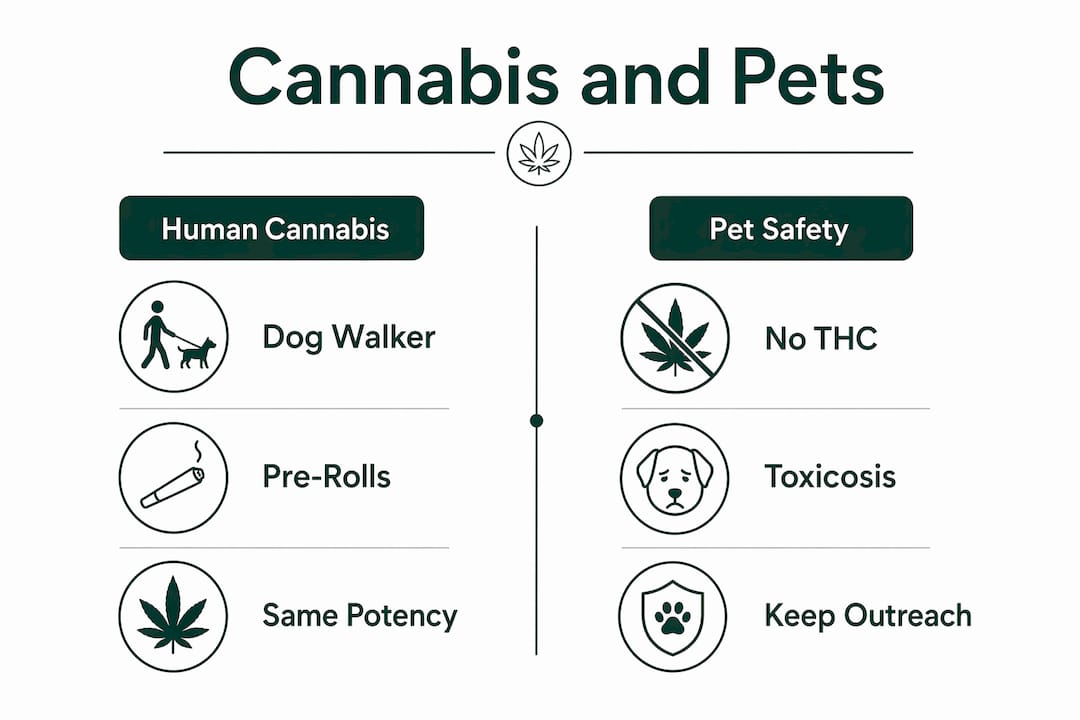
The numbers are stark. Mild clinical signs appear in dogs at doses as low as 0.3–0.5 mg/kg of body weight. Moderate toxicosis begins above 2–3 mg/kg. A single dog walker joint contains enough THC to put a small dog in serious danger if ingested.
Symptoms develop fast. Cannabis toxicosis in dogs typically appears within 30–90 minutes of ingestion. That rapid onset means a dog can go from normal to distressed before most owners realize what happened.
| Clinical sign | Onset timing | Duration |
|---|---|---|
| Lethargy | 30–90 minutes | Up to 96 hours |
| Ataxia (loss of coordination) | 30–90 minutes | Up to 96 hours |
| Vomiting | 30–90 minutes | Several hours |
| Tremors | 30–90 minutes | Up to 96 hours |
| Urinary incontinence | 30–90 minutes | Up to 96 hours |
The danger does not stop at THC. Human cannabis edibles frequently contain chocolate, xylitol, or raisins, all of which are independently toxic to dogs. A dog that eats a cannabis brownie faces two simultaneous poisoning events. The secondary ingredients often cause more severe harm than the THC itself.
“The most dangerous aspect of human cannabis products for pets is secondary toxic ingredients. THC ingestion alone usually carries high morbidity but low mortality. The added ingredients in edibles are what escalate a bad situation into a fatal one.”
The lesson is direct: dog walkers weed and all human cannabis products belong completely out of reach of pets. Storing them in sealed containers at height is not optional.
What does the research say about CBD products for dogs?
CBD occupies a different legal and scientific space than THC, but the picture is not as clean as many pet product marketers suggest. CBD does not produce intoxication in dogs, but safety concerns remain. Research on CBD for canine anxiety remains largely inconclusive as of 2026, with clinical trials failing to find consistent physiological evidence of effectiveness.
Veterinarians face a compounding problem. They have limited clinical experience with cannabis products for pets and often avoid recommending them due to knowledge gaps, efficacy uncertainty, and legal exposure. State laws vary, but the federal position is clear: no FDA-approved hemp or marijuana products exist for animal use as of Q1 2026.
Contamination is a real and underreported risk in the pet CBD market. Large CBD ingestions in dogs typically cause only mild gastrointestinal distress. When neurological symptoms appear after a supposed CBD-only product, contamination with THC or synthetic cannabinoids is the likely cause. That means a product labeled as THC-free may not actually be.
Key risks to understand before considering any cannabis-derived pet product:
- Unlabeled THC contamination in products marketed as pure CBD
- Synthetic cannabinoids added to boost potency without disclosure
- No standardized dosing guidelines for dogs across any product category
- Lack of long-term safety data for any cannabinoid in companion animals
- Variable state laws that may restrict even conversations between vets and owners about cannabis
Pro Tip: If you buy a CBD product for your dog, look for a Certificate of Analysis from an independent third-party lab. The COA should confirm THC content below 0.3% and show no synthetic cannabinoid contamination. If a brand does not publish COAs, do not buy from them.
Understanding how cannabinoids differ from each other helps you read those lab reports accurately and ask better questions.
How to approach pet care and cannabis alternatives safely
The safest starting point is a clear rule: no human cannabis product, including dog walkers weed, should ever be given to a dog as a treat or supplement. That boundary is not negotiable given the toxicity data.
If you want to explore cannabis-adjacent options for your dog’s anxiety or pain, follow these steps:
- Consult a veterinarian first. Find a vet who is knowledgeable about cannabis and willing to discuss the current evidence honestly. Some states allow vets to discuss cannabis options even if they cannot prescribe them.
- Choose hemp-derived CBD products with verified lab testing. Look for products specifically formulated for dogs, with dosing guidelines based on body weight and a published COA.
- Start at the lowest possible dose. Even with a well-labeled product, begin below the recommended dose and monitor your dog closely for 24 hours before increasing.
- Watch for any neurological symptoms. Ataxia, trembling, or extreme sedation after a CBD product signals possible THC contamination. Contact your vet immediately.
- Consider non-cannabis approaches in parallel. Behavior modification, environmental enrichment, pheromone diffusers, and prescription veterinary anxiolytics all have stronger evidence bases than any cannabis product for dogs right now.
- Stay current on state law. Veterinary cannabis regulations shift frequently. What your vet can legally discuss or recommend may change within a single year.
Pro Tip: Anxiety in dogs often responds well to structured routine and physical activity before any supplement is introduced. A consistent dog walking services schedule addresses the root cause of many anxiety behaviors without any pharmacological intervention.
The endocannabinoid system in dogs functions differently from the human version, which is exactly why human cannabis products carry such disproportionate risk for pets.
Key Takeaways
Dog walkers weed is a human cannabis pre-roll format, not a pet product, and no cannabis-derived drug is FDA-approved for animals as of 2026.
| Point | Details |
|---|---|
| Dog walker definition | A 0.35–0.5g pre-roll for short sessions, named for a dog walk’s duration. |
| THC toxicity threshold | Mild signs appear in dogs at just 0.3–0.5 mg/kg body weight. |
| Symptom onset | Cannabis toxicosis in dogs begins within 30–90 minutes and can last 96 hours. |
| No approved pet products | The FDA has not approved any hemp or marijuana product for animal use as of Q1 2026. |
| CBD risk factor | Neurological symptoms after CBD products usually signal THC or synthetic cannabinoid contamination. |
What I’ve learned watching pet owners navigate cannabis confusion
The term “dog walkers weed” creates a specific kind of confusion I see regularly. Pet owners who are also cannabis consumers hear the name and genuinely wonder if it is a product designed for their dog. That is not a foolish assumption. The cannabis market moves fast, and pet-focused branding has exploded in recent years.
The problem is that the unregulated pet CBD space has filled the gap that legitimate veterinary medicine has not yet occupied. Products with cartoon dogs on the label and claims about “calming your anxious pup” are everywhere. Most of them have no clinical evidence behind them and some carry real contamination risks.
What I find most concerning is the confidence gap. Pet owners often feel more comfortable buying a CBD dog treat from a boutique shop than asking their vet about cannabis. That dynamic needs to flip. Vets are the right first call, even if they cannot prescribe anything. They can at least help you avoid products that could cause harm.
The science on cannabis for dogs is genuinely early-stage. Honest pet care means sitting with that uncertainty rather than filling it with wishful thinking about a product that sounds good. Your dog cannot tell you something is wrong until the symptoms are already visible.
— Jake
Quality cannabis for humans, clarity for your pets
If you are a dog owner who also enjoys cannabis, the right approach is clean separation. Your cannabis is for you. Your pet’s health needs veterinary guidance.

Saylessny carries lab-tested, licensed cannabis products at The Bronx’s premier recreational dispensary, including pre-rolls in formats ranging from dog walker sizes to full-gram options. Every product on the Saylessny menu is legally compliant and third-party tested, so you know exactly what you are consuming. For owners who want to understand cannabinoids more deeply before buying, the CBC and cannabinoid guide at Saylessny covers the science clearly. Browse the full menu or order online for fast NYC delivery.
FAQ
What does “dog walker” mean in cannabis terms?
A dog walker is a mini pre-roll weighing 0.35–0.5 grams, designed for a short smoking session roughly matching the length of a dog walk. It is a human cannabis product, not a pet product.
Can dogs eat cannabis or cannabis edibles?
Dogs should never consume cannabis. THC causes toxicosis in dogs at very low doses, and edibles often contain additional ingredients like chocolate or xylitol that are independently fatal to pets.
Is CBD safe for dogs?
CBD does not intoxicate dogs, but safety is not confirmed. Clinical research on CBD for canine anxiety remains inconclusive, and contamination with THC or synthetic cannabinoids in unlabeled products poses a real risk.
Are there any FDA-approved cannabis products for pets?
No. As of Q1 2026, no FDA-approved hemp or marijuana products exist for animal use, and veterinarians are legally prohibited from prescribing cannabis for pets in the United States.
How quickly does cannabis poisoning show up in dogs?
Symptoms appear within 30–90 minutes of ingestion and can last up to 96 hours. If you suspect your dog ingested any cannabis product, contact a veterinarian immediately.