
A practical THC microdose is typically 1–5 mg; most adults start at 2.5 mg. That single number is the foundation of everything that follows. If you want to act right now, here is the short version:
- Choose a lab-tested product with clear mg-per-unit labeling and a Certificate of Analysis (COA) from a third-party lab.
- Start at 2.5 mg (or 1 mg if you are sensitive, older, or on prescription medications). Dosing guides consistently recommend 2.5 mg as the practical starting point for most beginners.
- Wait the full onset window before deciding whether to redose: 15–30 minutes for inhalation, up to 2 hours for edibles.
- Log your experience after each session: dose, time, mood, function, and any side effects.
- Check your state’s law. THC remains a Schedule I substance under federal law. Recreational and medical cannabis programs vary widely by state, and some states still prohibit all use. Confirm what is legal where you live before purchasing.
According to national survey data from UC San Diego, a notable share of U.S. adults report lifetime cannabis microdosing use, making it the most commonly microdosed substance in the country, ahead of psychedelics.
Key Takeaways
Microdosing THC works best when you start at 2.5 mg, use a lab-tested product with clear per-unit labeling, wait the full onset window before redosing, and log your response across multiple sessions before making any adjustments.
| Point | Details |
|---|---|
| Start at 2.5 mg | Most adults begin at 2.5 mg THC; older adults or those on medications should start at 1 mg. |
| Wait the full onset window | Edibles take 30–120 minutes to begin working; never redose before 2 hours have passed. |
| Use lab-tested products | Always verify a third-party COA showing actual mg-per-unit before purchasing any microdose product. |
| Special populations need extra caution | Pregnancy, under-25, cardiovascular conditions, and older adults require clinician review before starting. |
| Saylessny stocks precision formats | Low-dose tinctures, 2.5 mg gummies, metered vapes, and COA-verified pre-rolls are available for pickup or same-day delivery in NYC. |
Table of Contents
- What is microdosing THC, and why do people do it?
- How many milligrams is a THC microdose?
- Which product formats work best for microdosing?
- What does the evidence actually show about microdosing THC benefits?
- What are the risks and side effects of microdosing THC?
- How to start microdosing THC safely: a step-by-step protocol
- Why microdosing THC is especially tricky for older adults
- How to choose quality microdose products and read labels
- An honest take on what microdosing actually delivers
- Lab-tested microdose products, available at Saylessny
- Sources
What is microdosing THC, and why do people do it?
Microdosing THC means taking a dose low enough to produce minimal or no perceptible intoxication while still delivering a functional effect. The goal is not to get high. It is to use cannabis the way some people use a low-dose supplement: for stress relief, mild pain management, better sleep onset, or sharper focus, without the cognitive impairment that comes with recreational doses.
A standard recreational dose might run 10–25 mg of THC. A microdose sits at roughly 1–5 mg, well below the threshold where most people feel meaningfully altered. The distinction matters pharmacologically, not just experientially.
THC has a biphasic dose-response curve. At low doses, it tends to reduce anxiety and ease tension. At higher doses, the same compound can do the opposite, amplifying anxiety and paranoia. This is not a theory; it is documented in controlled human research. Understanding this curve is the core rationale for keeping doses small. Your endocannabinoid system also plays a role: receptor density, baseline endocannabinoid tone, and genetics all affect how you respond to any given dose, which is why two people can react very differently to the same 2.5 mg gummy.
Common reasons people microdose:
- Daytime stress and anxiety management without sedation
- Chronic pain or inflammation at doses that do not impair driving or work
- Sleep onset difficulty, particularly falling asleep faster
- Creative focus or mild mood lift during low-demand tasks
- Reducing reliance on higher-dose cannabis or alcohol
How many milligrams is a THC microdose?
The standard microdose range is 1–5 mg of THC, with most clinician-facing guides and practical resources landing on 2.5 mg as the conservative starting point for adults with no established tolerance. Some experienced users push to 5 mg and still consider it a microdose; others find 1 mg sufficient for a noticeable effect.
Two sub-ranges are worth distinguishing:
- 1–2.5 mg: Best for first-timers, older adults, people on medications, or anyone with high sensitivity. Effects are subtle and the risk of overshooting into impairment is low.
- 2.5–5 mg: A working range for people who have confirmed they tolerate the lower end well and want a slightly more pronounced effect for pain or sleep.
How delivery method changes everything
The same milligram amount hits very differently depending on how you consume it. Cannabinoid pharmacology reviews explain why: inhaled THC bypasses first-pass liver metabolism and reaches the bloodstream directly through the lungs, while oral THC is converted by the liver into 11-hydroxy-THC, a metabolite that is more potent and longer-lasting than THC itself.
Edibles can take 30–120 minutes to begin working, peak around 2–3 hours in, and last 4–8+ hours. That delayed onset is the most common reason people accidentally overdose: they feel nothing after 45 minutes and take more, then both doses hit together. For microdosing purposes, this makes edibles the format that demands the most patience.
Simple label math: A 10 mg gummy cut into quarters equals 2.5 mg per piece. A tincture labeled 300 mg per 30 mL bottle contains 10 mg per mL; a quarter-dropper (0.25 mL) delivers 2.5 mg. Metered vaporizers that specify mg-per-puff make inhalation the most precise inhaled method available.
Which product formats work best for microdosing?
Precision is the deciding factor when choosing a microdosing format. Ad-hoc inhalation of flower is the hardest to control; measured tinctures, low-dose gummies, and metered vapes are the formats clinicians and informed consumers consistently favor.
Low-dose tinctures are arguably the most flexible option. A calibrated dropper lets you dial in 1 mg, 2 mg, or 2.5 mg without cutting anything. Sublingual absorption (held under the tongue for 60–90 seconds) is faster than swallowing and more consistent than inhalation. Store tinctures upright, away from heat and light, and check the expiration date — potency degrades over time.
Microdose gummies and mints are the most popular format for a reason: they are discreet, pre-measured, and easy to split further. Products labeled at 2.5 mg or 5 mg per piece are ideal. A hybrid THC gummy at 5 mg, split in half, gives you a reliable 2.5 mg dose with no math beyond a clean cut. The trade-off is the slow, variable onset that edibles carry — patience is non-negotiable.
Metered-dose vaporizers solve the inhalation precision problem. A device that specifies milligrams per puff (some cartridges are calibrated to approximately 1–2 mg per draw) lets you count doses rather than guess. The onset is fast, which makes it easier to assess effects before deciding whether to take a second puff. Check the temperature and terpene profile of your cartridge — lower temperatures preserve terpenes that may modulate the effect.
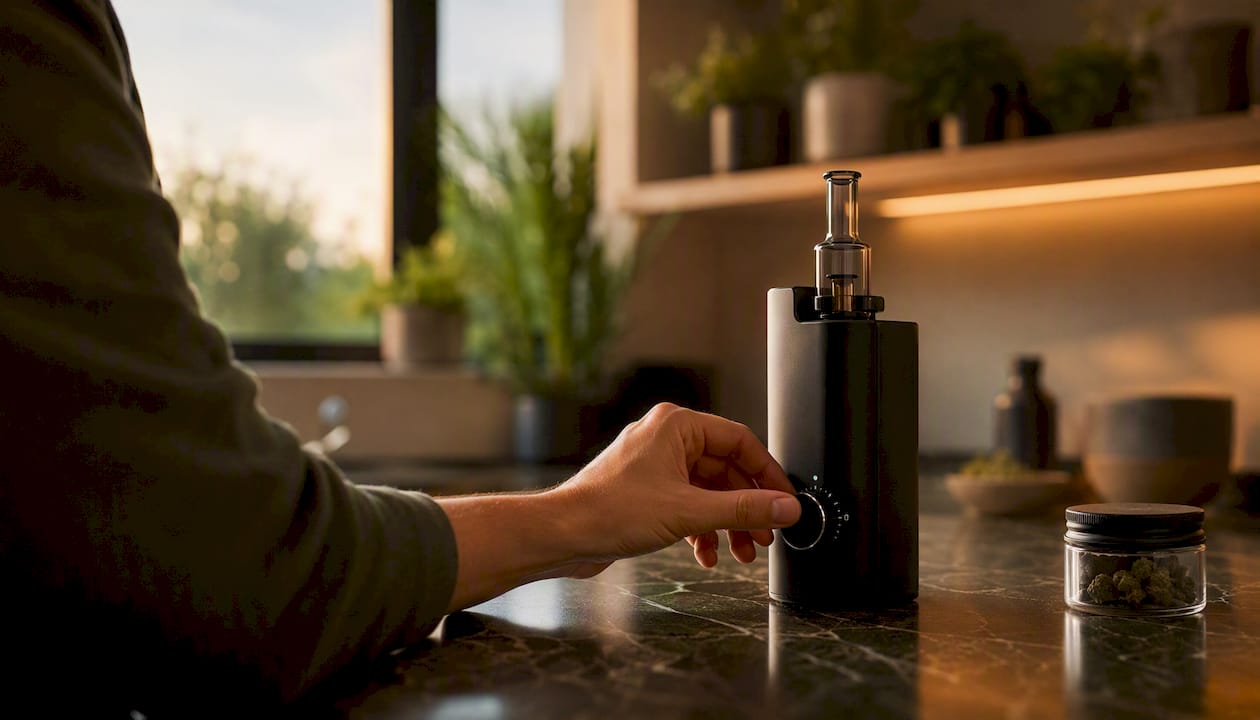
Microdose pre-rolls and the single-puff approach are the least precise but most accessible method. The strategy is simple: take one measured puff, wait 15 minutes, and assess before taking another. This method works, but it requires discipline and consistent technique.
Pro Tip: For any inhalation method, a short, controlled draw held for 2–3 seconds and then exhaled is more consistent than a long, deep inhale. Technique affects dose as much as the product itself.
What does the evidence actually show about microdosing THC benefits?
The honest answer: some benefits have real human data behind them, and others are mostly animal studies that have not yet translated into controlled human trials.
Anxiety and stress
This is where the human evidence is strongest. A controlled study published in Psychopharmacology demonstrated a clear biphasic response: 7.5 mg oral THC reduced stress responses in a laboratory stress task, while 12.5 mg increased anxiety. A small dose difference produced opposite outcomes. University of Illinois reporting on the same research reinforced the practical takeaway: low-dose THC can relieve stress, while more does just the opposite.
Pain
Human evidence for low-dose THC and pain is modest but consistent enough to be clinically relevant. Small trials and observational data suggest that doses in the 1–5 mg range can reduce pain perception without the sedation or impairment associated with higher doses. The mechanism likely involves CB1 receptor modulation in pain pathways, though the exact dose-response for pain differs from person to person.
Sleep
Systematic reviews document reduced sleep-onset latency at low-to-moderate THC doses, but the same literature flags two important caveats: tolerance builds quickly with nightly use, and regular THC use suppresses REM sleep. For sleep microdosing, the evidence supports occasional or short-cycle use rather than nightly dosing.
Cognitive aging and longevity
This is where the evidence thins out fast. Animal studies show promising signals for low-dose THC and cognitive restoration in aging rodents, but there is no controlled human evidence for THC-based cognitive recovery or longevity benefits. Anyone selling microdosing as a cognitive anti-aging strategy is running ahead of the science.
What are the risks and side effects of microdosing THC?
Even at low doses, THC carries real risks that are worth knowing before you start.
Short-term side effects at microdose levels are usually mild but can include:
- Dizziness or lightheadedness, particularly when standing up quickly (orthostatic hypotension)
- Mild cognitive fog or slowed reaction time
- Dry mouth and increased heart rate
- Anxiety or paranoia if the dose is higher than intended
Longer-term risks with regular microdosing:
- Tolerance develops, requiring higher doses to achieve the same effect over time
- Dependence is possible with daily use, even at low doses
- Drug screening: even small, regular THC doses will produce a positive result on standard urine drug tests
- REM suppression with nightly use, as noted in the sleep evidence above
Drug interactions are a serious concern that most microdosing guides underplay. THC is metabolized by the CYP450 enzyme system, particularly CYP3A4 and CYP2C9. This means it can alter the blood levels of many common medications, including blood thinners (warfarin), certain antidepressants, and seizure medications. THC also adds to the sedative effect of benzodiazepines, opioids, and other CNS depressants. Before starting any regular microdosing routine, bring a list of your current medications to a pharmacist or clinician and ask specifically about CYP interactions and additive sedation.
Absolute contraindications and strong cautions:
- Pregnancy and breastfeeding: no safe dose has been established; avoid entirely
- Personal or family history of psychosis or schizophrenia: THC can trigger or worsen psychotic episodes
- Under age 25: the developing brain is more vulnerable to THC’s effects on neural connectivity
- Cardiovascular conditions: even low doses can transiently increase heart rate and blood pressure
Pro Tip: Print or screenshot your medication list and bring it to your dispensary or pharmacist before starting. A quick CYP interaction check takes five minutes and can prevent a serious problem.
How to start microdosing THC safely: a step-by-step protocol
A conservative titration approach protects you from overshooting and gives you clean data on how your body responds.
- Choose your format. Pick a product with clear mg-per-unit labeling and a third-party COA. Tinctures and low-dose gummies are the easiest to control for beginners.
- Set your starting dose. Begin at 2.5 mg if you are a healthy adult with no relevant medical conditions. Start at 1 mg if you are older, sensitive, or on medications.
- Time it right. For edibles or tinctures, dose in the evening for your first few sessions so any unexpected effects do not interfere with work or driving. For inhalation, one puff and a 15-minute wait.
- Wait the full onset window. Do not redose until you have waited at least 90 minutes for tinctures and 2 hours for edibles. Impatience is the most common cause of accidental overconsumption.
- Log every session. Record: dose (mg), time, delivery method, mood before (1–10 scale), mood after, anxiety level, functionality (could you work/drive/care for others?), and any side effects.
- Run 5–10 sessions at the same dose before considering an increase. Your body needs time to establish a baseline response.
- Increase in small increments only. If 2.5 mg produces no noticeable effect after 7–10 sessions, increase to 3.5 mg or 5 mg, not 10 mg.
- Schedule tolerance breaks. For sleep use, avoid nightly dosing; try 3–4 nights on, 3–4 nights off. For daytime use, a 2-day break every 1–2 weeks helps prevent tolerance accumulation.
- Know when to stop. If you experience persistent anxiety, heart palpitations, cognitive fog that lingers into the next day, or any interaction with medications, stop and consult a clinician.
Sample schedules:
- Daytime (focus/anxiety): 2.5 mg tincture sublingual, mid-morning, on days with high-stress demands. Not daily.
- Evening (sleep onset): 2.5 mg edible, 90 minutes before target sleep time, 3–4 nights per week maximum.
Why microdosing THC is especially tricky for older adults
Older adults are not simply people who need a lower dose. The physiological picture is more complicated than that, and clinicians are increasingly vocal about it.
Aging changes the endocannabinoid system itself: receptor density and baseline signaling shift in ways that make dose-response less predictable. Hepatic metabolism slows with age, meaning THC and its metabolites clear more slowly, extending duration and increasing the risk of accumulation with repeated doses. The cardiovascular system becomes less able to compensate for THC-induced drops in blood pressure, making orthostatic hypotension, and the falls that follow, a genuine clinical concern even at doses that a younger adult would barely notice.
Clinical reviews document a clear association between THC dose and dizziness and fall risk in older adults, with the warning that even low doses can produce clinically meaningful cardiovascular and balance effects in this population.
For older adults considering microdosing, the protocol is stricter:
- Start at 1 mg, not 2.5 mg
- Never titrate without a clinician or pharmacist reviewing current medications first
- Avoid unsupervised home titration if frail or at existing fall risk
- Have a caregiver or family member present for the first several sessions
- Reassess every 2–4 weeks with a clinician rather than self-adjusting
How to choose quality microdose products and read labels
Not every product labeled “low dose” is actually suitable for precise microdosing. Here is what to check before you buy:
- Milligrams per unit, clearly stated. A label that says “5 mg THC per gummy” is usable. One that says “contains THC” with no per-unit figure is not.
- Third-party Certificate of Analysis (COA). The COA should show the actual THC content per unit (not just per batch weight), tested by an accredited independent lab. Ask for it at the counter or find it via QR code on the packaging.
- Full cannabinoid panel. Look for CBD, CBG, CBN, and minor cannabinoid content. A 1:1 THC:CBD ratio often produces a smoother, less anxious effect at low doses, thanks to the entourage effect.
- No undisclosed additives. Tinctures should list their carrier oil (MCT, hemp seed, etc.). Vape cartridges should not contain vitamin E acetate or unlisted cutting agents.
- Expiration date and storage instructions. THC degrades to CBN over time, especially with heat and light exposure. Store products in a cool, dark place and check dates.
Formats to prioritize for precision:
- Measured tinctures with calibrated droppers (1 mL = known mg)
- Gummies or mints at 2.5 mg or 5 mg per unit
- Metered vaporizers with per-puff mg specifications
Formats to approach carefully:
- Loose flower (no reliable per-puff dosing without a calibrated device)
- Unlabeled or home-made edibles
- Products without a COA or from unlicensed sources
Understanding how THC differs from THCA also matters when reading labels: raw flower and some products contain THCA, which converts to THC only through heat. A product’s total THC after decarboxylation may differ from the labeled THCA content.
An honest take on what microdosing actually delivers
There is a version of the microdosing conversation that oversells it, and a version that dismisses it entirely. Neither is useful.
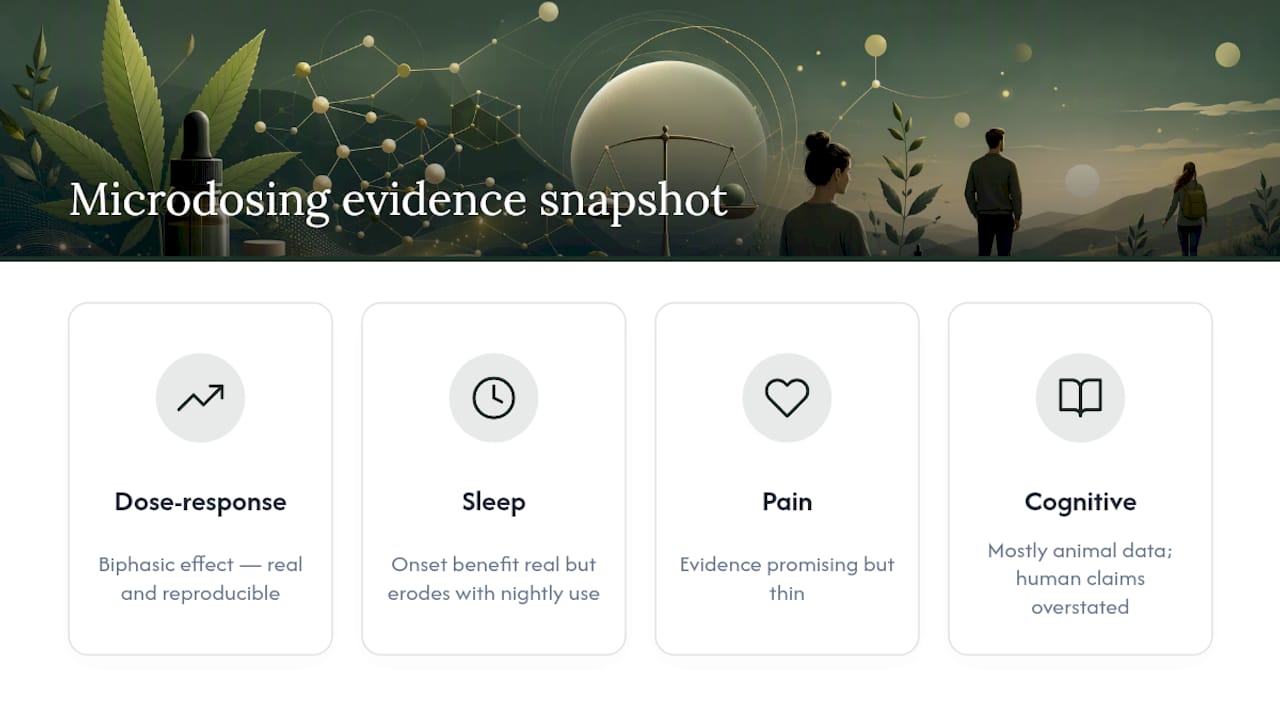
What the evidence actually supports is narrower and more interesting than the wellness marketing suggests. The biphasic dose-response data is real and reproducible. The sleep-onset benefit is real but fragile — it erodes with nightly use faster than most people expect. The pain data is promising but thin. The cognitive anti-aging angle is almost entirely animal data dressed up in human language, and anyone who tells you otherwise is not reading the studies carefully.
What I find more compelling than any single benefit claim is the framework microdosing forces on you: you have to measure, you have to wait, you have to log. That discipline alone separates people who use cannabis thoughtfully from people who use it reactively. The customers who come in asking about low-dose tinctures and 2.5 mg gummies are almost always the ones who report the most consistent, positive outcomes, not because the dose is magic, but because they are paying attention.
The safety piece matters more than the benefit piece for most people reading this. If you are on medications, older than 60, or have any cardiovascular or psychiatric history, the conversation with a clinician comes before the conversation with a budtender. That is not a disclaimer. It is the actual priority order.
Lab-tested microdose products, available at Saylessny
If you are ready to move from reading to buying, Saylessny stocks the formats that make precise microdosing practical: low-dose tinctures, 2.5 mg and 5 mg gummies, metered vape cartridges, and single-puff pre-rolls from brands that publish full COAs. Every product on the menu has passed third-party lab testing, so the mg-per-unit figure on the label is the actual number in the product.

The dispensary is located in The Bronx and serves all of NYC with same-day delivery. Staff can pull up a COA for any product in the store, walk you through cannabinoid ratios, and help you match a format to your specific goal, whether that is daytime stress relief, sleep onset, or pain management. For measured inhalation, CRU Cannabis pre-rolls are a strong starting point. For a curated look at what is currently in stock across all lab-tested brands, browse the full Saylessny menu. Order online for pickup or same-day delivery, or come in and ask the team directly.
Sources
The claims in this article draw on the following primary sources. For clinical decisions, read the full studies rather than relying on any summary.
- Cannabis Dosing Guide: How Much THC Is Right for Different Situations | RethinkTHC
- Ncbi
- How Long Do Edibles Take to Kick In? Duration, Side Effects
This article provides general information only and is not a substitute for professional medical advice. Confirm current laws in your state and consult a qualified clinician before starting any cannabis regimen, particularly if you take prescription medications or have an existing health condition.