
Most adults trying edibles for the first time should start at 2.5–5 mg THC. If you’re sensitive to cannabis, older, or new to any psychoactive substance, drop that to 1–2.5 mg as a microdose. Two rules override everything else: wait at least 2 hours before taking more, and do not drive or operate machinery for 8–12 hours after dosing.
- Starting dose for most beginners: 2.5–5 mg THC
- Microdose for sensitive users or older adults: 1–2.5 mg THC
- Redosing rule: Never sooner than 2 hours after the first dose
- Driving rule: Avoid for at least 8–12 hours; the CDC advises against any impaired driving after cannabis use
Before you start: If you are pregnant, have a serious mental-health history, or take prescription medications (especially blood thinners, antidepressants, or antiepileptics), consult a clinician before using any THC product. This guide is general information, not medical advice.
Key Takeaways
Starting at 2.5–5 mg THC, waiting at least 2 hours before redosing, and verifying lab results on every product are the three non-negotiable foundations of safe edible use.
| Point | Details |
|---|---|
| Start at 2.5–5 mg | Most beginners should start at a standard low dose; sensitive users and older adults should start at a lower dose. |
| Wait 2+ hours before redosing | Edibles peak at 2–4 hours; redosing early is the leading cause of overconsumption. |
| Check the label carefully | Always read mg per serving, not total mg per package, before eating any portion. |
| Calculate homemade servings | Use the formula: grams × THC% × 1,000 × extraction efficiency ÷ number of servings. |
| Use lab-tested products | Saylessny carries COA-verified edibles for pickup and same-day delivery across NYC. |
Table of Contents
- What the edible dosage guide actually looks like: the mg chart
- How to find your ideal edible dose through personal titration
- How long edibles take to kick in, peak, and wear off
- How to calculate mg per serving for homemade edibles
- Why the same dose can feel completely different each time
- What to do if you take too much
- How to store, label, and legally handle edibles at home
- The science behind why double-dosing is so dangerous
- A dispensary perspective on advising customers about edible dosing
- Lab-tested edibles available for pickup and same-day delivery in NYC
- Sources
What the edible dosage guide actually looks like: the mg chart
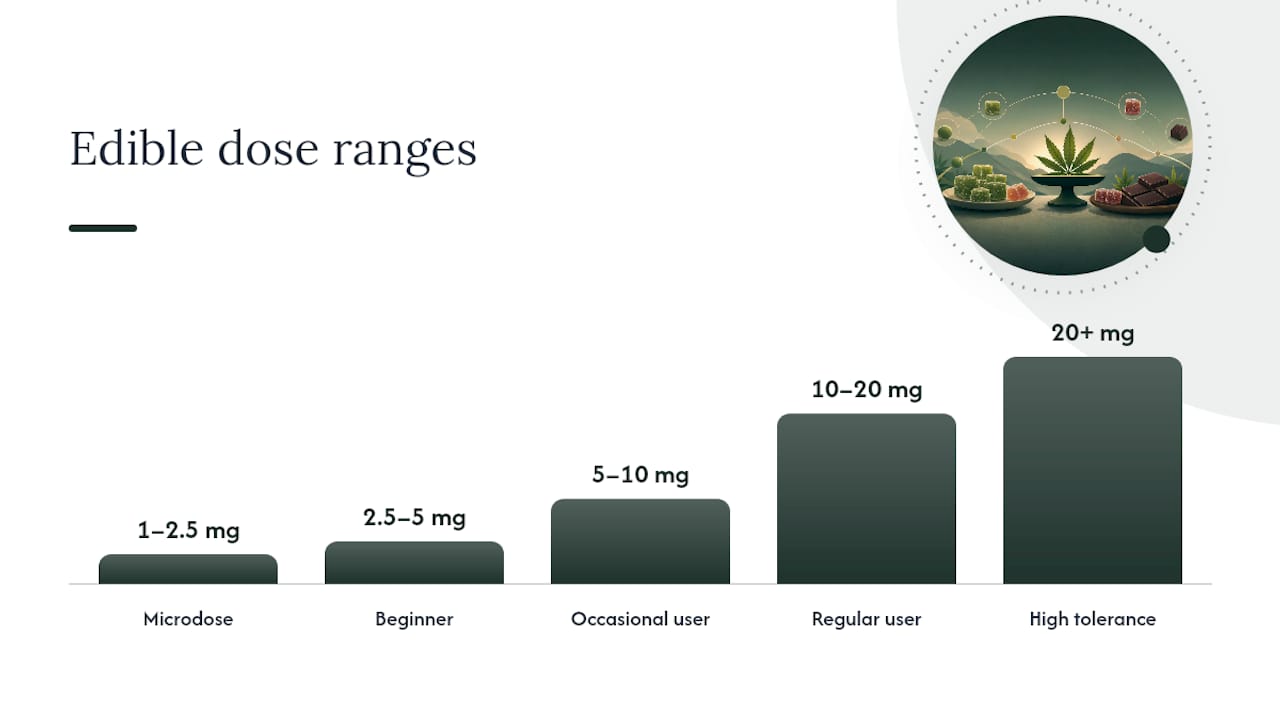
The table below reflects the industry-standard mg-based dosing chart used across consumer harm-reduction resources. Use it to pick your target range and to interpret what a product label is actually telling you.
| Experience Level | Typical Dose per Serving | Expected Effects |
|---|---|---|
| Microdose | 1–2.5 mg | Subtle mood lift, mild relaxation, no significant impairment |
| Beginner | 2.5–5 mg | Light euphoria, gentle body relaxation, manageable for most adults |
| Occasional user | 5–10 mg | Noticeable high, stronger relaxation, possible time distortion |
| Regular user | 10–20 mg | Pronounced euphoria, heavy body effect, not recommended without tolerance |
| High tolerance | 20 mg or more | Intense effects; only for experienced users with established tolerance |
Reading a product label
Packaging confusion is one of the most common reasons people accidentally take too much. A package labeled “100 mg total” with 10 gummies contains 10 mg per piece, not 100 mg per piece. Always check:
- Mg per serving (not total mg per package)
- Serving size (half a gummy vs. a full gummy)
- Total servings in the package
- THC vs. CBD content (a 5 mg THC / 5 mg CBD ratio will feel different from 5 mg THC alone)
Format also changes the experience. Standard gummies and chocolates follow the 30–90 minute onset window. Nano-emulsified beverages can reduce onset to roughly 15–30 minutes because the smaller particle size absorbs faster. Tinctures held under the tongue for 60–90 seconds act faster than swallowed capsules. For hybrid THC gummies specifically, the standard onset window applies, but the ratio of cannabinoids in the formula changes the character of the effect.
Pro Tip: If a product lists “2 servings per package” on a single gummy, that gummy is meant to be cut in half. Eat half, wait two full hours, and only then decide whether you need the rest.
How to find your ideal edible dose through personal titration
No chart replaces personal experience. The goal of titration is to find the lowest dose that gives you the effect you want, with the fewest side effects. Clinical reviews recommend cautious titration, especially for older adults and anyone on medications.
A simple titration schedule
- Session 1 (Week 1): Take 2.5 mg. Record the time, what you ate beforehand, and how you felt at 1 hour, 2 hours, and 4 hours.
- Session 2 (Week 1, 2 days later): Repeat 2.5 mg. Confirm the effect is consistent.
- Session 3 (Week 1, 2 days later): If effects were too mild, increase to 5 mg. If comfortable, stay at 2.5 mg.
- Week 2, Session 1: Try your adjusted dose in a different setting (morning vs. evening, full stomach vs. light meal).
- Week 2, Sessions 2–3: If you want more, increase by 2.5 mg increments only. Never jump more than 5 mg between sessions.
- Week 3 onward: Once you find your sweet spot, stick with it for at least two weeks before reassessing.
Keep a simple notes-app log: dose, time, format, food intake, and a 1–10 effect rating. Patterns emerge fast.
Pro Tip: If your goal is sleep or anxiety relief rather than a recreational high, consider a CBD-balanced product (1:1 THC:CBD ratio) at a lower THC dose. CBD can soften the psychoactive edge without eliminating the relaxation benefit. Sublingual tinctures also let you adjust in smaller increments than pre-portioned gummies.
For readers curious about how minor cannabinoids like CBG or CBN might shift the effect profile, this guide on minor cannabinoids explains the practical differences.
How long edibles take to kick in, peak, and wear off
Edibles work differently from inhaled cannabis because the THC travels through your digestive system before reaching your bloodstream. The liver converts delta-9-THC into 11-hydroxy-THC, a more potent metabolite that crosses the blood-brain barrier more readily. That conversion is why edibles often feel stronger and last longer than smoking the same amount.
Typical edible timeline: Onset 30–90 minutes · Peak 2–4 hours · Total duration up to 10–12 hours
Nano-emulsified beverages are the exception: their onset can start in 15–30 minutes. Sublingual tinctures fall somewhere in between, often 20–45 minutes. Standard gummies, chocolates, and capsules sit squarely in the 30–90 minute window.
Practical scheduling rules:
- Set a phone timer for 90 minutes after your first dose. If you feel nothing at 90 minutes, you may be in the slow-absorber group, not the no-effect group.
- Plan your session for a full 10–12 hour window. An evening dose at 8 PM can still be active at 6 AM.
- Do not drive, make important decisions, or operate machinery until effects have fully cleared.
- Have water and a light snack available. A full stomach slows onset; an empty stomach speeds it up and can intensify effects.
How to calculate mg per serving for homemade edibles
Homemade infusions are where most accidental overconsumption happens, because people skip the math. The formula is straightforward once you know the steps.
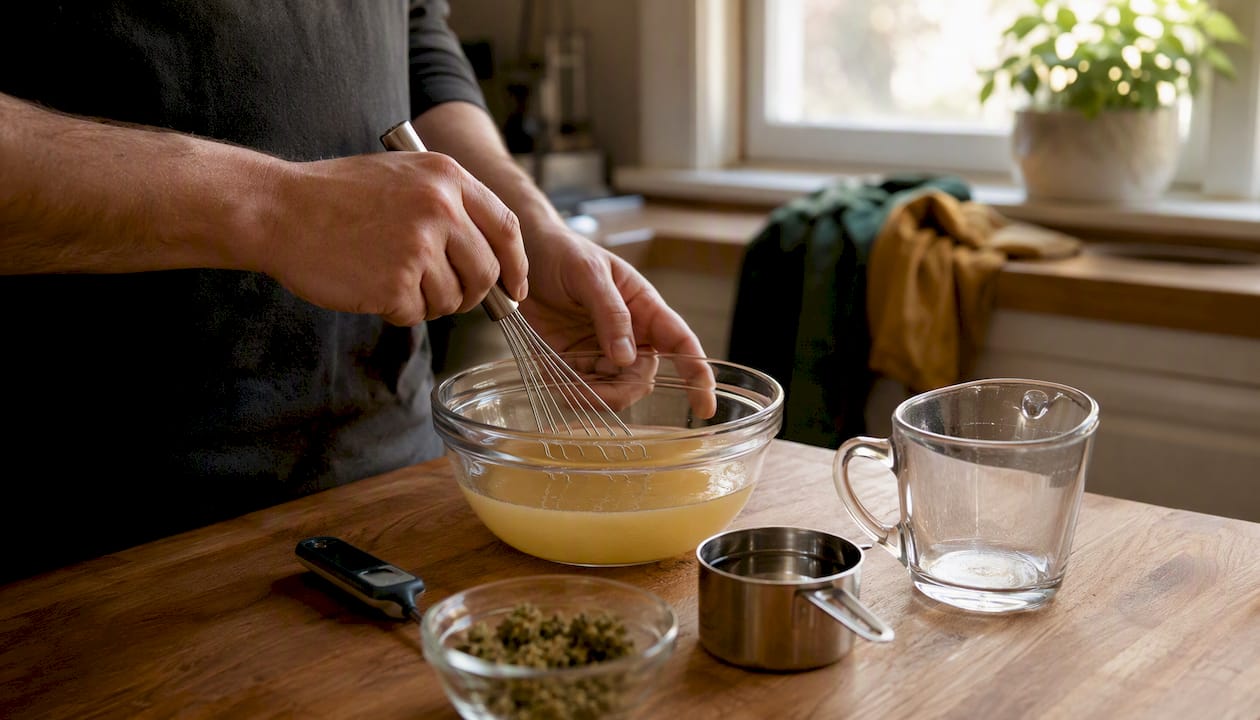
The calculation formula
Total mg THC = grams of flower × (THC% ÷ 100) × 1,000 × extraction efficiency
Then: mg per serving = total mg THC ÷ number of servings
The extraction efficiency factor accounts for the fact that not all THC transfers from the plant into your butter or oil.
Worked example
- Starting material: 7 grams of flower at 18% THC
- Total THC in flower: 7 × 0.18 × 1,000 = 1,260 mg
- After extraction (70% efficiency): 1,260 × 0.70 = 882 mg in your infused butter or oil
- Divide by servings: 882 ÷ 12 servings = 73.5 mg per serving
That is a very high dose per serving. To bring it down to a beginner-friendly 5–10 mg, you would either use less flower, use a lower-THC strain, or increase the number of servings to 88–176 pieces from the same batch.
Understanding why raw flower potency matters here is covered in detail in this primer on THC vs. THCA and decarboxylation, since undecarboxylated material will produce a lower actual THC yield than the label percentage suggests.
| Variable | Example Value | Notes |
|---|---|---|
| Flower weight | 7 g | Weigh on a kitchen scale |
| THC percentage | 18% | From lab COA on packaging |
| Extraction efficiency | 70% | Typical stovetop; lab-grade can reach 90%+ |
| Number of servings | 12 | Adjust to hit your target mg/serving |
| Result: mg per serving | 73.5 mg | Divide total extracted mg by servings |
Pro Tip: Label every batch of homemade edibles with the date, total mg in the batch, and mg per serving. Store them in a clearly marked, childproof container separate from regular food. Unlabeled homemade edibles are a household safety risk.
Why the same dose can feel completely different each time
The pharmacokinetics of cannabinoids vary significantly between individuals and even between sessions for the same person. Here is what actually drives that variability:
- Tolerance and frequency: Daily users develop tolerance faster. A 5 mg dose that worked in month one may feel negligible by month three.
- Body composition and metabolism: Fat-soluble cannabinoids accumulate in adipose tissue. Higher body fat can mean slower release and longer duration.
- CYP2C9 enzyme variants: This liver enzyme metabolizes THC. Poor metabolizers (a meaningful portion of the population) process THC more slowly, leading to stronger and longer effects at the same dose. Peer-reviewed pharmacokinetic research documents this variability directly.
- Food intake: A high-fat meal before dosing increases THC absorption. An empty stomach speeds onset and can amplify intensity.
- CBD presence: CBD in the same product can modulate the psychoactive effect, often reducing anxiety at lower doses.
- Concurrent medications: Cannabis interacts with CYP450-metabolized drugs, including warfarin, SSRIs, and some antiepileptics. Clinical guidance recommends a clinician review before combining cannabis with any prescription medication.
- Age: Research on older adults recommends starting at 1–2.5 mg due to altered body composition and slower metabolism.
For a deeper look at why the same strain affects two people so differently at the biological level, this endocannabinoid system explainer covers the receptor-level reasons.
Medical disclaimer: If you are pregnant, breastfeeding, have a cardiac condition, a personal or family history of psychosis, or take prescription medications, consult a licensed clinician before using THC edibles. The NCCIH notes that evidence on cannabis interactions and safety gaps is still evolving.
What to do if you take too much
Overconsumption from edibles is the most common cannabis-related emergency room visit, almost always caused by impatient redosing. Clinical studies document that adverse events spike when users take a second dose before the first has peaked. The good news: a THC overdose is not fatal, but it can be genuinely distressing.
If you or someone else has taken too much:
- Stay calm. Remind yourself or the person that the effects are temporary and will pass.
- Move to a safe, comfortable environment. Lie down or sit somewhere familiar.
- Hydrate. Sip water or a non-caffeinated drink slowly.
- Use CBD if available. CBD can reduce THC-induced anxiety at a 1:1 ratio or higher.
- Rest and monitor. Check in every 30 minutes. Most acute distress peaks within 2–3 hours.
- Call emergency services (911) if: the person experiences chest pain, difficulty breathing, severe confusion, or signs of psychosis that do not improve.
Tell responders: how much was taken, when it was taken, the product’s THC mg per serving, and whether any other substances were involved. This information speeds appropriate care.
Safety checklist before every session:
- Keep a written or phone-based dose log (time, mg, format)
- Store all edibles in childproof, clearly labeled containers
- Never leave edibles where children or pets can reach them (accidental ingestion in pets is a veterinary emergency; see what pet owners need to know)
- Arrange transportation in advance; do not plan to drive
- Tell a trusted person you are dosing, especially for a first session
How to store, label, and legally handle edibles at home
Safe storage is not optional, especially in households with children or pets. Colorado’s state cannabis safety guidance recommends childproof containers, opaque packaging, and locked storage as baseline practices, and most states with legal cannabis markets follow similar frameworks.
Home storage checklist:
- Use childproof, resealable containers
- Store in an opaque container away from light and heat
- Keep in a locked drawer or cabinet, not a kitchen counter
- Label clearly: product name, date made or opened, total mg per package, mg per serving
- Keep away from regular food to prevent accidental consumption
For purchased products:
- Check the lab Certificate of Analysis (COA) on the package or via a QR code.
- Confirm the THC mg per serving matches what you intended to buy.
- Verify the product was tested for pesticides, heavy metals, and residual solvents.
- Note the expiration or best-by date; potency degrades over time.
- Reseal and store immediately after opening.
Legal limits on possession and home storage vary by state. In New York, adults 21 and older may possess up to 3 ounces of cannabis and 24 grams of concentrate under state law, but always verify current rules with your state’s cannabis authority, since limits and packaging regulations change. The CDC’s cannabis overview also covers general public-health guidance applicable across states.
The science behind why double-dosing is so dangerous
The core safety rule in every edible dosage guide comes down to one pharmacological fact: you cannot feel the first dose rising. First-pass hepatic metabolism means THC is absorbed through the gut, processed by the liver into 11-hydroxy-THC, and only then enters systemic circulation. That process takes 30–90 minutes under normal conditions, and longer if your stomach is full or your metabolism runs slow.
The double-dosing trap: A user takes 10 mg, feels nothing at 45 minutes, takes another 10 mg, and then both doses peak simultaneously at the 2-hour mark. The result is an unintended 20 mg experience, often with significant anxiety or disorientation.
Practical steps to avoid it:
- Set a timer for 90 minutes after your first dose before even considering a second
- Write down the exact time and dose taken; memory is unreliable when you are waiting and anxious
- Start at the lowest dose you think will work, not the highest you think is safe
- Prefer a lower-dose format (2.5 mg gummies) over a higher-dose one so any accidental double is less severe
Population variability adds another layer. Genetic differences in CYP2C9 enzyme activity mean some people metabolize THC significantly more slowly than average. For those individuals, onset at 90 minutes is not unusual, and a second dose taken at that point stacks directly on top of a still-rising first dose. Peer-reviewed pharmacokinetic studies confirm this variability is clinically meaningful, not just anecdotal.
| Scenario | Onset Window | Risk of Double-Dosing |
|---|---|---|
| Standard gummy, full stomach | 60 minutes or more | High if redosing before 2 hours |
| Standard gummy, empty stomach | 30–60 minutes | Moderate; faster onset reduces wait anxiety |
| Nano-emulsified beverage | 15–30 minutes | Lower; faster feedback loop |
| Sublingual tincture | 20–45 minutes | Lower; faster feedback loop |
| Capsule/softgel | 45–90 minutes | High; slow, consistent release |
A dispensary perspective on advising customers about edible dosing
At Saylessny, the most common question from first-time edible buyers is some version of: “How much should I actually take?” The honest answer is always the same: less than you think, and slower than you want. Staff typically walk beginners through the mg chart, confirm they understand the 2-hour wait rule, and point them toward low-dose, portion-controlled formats where the serving size is already measured for them.
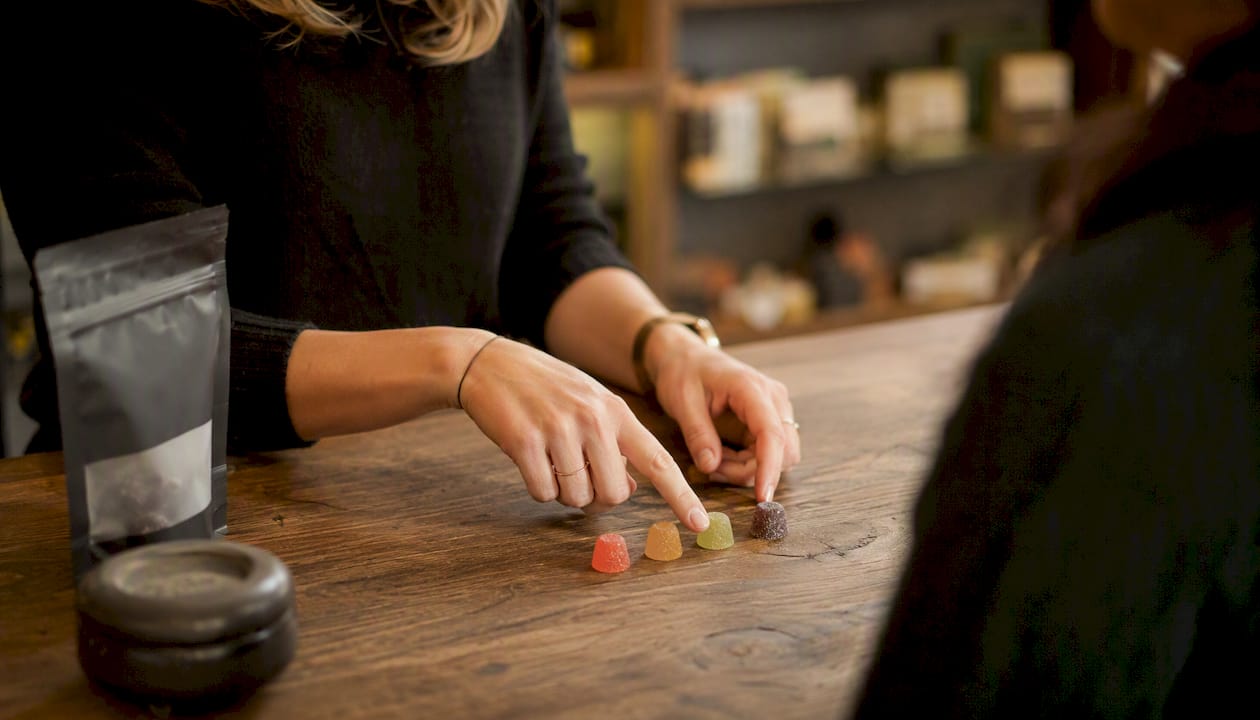
Every product on the Saylessny menu comes with lab-tested potency data. Customers can request the Certificate of Analysis for any product, which shows the exact THC and CBD content per serving, along with pesticide and contaminant screening results. That transparency matters because a product labeled “10 mg” from an unlicensed source may contain 4 mg or 25 mg. Lab-tested means the number on the label is the number in the product.
Lab-tested edibles available for pickup and same-day delivery in NYC
Knowing your dose is only half the equation. The other half is trusting that the product’s label is accurate.

Saylessny carries a curated selection of lab-tested edibles at its Bronx dispensary, with same-day delivery across NYC. Every product on the menu has a verified COA, so the 5 mg gummy you order is actually 5 mg. For beginners, Koa Cannabis Co.’s infused minis are a strong starting point: small-format, precisely dosed, and easy to portion. If you want to explore what’s setting the standard for NYC edibles right now, Doozies and LayUp are worth a look. Browse the full menu and place an order for pickup or delivery at Saylessny.
Sources
This article is general information, not a substitute for advice from a qualified doctor. Consult a qualified healthcare professional about your own circumstances before acting on anything here.