
No, you cannot legally drive after using cannabis in New York. Driving while impaired by weed is a misdemeanor under VTL §1192, and consuming or burning it inside a vehicle is illegal on its own. If you have used cannabis, do not get behind the wheel. Line up a ride, use delivery instead of driving to a dispensary, or wait it out.
TL;DR:
- The legal standard for impaired driving in New York is “driving while ability impaired by drugs,” which requires proving any level of impairment regardless of THC blood concentration.
- Consuming or burning cannabis inside a vehicle on a public road is illegal, even if the cannabis is within possession limits and unopened.
- Edibles can cause longer-lasting impairment than smoking, making delayed effects a risk if driving is attempted within two hours of ingestion.
- Refusing a chemical test after being pulled over does not prevent license suspension but can lead to harsher administrative penalties.
- Ordering same-day cannabis delivery avoids the risks associated with driving after consumption, as it keeps use off the road entirely.
Table of Contents
- Driving With Weed in NY: What the Law Actually Says
- How Weed Affects Your Driving (And Why Edibles Are Different)
- What Happens If You Get Pulled Over With Weed in NY
- Transporting Weed in NY the Right Way
- What DWAI-Drugs and Related Charges Actually Cost You
- Say Less’s Take on Staying Legal and Safe in NYC
- The Part of This Debate People Keep Getting Wrong
- Skip the Drive: Same-Day Delivery Across NYC
- Sources
Driving With Weed in NY: What the Law Actually Says
New York’s cannabis legalization law never touched impaired-driving rules. The Marijuana Regulation and Taxation Act created the Office of Cannabis Management and opened legal retail sales, but it left the driving statutes exactly where they were.
The operative charge is DWAI-Drugs under VTL §1192(4), “Driving While Ability Impaired by Drugs.” The bar is low by design: prosecutors only need to show your driving ability was affected “to any extent.” That is a lower threshold than the “intoxicated” standard used for alcohol, and courts have kept refining what it means in practice, including in appellate discussions of how impairment is judicially interpreted.
Two other statutes matter just as much for anyone thinking about driving with weed in NY:
- VTL §1227 bans consuming or burning cannabis anywhere inside a motor vehicle on a public road, for drivers and passengers alike, whether the car is moving or parked on the shoulder.
- Penal Law §222.05 sets the legal possession baseline: adults 21 and older can carry up to three ounces of flower or 24 grams of concentrate, and it also limits how far police can search a vehicle based on odor alone during a stop, a point covered in Penal Law §222.05.
Staying under three ounces and keeping it sealed and untouched during the drive covers the legal baseline. It does not cover impairment, which is judged separately and has nothing to do with how much you’re carrying.
How Weed Affects Your Driving (And Why Edibles Are Different)
Cannabis measurably degrades the skills driving depends on. NYC’s health department flags slower reaction time, poor lane-keeping, weaker divided attention, and distorted perception of time and distance as the main risks tied to recent use. Those are the same skills a police officer or a drug recognition expert is trained to watch for.
The gap most people miss: smoking and edibles don’t behave the same way. Smoked or vaped cannabis hits fast and fades relatively fast. Edibles are the opposite. Onset can take up to two hours, according to state traffic safety guidance on cannabis and driving, and the effects run longer once they arrive. Someone who eats a gummy, feels nothing after 20 minutes, and decides to drive can end up impaired mid trip. Check a vape duration guide or an edible dosage guide before you assume you know your own timeline.
Impairment risks compound with each of these:
- Reaction time slows enough to matter at highway speed.
- Attention splits poorly between the road, mirrors, and distractions.
- Lane position drifts, especially on curves or in heavy traffic.
- Time and distance perception get unreliable, which throws off following distance and merging judgment.
What Happens If You Get Pulled Over With Weed in NY
Officers do not need a breathalyzer number to charge DWAI-Drugs, because New York has no per se THC blood limit the way it does a 0.08% limit for alcohol. Instead, impairment gets built from officer observations: driving behavior, eye movement, speech, and performance on field sobriety tests, sometimes backed by a drug recognition expert evaluation, a dynamic explained in NY DMV’s Chapter 9 on alcohol and other drugs. Legal analysis on drugged driving charges in NY notes this is exactly why cases often turn on distinguishing “THC present” from “actually impaired.”
New York’s implied consent law means police can request a chemical test once you’re arrested. Refuse, and the consequences arrive fast, separate from whatever happens with the criminal case:
- Immediate license suspension at arraignment, before any conviction.
- A DMV refusal hearing that can add civil penalties and a longer revocation.
- Steeper, often mandatory consequences for commercial drivers.
One protection worth knowing: the smell of burnt cannabis alone does not give officers probable cause to search parts of your car that aren’t within your immediate reach, such as a locked trunk.
Pro Tip: If you’re pulled over and haven’t used cannabis but have it in the car, say so calmly, keep it in its sealed packaging, and let the officer see it’s stored, not being consumed. Silence about legal possession often reads worse than a simple, factual answer.
Transporting Weed in NY the Right Way
Getting stopped with legal cannabis shouldn’t turn into a legal problem if you follow a few basic habits.
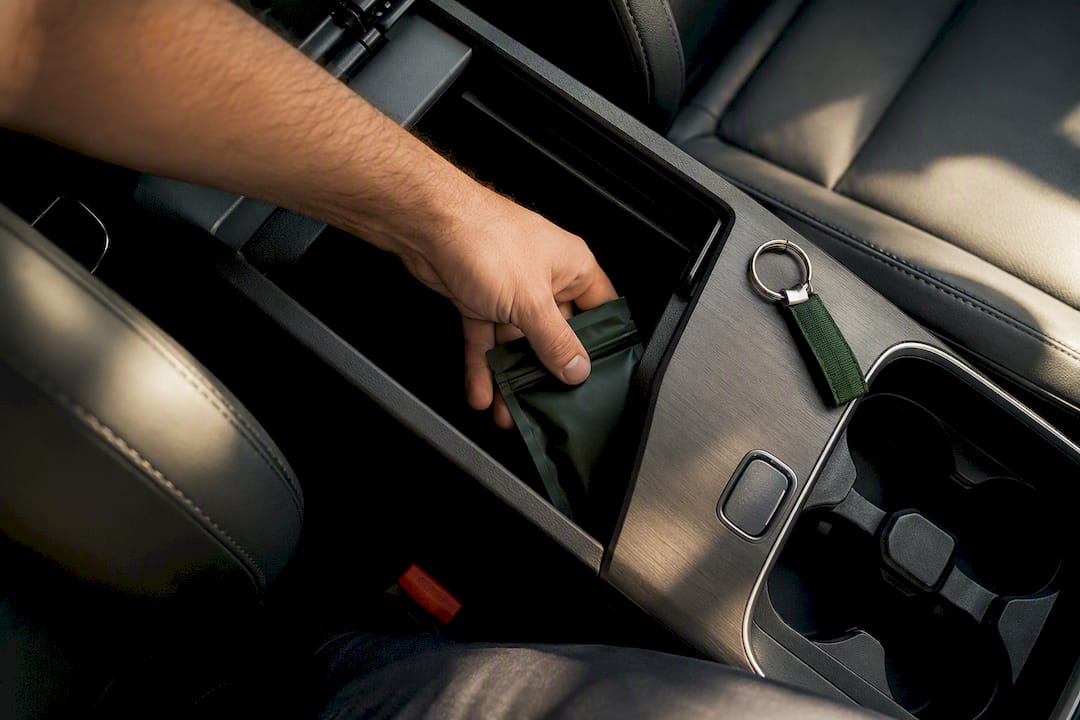
- Keep it sealed in its original packaging, in the trunk or a locked glovebox, not in the cup holder or on the seat.
- Never light up or vape inside the car, whether you’re driving, parked, or a passenger. VTL §1227 doesn’t distinguish.
- If you used an edible, wait at least two hours before considering more, and assume the full effect can outlast that window.
- If you’ve used anything recently, skip driving. Delivery, rideshare, or a sober friend behind the wheel all beat guessing at your own impairment.
What DWAI-Drugs and Related Charges Actually Cost You
A first DWAI-Drugs conviction is a misdemeanor, and the numbers add up fast: fines within a range, potential jail time up to one year, and a license revocation period, according to DMV’s own guidance. None of that requires a prior record.
Lower-stakes but still real:
- Burning or consuming cannabis in a vehicle under VTL §1227 carries fines and possible short jail time on a first offense.
- Repeat violations of either statute within a relatively short period escalate the penalties.
- Refusing a chemical test after arrest triggers separate administrative penalties regardless of criminal proceedings.
None of these penalties require proof you were “high” in some casual sense. They require proof your ability to drive was affected, which is a much lower bar than most people assume.
Say Less’s Take on Staying Legal and Safe in NYC
Say Less operates as a licensed dispensary in The Bronx, and every product on the menu, from flower to vapes to edibles, passes lab testing before it reaches a shelf or a delivery bag. That matters here because knowing exactly what you’re consuming, and its potency, is half the battle in planning a safe timeline before you drive again.
If you’re newer to edibles or trying a higher potency product, our edible dosage guide breaks down onset and duration by milligram. For a broader primer on what’s actually legal to carry and where impairment law diverges from possession law, see our guide on cannabis legality in New York.
The Part of This Debate People Keep Getting Wrong
Most advice about weed and driving in New York either overstates the danger, treating any THC in your system as equivalent to falling-down drunk, or understates it, treating legal possession as if it makes impairment a non-issue. Both miss what the statute actually says.
The “affected to any extent” standard in VTL §1192 is stricter than a lot of drivers realize, and there’s no blood test number that saves you from it. That means the safest posture isn’t calculating how high you feel. It’s building in a real buffer of time, especially after edibles, before you touch the wheel at all.
The bigger blind spot is the vehicle itself. People plan around not driving high but forget that lighting up in a parked car is its own separate charge under VTL §1227. Possession limits, consumption rules, and impaired-driving law are three different legal questions, and treating them as one is how otherwise careful people end up with a ticket or worse.
— Jake
Skip the Drive: Same-Day Delivery Across NYC
Same-day cannabis delivery and pickup are available in NYC, which addresses the problem this article just walked through: once you’ve used anything, driving is off the table, but wanting more product usually isn’t.

Instead of weighing whether you’re “okay to drive” to a dispensary, order from the couch and let delivery handle it. The menu includes lab-tested flower, vapes, and edibles from brands like Ayrloom and CRU Cannabis, and every product page lists potency clearly so you’re not guessing on dosage before you decide how long to wait before doing anything else, including driving. First time buying edibles? The edible dosage guide walks through milligram ranges before you order. Check our weed delivery guide for NYC to see coverage and minimums, then place an order for pickup or delivery the next time you need product without needing to drive.
This article is general information, not a substitute for advice from a qualified lawyer. Consult a qualified legal professional about your own circumstances before acting on anything here.
Sources
- Chapter 9: Alcohol and Other Drugs | NY DMV
- Cannabis & Driving: The Information You Need | Governor’s Traffic Safety Committee
- Cannabis (Marijuana) – NYC Health
- N.Y. Penal Law § 222.05
- Appellate/legal discussion of impairment standards (People v Cruz and related interpretations)