
If you’re new to cannabis, start with CBD-dominant flower or a 1:1 THC:CBD product, and keep THC in the 5 to 15% range if you’re smoking flower. Prefer a microdose if you’re eating an edible: 2.5 mg THC, full stop. This combination gives you a gentle, learnable experience instead of a rough one, and it’s the same starting point Leafly recommends for anyone picking up their first product.
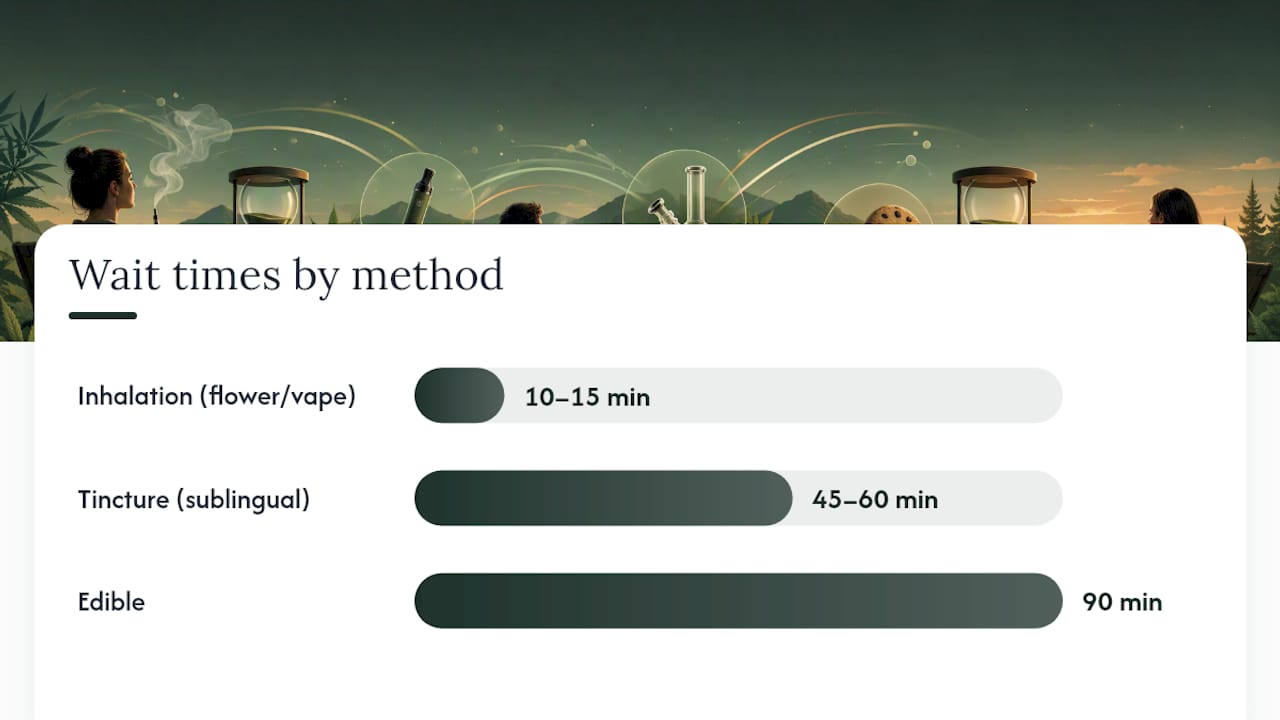
The timing matters as much as the dose. With flower or a vape, take one small inhalation and wait 10 to 15 minutes before deciding whether you need more. With an edible, wait a full hour and a half before even thinking about a second dose. Edibles hit slower and last longer, and rushing a second dose before the first one lands is how a lot of first experiences go sideways.
- Flower or pre-roll: low to moderate THC levels, one small inhalation, wait 10 to 15 minutes.
- Edible: a low single-digit milligram dose of THC to start, wait at least 90 minutes before redosing.
- Vape: low-THC or full-spectrum cartridge, one short puff, then wait to assess effect.
- Tincture: a few drops under the tongue, wait 45 to 60 minutes.
Pro Tip: Always check for a certificate of analysis (COA) before you buy. If a shop or product page can’t show you lab results confirming THC, CBD, and contaminant testing, walk away, no matter how good the packaging looks.
Buy from a licensed dispensary that lab-tests everything on its menu and trains staff to talk you through dosage, not just push the highest-THC product on the shelf. Saylessny’s strain pages list cannabinoid percentages and terpene notes up front, which is exactly the information you need before your first purchase, not after.
Key Takeaways
A safe first cannabis experience depends on choosing CBD-dominant or 1:1 THC:CBD products, dosing conservatively, and verifying every claim against a lab-tested COA rather than a strain’s marketing label.
| Point | Details |
|---|---|
| Start low and balanced | Choose CBD-dominant or 1:1 THC:CBD products, targeting 5 to 15% THC for flower or 2.5 mg for edibles. |
| Respect the wait times | Wait 10 to 15 minutes after inhaling and a full 90 minutes after an edible before considering more. |
| Read the terpene panel | Favor linalool and limonene for calmer effects and watch for heavy myrcene, which can intensify sedation. |
| Pick forgiving genetics for grows | Autoflowers and strains like Northern Lights offer short flowering times and resist common rookie mistakes. |
| Buy from a verified menu | Saylessny lists COA-backed cannabinoid and terpene data on strain pages like Crypto Cherry and Cherry Bomb for informed first purchases. |
Table of Contents
- What Makes a Strain Beginner Friendly?
- Beginner Strains and Dosing by Product Type
- Beginner Grower Picks and Easy Cultivation Tips
- How to Choose a Safe Beginner Strain at the Dispensary
- How Saylessny Supports a Safe First Experience
- Storing Your Strains to Keep Them Fresh
- Building Tolerance Before You Try Something Stronger
- Matching a Strain to What You Actually Want to Do
- What I’d Tell a Friend Buying Their First Strain
- Start Your First Order With Saylessny
- Frequently Asked Questions
- Sources
What Makes a Strain Beginner Friendly?
The honest answer has nothing to do with whether a bag says “indica” or “sativa.” Those labels describe plant shape, not what the product will do to you. What actually predicts your experience is the chemical profile on the lab report: the THC percentage, the CBD percentage, and the terpene breakdown. Research-backed guides increasingly point out that cannabinoid ratios and terpene combinations matter far more than which plant family a strain descended from.
Here’s the mechanism in plain terms. THC is the cannabinoid that gets you high, and it’s also the one responsible for the racing heart, anxiety spiral, or paranoia that scares off a lot of first-timers. CBD doesn’t get you high on its own, and when it’s present alongside THC, it tends to soften THC’s harsher edges. That’s why a 1:1 THC:CBD product, or anything CBD-dominant, is a much gentler entry point than a pure THC strain at 25% potency. CBD acts almost like a ceiling on the experience. It’s part of why balanced formulations are considered the safer starting point instead of just chasing the lowest THC number you can find.
Terpenes are the second half of the equation, and they get overlooked constantly. These are the aromatic oils that give cannabis its smell, and they also interact with cannabinoids to shape how a high actually feels. A few worth knowing:
- Linalool — the same terpene found in lavender, generally associated with a calmer, less anxious experience.
- Limonene — a citrus-scented terpene often linked to a lighter, more uplifting feel.
- Myrcene — earthy and musky, and when it shows up in high concentrations, it tends to push effects toward heavy sedation, which can feel overwhelming rather than pleasant for someone new to cannabis.
None of this shows up on the front of the package. You have to look at the COA, and this is where a lot of beginners freeze up because a lab report looks like a spreadsheet full of numbers nobody explained to them. It’s simpler than it looks. Find the total THC and total CBD percentages first. Then scroll to the terpene panel, usually a separate table, and see which terpenes appear at the top. A product listing myrcene as its dominant terpene at a high percentage is telling you, in advance, that the effects will likely be heavier than one topped with linalool or limonene.
Modern commercial flower also runs hotter than most people expect. Potency has climbed well past 20% THC in a lot of today’s flower, which means the “average” strain on a menu is no longer a gentle option. You have to actively seek out the lower end of the spectrum instead of assuming a random pick will be mild. If you want a deeper technical breakdown of how terpenes interact with cannabinoids, our terpene primer walks through the chemistry without the jargon overload.
Beginner Strains and Dosing by Product Type
Different product formats hit you differently, and picking the wrong format for a first try is one of the most common beginner mistakes. Here’s how to approach each one.
- Flower and pre-rolls. Look for anything in the 5 to 15% THC range, or a labeled 1:1 THC:CBD flower if your dispensary carries one. Take one small inhalation, hold it comfortably, and wait 10 to 15 minutes before taking another. Inhaled cannabis hits fast, usually within a few minutes, so you’ll know quickly whether you need more or whether you’ve had plenty.
- Vape cartridges. Stick to full-spectrum, low-THC carts rather than distillate-heavy disposables that strip out terpenes and concentrate THC to 80% or higher. Take one short puff, wait a few minutes, and reassess. Cheap high-temperature disposables are also more likely to skip terpene testing altogether, which defeats the purpose of choosing a calming profile in the first place.
- Edibles. This is where beginners get into trouble most often, because the effects take so long to show up that people assume the first dose “didn’t work” and take more. Guidance from Treehouse Cannabis is blunt about this: start at 1 to 2.5 mg THC, and give it a full 90 minutes before you even consider a second dose. Read the label carefully. A single gummy piece might be 10 mg, meaning a quarter of it is your actual starting dose.
- Tinctures. These go under the tongue and offer more control than edibles because you can titrate drop by drop. Start with a small measured dose, hold it under your tongue for 30 to 60 seconds before swallowing, and wait 45 to 60 minutes to feel the full effect. Onset lands somewhere between inhaled products and edibles, faster than a gummy but slower than a puff. Our tincture dosing guide breaks down measured-drop dosing step by step if you want more detail before your first bottle.
A quick note on the math here: dispensary-standard dosing guidance consistently lands on the same numbers regardless of source, one small inhalation with a 10 to 15 minute wait, or 1 to 2.5 mg for edibles with a 90 minute wait. That consistency across independent guides is worth paying attention to; it’s not a marketing number, it’s a safety threshold that shows up everywhere.
If you want concrete examples instead of abstract ranges, a few strains on Saylessny’s menu are built for exactly this kind of first experience. Crypto Cherry offers a fruity, approachable flavor profile with a terpene mix that tends toward the calmer end, and the full strain breakdown shows its lab numbers and expected effects before you buy. Birthday Cake is a milder hybrid option that a lot of newer customers gravitate toward for an easygoing evening session rather than an intense one. Cherry Bomb rounds out the group with a bold flavor but a manageable overall profile, and its product page lists the terpene highlights so you’re not guessing. None of these are marketed as “beginner strains” in a gimmicky way. They’re simply well-documented, lab-tested options where the numbers back up the claim.
Beginner Grower Picks and Easy Cultivation Tips
Growing your first plant is a different kind of beginner challenge, and the genetics you pick matter more than any piece of equipment you buy. A forgiving strain will survive the mistakes every new grower makes. A finicky one won’t.
Look for these traits when picking your first genetics:
- Autoflowering varieties — they flip to the flowering stage on their own schedule instead of requiring a precise light-cycle change, which removes one of the biggest sources of beginner error. Autoflower genetics are widely recommended for first-time growers specifically because they simplify timing.
- Short flowering time — less time in the grow room means fewer chances for something to go wrong. Northern Lights, a classic beginner pick, typically finishes flowering in about 7 to 8 weeks.
- Mold and pest resistance — strains bred for resilience tolerate humidity swings and minor neglect far better than delicate, high-maintenance cultivars.
- Manageable height — compact plants are easier to control in a tent or small grow space and less likely to outgrow your lighting setup.
The most common rookie mistakes have nothing to do with genetics, though. Overwatering and overfeeding top the list; new growers tend to treat their plants like they need constant attention, when cannabis actually prefers to dry out between waterings and does fine on a conservative feeding schedule. Poor ventilation is another quiet killer, since stagnant air invites mold and weakens stems. And an oversized container for a young plant just holds excess moisture around undeveloped roots, inviting rot before the plant has a chance to establish itself.
Pro Tip: Resist the urge to buy the biggest, most feature-packed grow tent kit for your first attempt. A simple LED light, breathable fabric pots, and quality pre-mixed soil will outperform an overengineered setup you don’t fully understand yet.
On seeds versus clones: seeds from a reputable, established breeder give you known, stable genetics with documented flowering times and disease resistance. Clones can save you a few weeks, but they also carry the risk of inheriting pests or diseases from the source plant. For a first grow, stable genetics from a trusted seed source beat convenience every time.
How to Choose a Safe Beginner Strain at the Dispensary
Whether you’re standing at the counter or scrolling a menu online, run through the same short checklist before you commit to anything.
- Check the THC and CBD percentages. You’re looking for that 5 to 15% THC range for flower, or a clearly labeled 1:1 ratio product.
- Find the COA and batch ID. If the product page or shelf tag doesn’t link to a certificate of analysis, or doesn’t list a batch number you can trace back to that COA, treat that as a gap in information, not a minor detail.
- Read the terpene highlights. Look for linalool or limonene near the top of the list rather than a heavy myrcene dominance if you want something gentler.
- Check the harvest or pack date. Fresher flower generally means better-preserved terpenes and a more predictable experience.
- Note the recommended serving size. Especially for edibles, where the per-piece dose can vary widely between brands.
Don’t hesitate to ask staff direct questions. “What would you recommend for a first-timer?” “How fast does this one hit, and how long does it last?” “Is this CBD-forward or a 1:1?” A good budtender will answer these without steering you toward the strongest thing on the shelf.
Watch for red flags too: a product with no visible COA, extremely high THC with zero CBD, a vape cartridge from a vendor you can’t verify, or vague labeling that just says “indica” or “sativa” without any numbers behind it. Saylessny’s strain pages are built to answer exactly these questions before you ever get to the counter, listing dosage guidance and terpene information alongside the product itself.
How Saylessny Supports a Safe First Experience
Every product on Saylessny’s menu comes from lab-tested inventory, so the numbers you see on a strain page match what’s actually in the package, not a rounded-up marketing figure. That’s the baseline for any beginner-friendly recommendation, and it’s non-negotiable for products going into your body.
The curated brand lineup, including names like Jeeter and Florist Farms, gives you a starting point that’s already been filtered for quality rather than leaving you to sort through an unfiltered menu on your own. A few ways this shows up in practice:
- Individual strain pages, like the one for Crypto Cherry, list expected effects, terpene notes, and flavor profile before you buy.
- Staff at the dispensary can walk you through dosage and product type in person if you’d rather ask questions than read a label alone.
- Pickup and same-day delivery across NYC mean you can start with a small order and reorder once you know what works for you.
Treat these pages the way you’d treat a nutrition label. The information is there specifically so you don’t have to guess.
Storing Your Strains to Keep Them Fresh
Cannabis degrades the moment it’s exposed to light, heat, and air, and a beginner-friendly strain stored badly stops being mild or predictable within weeks. THC slowly converts to CBN as flower ages, which shifts the effect toward something drowsier and less potent than what you originally bought.
Keep flower in an airtight glass container, not the plastic bag it might have come in, and store it somewhere cool and dark. A closet shelf works better than a spot near a window or above a heat vent. Avoid the refrigerator for long-term flower storage since humidity swings inside a fridge can encourage mold. Vape cartridges should be stored upright in a cool spot to prevent leaking and to protect the oil’s terpene content from breaking down under heat.
Edibles have their own shelf-life rules depending on the format, gummies, chocolates, and beverages all age differently, and our edible storage and shelf-life guide covers the specifics if you’ve got a batch you’re not finishing right away. Tinctures generally hold up the longest when kept in a dark bottle away from direct sunlight.
The practical upshot: buy what you’ll realistically use within a month or two rather than stockpiling, since freshness matters more for a beginner’s experience than most people assume going in.
Building Tolerance Before You Try Something Stronger
Your first few sessions should look almost identical: same low dose, same product type, same wait times. The goal isn’t to chase a bigger high each time. It’s to learn how your body responds before you change any variable.
Tolerance builds gradually and predictably with regular use, which means the 2.5 mg edible or the one-puff vape session that felt significant in week one will likely feel milder by week four or five. That’s your signal, not a reason to panic, and not a reason to double your dose overnight either. Increase gradually: move from 2.5 mg to 5 mg on edibles, or from one small inhalation to two, and give yourself a full session to evaluate each change before adjusting again.
Only consider stepping up to higher-THC flower, stronger vapes, or higher-dose edibles once you’ve had several consistent, comfortable sessions at your starting dose. Even then, move in small increments. High-THC concentrates like dabs or heavily distilled vape products are not a reasonable next step for someone who’s only had a handful of sessions. Those products can overwhelm even people with moderate tolerance, and building up to them safely can take months, not weeks. There’s no schedule you need to hit. Some people stay comfortably at a mild 1:1 product indefinitely, and that’s a perfectly reasonable place to land.
Matching a Strain to What You Actually Want to Do
The chemical profile you choose should track the outcome you’re after, not just the THC number. A high-linalool, CBD-leaning product tends to support relaxation and winding down, which makes it a reasonable pick for an evening at home rather than an afternoon with plans. A limonene-forward profile with a touch more THC often reads as lighter and more sociable, useful if you’re looking for something to accompany a low-key hangout rather than total sedation.
Creativity is trickier to pin down chemically since it’s highly individual, but plenty of people report that lower-THC, terpene-forward products keep them clear-headed enough to stay engaged in a task instead of fading into the couch. If you’re using cannabis to manage physical discomfort rather than chasing a particular mood, our pain-focused strain guide breaks down cannabinoid ratios suited to that specific goal.
The through-line across all of these use cases is the same one from the start of this guide: read the terpene panel and cannabinoid ratio before you buy, and match those numbers to what you’re trying to feel, rather than picking based on a strain name or a vague shelf tag.
What I’d Tell a Friend Buying Their First Strain
Most beginner guides spend too much time on strain names and not enough on the two numbers that actually determine your experience: cannabinoid ratio and terpene profile. Indica and sativa labels persist because they’re easy shorthand, not because they’re accurate, and I think that’s the single biggest disservice done to new cannabis users.
If there’s one thing worth prioritizing above all else, it’s reading the COA before the marketing copy. A strain with a great name and a vague label is a bigger gamble than a strain with a boring name and a transparent lab report. CBD content deserves more attention than it gets, too. It’s not just a “wellness” add-on; it’s a functional buffer against the anxious edge that ruins a lot of first experiences.
Where I’d push back on convention: don’t assume “start low” means any low-THC product will do. A low-THC flower dominated by myrcene can still feel heavier than expected. Read the whole panel, not just one number.
Start Your First Order With Saylessny
You’ve got the dosing rules, the terpene basics, and the checklist. The next step is buying from a menu where every one of those numbers is already verified instead of taken on faith. Saylessny lab-tests its entire inventory and lists cannabinoid percentages and terpene notes directly on strain pages, so you’re not cross-referencing a COA against a vague shelf tag on your own.

For a first order, look at brands built around approachable, well-documented flower rather than maximum potency. CRU Cannabis offers lab-tested pre-rolls and flower with clear labeling suited to exactly the dosing approach covered in this guide. If edibles fit your plan better, the beginner edible dosage guide pairs well with Saylessny’s curated edible selection for working out your starting milligram count. Same-day pickup and delivery across NYC mean you can start small, see how it feels, and reorder once you know your baseline. Browse the current menu and place your first order today.
Frequently Asked Questions
What THC percentage is best for a beginner?
Aim for flower in the 5 to 15% THC range, or choose a 1:1 THC:CBD product if you want an even gentler experience. Anything above that range is easier to misjudge on a first try.
How long should I wait before redosing an edible?
Wait at least 90 minutes. Edibles take time to metabolize, and taking a second dose too early is the most common reason first-timers end up with an uncomfortable experience.
Are mild weed strains the same as low-THC strains?
Not exactly. A strain can be low in THC and still feel intense if it’s dominated by myrcene, so a genuinely mild experience depends on the full cannabinoid and terpene profile, not THC content alone.
What’s the easiest cannabis strain for a new grower?
Autoflowering genetics and resilient cultivars like Northern Lights are commonly recommended because they tolerate beginner mistakes and finish flowering quickly, often within 7 to 8 weeks for Northern Lights specifically.
How do I know if a dispensary product is safe to try?
Check for a visible certificate of analysis, a matching batch ID, and clear cannabinoid and terpene percentages. If any of that is missing from the label or product page, choose a different option.
This article is general information, not a substitute for advice from a qualified doctor. Consult a qualified healthcare professional about your own circumstances before acting on anything here.
Sources
- Cannabis strains for beginners — Leafly
- Best cannabis strains for beginners: A science-backed guide — ThisIsWhyImHigh
- Best marijuana strains for beginner growers — GrowWeedEasy
- How to choose your first cannabis product: A complete guide for beginners — Treehouse Cannabis