
Cannabis can relieve social anxiety at low doses and worsen it at high ones, and the difference often comes down to what’s in the product, not just how much you smoke or eat. If you’re going to try it, skip high-THC flower and concentrates, look for CBD-forward or balanced 1:1 options, and start with a dose smaller than you think you need. The rest of this discussion covers potential mechanisms, quality of evidence, and practical considerations for social use.
TL;DR:
- Low doses of THC can be calming and slightly anxiolytic, while high doses tend to trigger anxiety symptoms like paranoia and racing heart.
- CBD alone or in balanced ratios with THC generally reduces anxiety without intoxication, though evidence is limited and varies across formulations.
- Adolescents and individuals with pre-existing anxiety, trauma, or high CB1 receptor availability are at higher risk of negative or unpredictable reactions.
- Using cannabis to manage social anxiety requires starting with low doses, choosing CBD-rich products, and avoiding high-potency flower or concentrates.
- Combining cannabis with medications like SSRIs or benzodiazepines raises drug interaction risks and requires medical consultation before use.
Table of Contents
- Social Anxiety and Weed: Why the Effect Flips So Easily
- What the Research Actually Shows About Cannabis and Anxiety
- Who Faces the Highest Risk From Cannabis-Related Anxiety
- How to Use Weed for Anxiety Without Making It Worse
- Real Risks: Side Effects, Drug Interactions, and When to Stop
- Jake’s Take on Evidence-First Cannabis Guidance and Say Less
- Why Say Less Approaches This Differently
- Sources
Social Anxiety and Weed: Why the Effect Flips So Easily
The same plant compound can calm you down at one dose and set off a panic spiral at another. That’s not inconsistency in the research. It’s biology, and it explains why your friend swears a gummy fixed their party nerves while yours sent you spiraling into a bathroom to hide.
THC binds to CB1 receptors scattered through the amygdala, hippocampus, and prefrontal cortex, the same circuitry that governs fear response and social threat detection. At low doses, THC appears to dampen this circuit, which is why some people feel looser and more talkative at a party after a small hit. At higher doses, the same receptor activity seems to overshoot, flooding the system and triggering the exact fear response you were hoping to avoid. Researchers sometimes call this the anandamide displacement hypothesis: THC crowds out your body’s natural calming endocannabinoid, anandamide, and at high concentrations that crowding effect turns anxiogenic instead of anxiolytic.
CBD works through a different, gentler pathway. Rather than directly activating CB1, it appears to modulate serotonin signaling through 5-HT1A receptors and dial down amygdala reactivity to social threat cues. That mechanism is the reason a review of primary cannabinoids’ anxiolytic and anxiogenic effects found single doses of CBD reduced subjective anxiety in small trials involving simulated public speaking, historically one of the most reliable ways to trigger social anxiety symptoms in a lab.
The dose curve matters more than the strain name on the jar:
- Low doses of THC are often reported as socially loosening, mildly euphoric, and sometimes anxiolytic.
- Higher doses of THC can frequently be anxiogenic, associated with racing heart, paranoia, and heightened self-consciousness, exactly the symptoms someone with social anxiety is trying to avoid.
- CBD alone or CBD-dominant ratios: generally anxiolytic across small trials, with minimal intoxication.
- Balanced THC:CBD (roughly 1:1): may blunt some of THC’s anxiogenic edge, though evidence here is thinner than for CBD alone.
This biphasic pattern is well documented in pharmacology, though the exact tipping point varies by body weight, tolerance, and individual CB1 receptor density. A fMRI and PET study on THC-induced anxiety found that acute THC increased both subjective anxiety and amygdala activation, and the magnitude of that spike correlated with how much CB1 receptor availability a person had in that brain region to begin with. That’s a biological explanation for something a lot of users already sense: two people can smoke the identical joint and walk away with opposite experiences.
Terpenes, the aromatic compounds responsible for a strain’s smell, get a lot of credit in dispensary marketing for shaping mood, and there’s a plausible mechanism (myrcene and linalool are often cited for sedative effects, limonene for mood elevation). But the entourage effect, the idea that terpenes and cannabinoids interact to change the overall experience, remains a working theory with limited clinical backing. Treat terpene claims as a minor flavor note on top of the cannabinoid ratio, not a substitute for it.
What the Research Actually Shows About Cannabis and Anxiety
The honest answer is that the evidence points in two directions at once, and both directions are backed by real data.
Start with the long-term risk picture. A 2024 systematic review found that adolescent cannabis use was prospectively linked to a substantially higher risk of developing an anxiety disorder later in life, with an odds ratio of 2.14. That means teenage users in the studies reviewed were more than twice as likely to develop an anxiety disorder down the road compared to non-users. This is one of the stronger long-term signals in the literature, but it comes with an important caveat: it can’t fully separate cause from correlation. Kids who are already anxious, isolated, or dealing with early social difficulty may simply be more likely to reach for cannabis in the first place, which muddies any clean causal story.
That self-medication angle shows up again in adult data. A 2022 meta-analysis on social anxiety and cannabis use in young adults found a modest but real association between social anxiety and cannabis-related problems (correlation coefficient of 0.197), but no significant link between social anxiety and how often someone actually used cannabis. Translation: socially anxious young adults weren’t smoking more often than their peers, but when they did run into problems with cannabis, social anxiety tended to be part of the picture. That’s consistent with people using weed specifically to manage social situations rather than casually, and running into trouble more easily when they do.
A broader critical review of cannabis use and anxiety pooled findings across studies and found meta-analytic odds ratios of 1.24 for cannabis use and anxiety, and 1.68 for cannabis use disorder specifically and anxiety. Those numbers are real, but modest, and the review is explicit that causal direction remains murky across the field.
On the flip side, controlled dosing studies keep finding a genuine anxiolytic signal for CBD. The critical appraisal of cannabis’s anxiogenic and anxiolytic properties summarizes a consistent pattern across small trials: acute THC reliably produces anxiogenic effects in a dose-dependent way, while CBD and certain balanced whole-plant preparations produced anxiolytic effects instead. A systematic review and meta-analysis of cannabinoid formulations for anxiety-related disorders reinforces that some pharmaceutically pure CBD studies show moderate benefit for social anxiety disorder in specific subgroups, but stresses that overall evidence quality remains low to moderate, largely because trials use different formulations, doses, and populations that don’t compare cleanly against each other.
| Evidence type | Key finding | Population | Caveat |
|---|---|---|---|
| Systematic review, adolescent cohort | OR = 2.14 for later anxiety disorder | Adolescents | Correlation, not proof of direct cause |
| Meta-analysis, young adults | r = 0.197, social anxiety linked to cannabis problems | Young adults | No link found to frequency of use |
| Critical review, mixed studies | OR 1.24 to 1.68 for anxiety association | General adult samples | Causal direction unclear |
| Small RCTs, public speaking tests | CBD reduced anxiety versus placebo | Small adult samples | Small sample sizes, limited generalizability |
Recent reporting adds a biochemical layer to all this. Coverage of ongoing cannabis and anxiety research from the University of Colorado notes that acute THC and 1:1 balanced formulations altered anandamide levels differently in people with mild anxiety during controlled testing, suggesting the ratio genuinely changes what’s happening at the receptor level, not just the subjective experience.
Put it together and the honest summary is this: heavy, high-THC, chronic use carries a real association with worse anxiety outcomes over time, especially when it starts young. Low-dose, CBD-leaning use has a smaller but real anxiolytic signal in controlled settings. The studies are heterogeneous, samples are often small, and self-medication confounds nearly everything. Anyone telling you the science is settled in either direction isn’t reading the same papers.
Who Faces the Highest Risk From Cannabis-Related Anxiety
Not everyone rolls the dice with the same odds. A handful of factors reliably predict who is more likely to have a bad experience, and who is more likely to see a small benefit.
People with a pre-existing diagnosis of social anxiety disorder, panic disorder, or a history of trauma tend to be more sensitive to THC’s anxiogenic side. If your nervous system already runs a hair-trigger threat detection system, adding a compound that can spike amygdala activity is a genuine gamble, not just a mild risk.
Age matters more than most casual users assume. The adolescent brain is still building out its endocannabinoid system, and the cohort data linking teenage use to later anxiety disorders is some of the more consistent long-term evidence in this entire field. Younger users, broadly, show worse long-term outcomes than adults who start later.
A few other factors shift the odds:
- Dose and potency: frequent high-THC or concentrate use predicts more cannabis-related problems than occasional, low-dose use.
- Motive for use: using cannabis specifically to cope with social discomfort, rather than for enjoyment, is associated with worse outcomes and higher risk of developing cannabis use disorder.
- Sex and individual biology: some research suggests sex differences in cannabinoid response, though this area is still developing.
- CB1 receptor availability: individual differences in receptor density in the amygdala appear to partly explain why identical doses hit two people so differently.
If more than one of these applies to you, that’s not a reason to panic. It’s a reason to be more conservative than the person next to you who’s never had an anxious day in their life.
How to Use Weed for Anxiety Without Making It Worse
If you’re going to experiment, the goal is capturing the low-dose calming effect while staying well clear of the anxiogenic zone. That takes more discipline than most people bring to a Friday night, but it’s not complicated.
- Pick your product before you pick your mood. CBD-forward or balanced 1:1 THC:CBD products are the safer starting point for social anxiety specifically. Save the high-THC flower and concentrates for a night you’re not trying to manage a room full of people. Our guide to choosing cannabis products that actually fit you breaks down how to read cannabinoid ratios on a lab label before you buy.
- Start lower than feels reasonable. Practice-based microdosing ranges commonly used for social settings run around 1 to 2.5 mg of THC, or 10 to 25 mg of CBD as an acute anxiolytic adjunct. These aren’t clinical prescriptions, they’re the ranges people report working with in practice, so treat them as a starting point, not a target.
- Choose your form based on how fast you need control. Inhalation (vaping or smoking) hits in seconds to minutes, which means you can stop the moment you feel it working and skip a second hit if anxiety creeps in instead of easing. Edibles take 30 minutes to two hours to kick in, and that delay is exactly why so many first-timers redose too soon and end up in the anxiogenic zone by accident. Our edible dosage guide walks through conservative mg steps for exactly this reason, and our breakdown of vape high duration covers what to expect once you’ve inhaled.
- Wait out the full onset window before judging the dose. This is where most bad nights actually start: someone takes an edible, feels nothing after 20 minutes, takes another, and then gets hit by both doses stacking at once an hour later.
- Have an exit plan for acute anxiety. If it hits anyway, grounding techniques (naming five things you can see, five you can hear), moving to a quieter or more familiar space, and hydrating all help take the edge off while the peak passes.
For a deeper primer on how THC and CBD differ pharmacologically, this breakdown of THC versus CBD is a useful outside read, even though it’s framed around sleep rather than anxiety, since the underlying receptor mechanics carry over. Our own microdosing guide covers titration in more detail if you want a structured approach rather than trial and error.
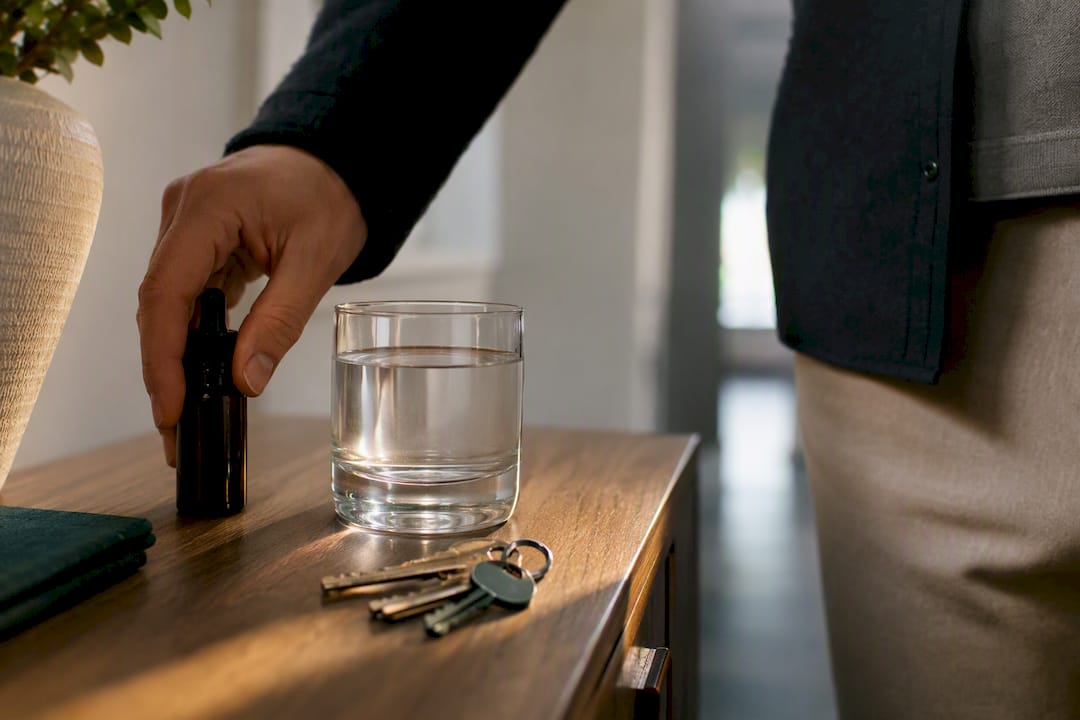
Pro Tip: Carry a low-dose CBD product, like a fast-acting tincture or a CBD-only vape, as your emergency brake. If a THC dose starts tipping into anxious territory, a small amount of CBD can take the edge off faster than just waiting it out.
Real Risks: Side Effects, Drug Interactions, and When to Stop
Even a careful approach carries real risk, and pretending otherwise does readers a disservice.
Acute side effects are the most common problem: racing heart, paranoia, a spike in self-consciousness that’s the opposite of what someone with social anxiety wants walking into a room. These tend to pass within a few hours as THC clears, but in the moment they can feel endless. Longer-term, regular high-dose use is associated with cannabis use disorder and, per the cohort data above, a higher likelihood of developing or worsening an anxiety disorder over time, particularly for people who started using as teenagers.
Drug interactions deserve more attention than they usually get. Cannabinoids are metabolized through the liver’s CYP450 enzyme system, the same pathway used by a long list of common medications, including many SSRIs and benzodiazepines prescribed for anxiety itself. That overlap can change how those medications are processed in your body. Combining cannabis with benzodiazepines or opioids also raises the risk of additive sedation, which is a bigger deal than it sounds, affecting coordination, memory, and reaction time well beyond what either substance would cause alone.
A short list of situations that call for real caution:
- Never drive or operate machinery while impaired, regardless of how in control you feel; impairment and self-perception don’t reliably match up.
- Anyone on prescribed psychiatric medication should talk to a doctor or pharmacist before combining it with cannabis, not after.
- Workplace drug policies and local regulations still apply even where recreational cannabis is legal, so know your employer’s stance before you assume it’s a non-issue.
- If cannabis use is escalating, if you need more to get the same calming effect, or if anxiety is getting worse rather than better over weeks of use, that’s a signal to stop and talk to a clinician rather than adjust the dose again.
None of this means cannabis is off the table for someone with social anxiety. It means treating it with the same seriousness you’d want a doctor to bring to any tool that can help or harm depending on how it’s used.
Jake’s Take on Evidence-First Cannabis Guidance and Say Less
The strongest evidence here doesn’t point to a blanket verdict, and that’s the point. A 2.14 odds ratio for adolescent risk and a 0.197 correlation for young adult cannabis problems are both real numbers, but neither one tells an individual reader what will happen to them. Jake reviews the article’s research and offers an editorial perspective grounded in that evidence, not personal testing claims.
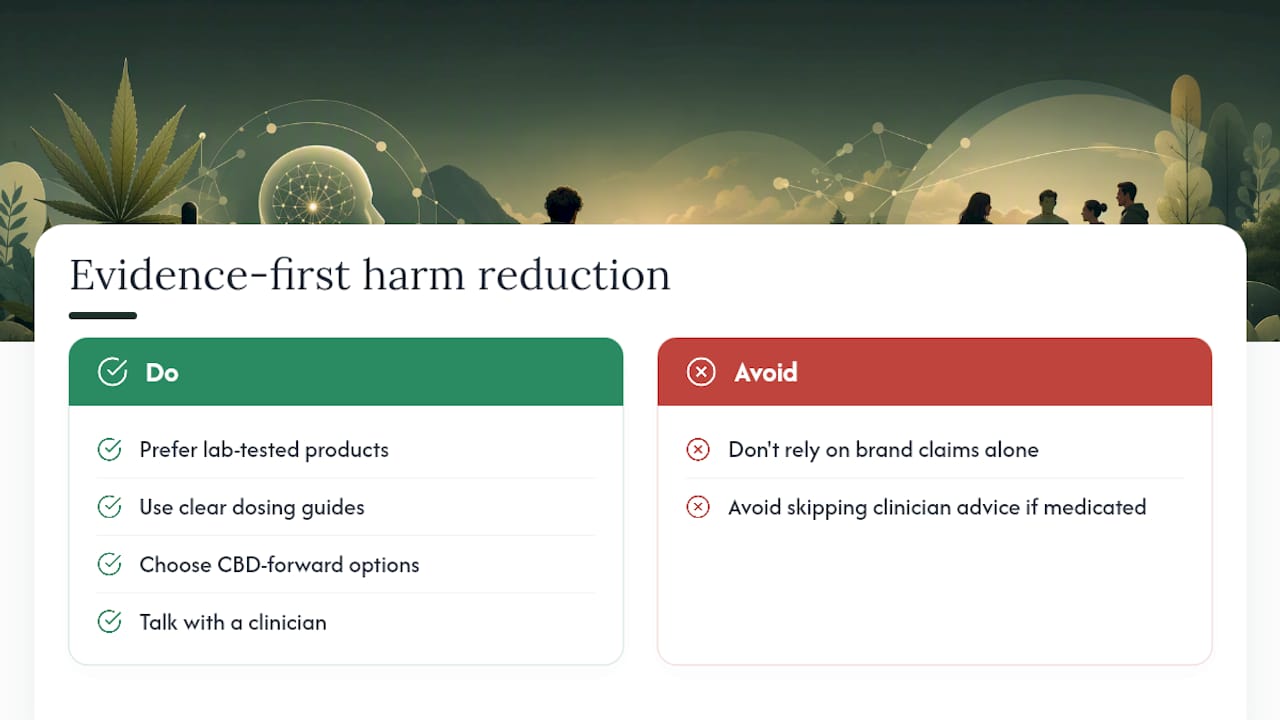
Cannabis brands can back up product claims with lab-tested potency and cannabinoid ratios, education on dosing, and curated CBD-forward options for people who want a lower-risk starting point, alongside guides like how to choose cannabis products that actually fit you and a beginner’s edible dosage guide that walk through the practical side of what the research above lays out.
None of this replaces a conversation with a clinician, especially for anyone with a diagnosed anxiety disorder or a prescription that might interact with cannabinoids. Lab-tested products and clear dosing information reduce the guesswork; they don’t replace medical judgment.
— Jake
Why Say Less Approaches This Differently
This dispensary takes an evidence-first approach rather than pushing whatever’s moving fastest off the shelf. Many products carry lab-verified potency and cannabinoid ratios, so when selecting CBD-forward or balanced options for social settings, customers have real numbers to consider instead of relying on strain names alone.

That matters most in the moment you’re standing in a dispensary trying to decide between three products that all look identical on the shelf. Our guide on how to choose cannabis products that actually fit you walks through reading lab labels and cannabinoid ratios before you buy, so the dosing framework covered above translates into an actual product decision rather than a shrug at the counter. Curated brands like Florist Farms and Hudson Cannabis offer flower and concentrates with transparent testing, which is the baseline anyone managing social anxiety around cannabis should insist on.
If you’re in The Bronx or greater NYC and ready to try a more conservative, CBD-leaning approach, browse the current menu at Say Less for same-day delivery or in-store pickup, and start with a product built for a low, controlled dose rather than whatever’s strongest on the shelf.
Sources
- Association between adolescent cannabis use and later anxiety disorder (systematic review)
- Cannabis use and social anxiety in young adulthood: A meta-analysis
- Effects of Different Cannabinoid Formulations on Anxiety-Related Disorders, and Tourette Syndrome: A Systematic Review and Meta-Analysis