
Which cannabinoid works best for sleep?
THC is the most effective cannabinoid for sleep onset. At low doses, it reduces the time it takes to fall asleep and helps you stay asleep longer. CBD complements THC by calming anxiety and reducing physical tension, without adding intoxication. CBN is gaining attention as a sleep aid, and a randomized placebo-controlled trial found oral CBN (25–100 mg) improved sleep quality comparably to 4 mg of melatonin, though the broader clinical evidence base for CBN remains thin.
Here is the short version of where the research lands:
- THC is the primary driver of sedation and faster sleep onset, especially at low doses (2–2.5 mg)
- CBD reduces anxiety and supports relaxation, making it a useful complement rather than a standalone sleep aid
- CBN shows real promise in recent trials but needs more large-scale human research before it earns a definitive ranking
- CBG has almost no published sleep-specific evidence yet
- Combinations of THC, CBD, and CBN tend to outperform any single cannabinoid used alone
- Strain type matters: indica-dominant strains with high myrcene content are the go-to for sedation
- Cannabinoids work best as a short-term, intentional sleep tool, not a nightly habit
No cannabinoid cures insomnia. They can make falling asleep easier and reduce nighttime waking, but the underlying causes of poor sleep need their own attention.
Table of Contents
- How cannabinoids affect your sleep biology
- THC, CBD, CBN, and CBG: what each one actually does for sleep
- Which cannabis strain relaxes you enough to sleep?
- Practical tips for using cannabinoids for sleep
- Side effects and risks you should know about
- What the evidence actually says: a verdict on cannabinoids for sleep
- What Saylessny recommends based on current evidence
- Saylessny has the lab-tested products to back your sleep routine
- Key Takeaways
How cannabinoids affect your sleep biology
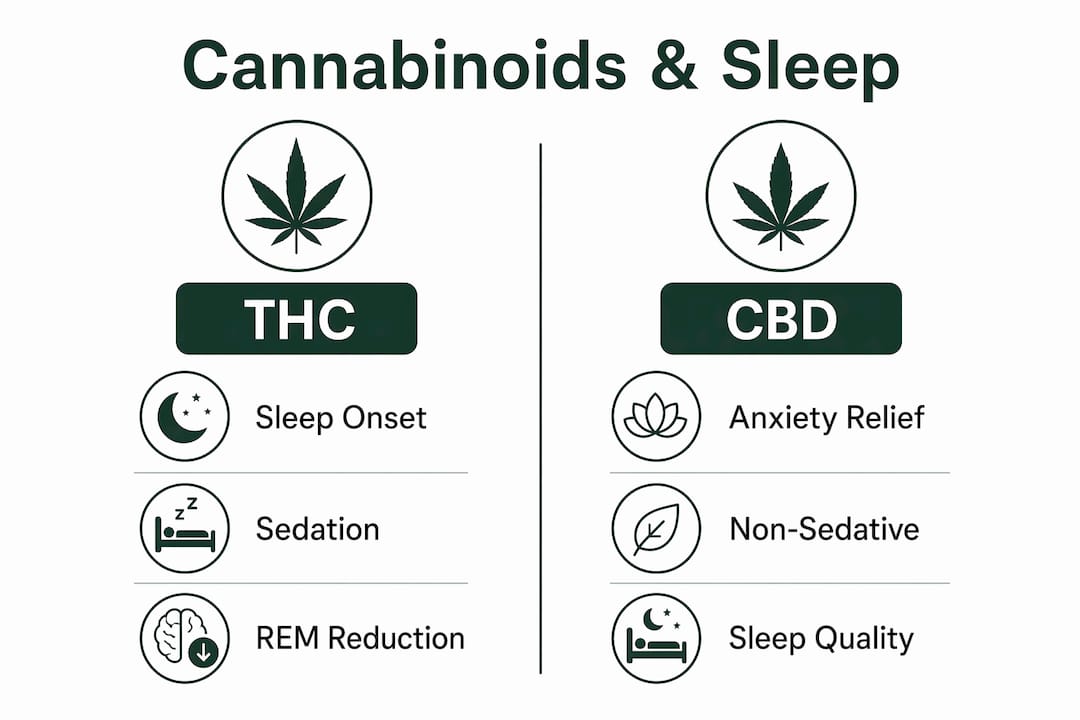
The endocannabinoid system (ECS) plays a direct role in regulating the sleep-wake cycle. CB1 receptors, concentrated in the brain and central nervous system, are the primary targets through which cannabinoids influence sleep. When THC binds to CB1 receptors, it produces sedation, reduces sleep onset latency, and can extend total sleep time. CBD works differently: it modulates anxiety pathways and supports the nervous system without binding strongly to CB1, which is why it calms without knocking you out.

The distinction between acute and chronic use is where things get complicated. Short-term THC use tends to shorten the time to fall asleep and reduce nighttime waking. With chronic nightly use, tolerance builds, the sedative effect fades, and sleep architecture can actually worsen over time. REM sleep, the stage most critical for memory and emotional processing, tends to decrease with regular THC use.
| Cannabinoid | Primary sleep mechanism | Effect on sleep onset | Effect on sleep architecture |
|---|---|---|---|
| THC | CB1 agonist, direct sedation | Reduces latency | May suppress REM with chronic use |
| CBD | Anxiety modulation, indirect | Minimal direct effect | May increase SWS + REM in some users |
| CBN | Partial CB1 agonist | Modest hypnotic effect | Increased NREM and REM in animal studies |
| CBG | Partial CB1/CB2 agonist | Unclear | Insufficient human data |
A CBD-terpene formulation (300 mg CBD plus eight terpenes) in a double-blind crossover trial increased slow-wave and REM sleep by a mean of 1.3% of total sleep time compared to placebo, with some participants gaining up to 48 minutes of restorative sleep per night. That is not a dramatic number for most people, but for someone with severe insomnia, 48 extra minutes of deep sleep per night is meaningful.
THC, CBD, CBN, and CBG: what each one actually does for sleep
THC
THC is the cannabinoid with the clearest, most direct sedative effect. It binds to CB1 receptors and produces drowsiness, reduces the time to fall asleep, and at low doses helps maintain sleep. The catch: THC at high doses can become stimulating rather than sedating, and chronic use suppresses REM sleep. The sweet spot for sleep is a low dose, typically 2–2.5 mg for cannabis-naive adults, taken well before bed.
CBD
CBD is not a sedative on its own. What it does is reduce anxiety and physical tension, which for many people is the actual barrier to sleep. A doctor at Northwell Health notes that “CBD can be supportive for stress and inflammation, but for actual sleep induction, THC tends to have more of an effect.” CBD becomes most useful when paired with THC, particularly in ratios like 2:1 (CBD to THC), which can soften THC’s psychoactive edge while preserving its sleep benefits.
CBN
CBN is a partial CB1 agonist with lower receptor affinity than THC. The marketing around CBN often overstates its potency. A thorough review published in PMC found that clinical evidence for CBN’s sleep effects is limited and largely dated, with most human studies from the 1970s and 1980s using small, non-diverse samples. That said, a 2024 randomized trial found oral CBN (25–100 mg) improved sleep disturbance, with no significant side effects, which is a genuinely encouraging result. Animal studies also show CBN increases both NREM and REM sleep, with effects lasting longer than zolpidem at certain doses. The picture is promising but not yet settled.
CBG
CBG has almost no published sleep-specific research. It interacts with CB1 and CB2 receptors and may have mild anxiolytic properties, but there is no clinical trial data supporting its use as a sleep aid. If you are choosing a cannabinoid specifically for sleep, CBG is not where the evidence points right now. You can learn more about how minor cannabinoids compare in terms of their mechanisms and current research status.
Which cannabis strain relaxes you enough to sleep?
Strain type is a real factor, though the indica-sativa distinction is less about genetics than it is about cannabinoid and terpene profiles. The practical difference still holds up in most cases.
- Indica strains are the traditional choice for sleep. They tend to carry higher myrcene levels, a terpene with sedating properties, and cannabinoid profiles that lean toward relaxation. If you are asking which cannabis strain relaxes most effectively before bed, indica-dominant options are consistently the answer. Terpene profiles like myrcene, linalool, and beta-caryophyllene all contribute to the calming effect.
- Sativa strains are generally more energizing. They tend to produce a more cerebral, uplifting effect that is counterproductive for sleep. Using a sativa at night is a common mistake for people new to cannabis.
- Hybrids sit in between. An indica-dominant hybrid can offer a balance of relaxation and mild euphoria, which some people find easier to tolerate than a pure indica’s heavier body effect. The key is knowing the terpene profile, not just the label.
Pro Tip: When shopping for a sleep strain, look at the terpene lab report, not just the indica or sativa label. A product with high myrcene and linalool content will generally be more sedating regardless of how it is classified.
Myrcene is the terpene most consistently linked to sedation. Linalool, also found in lavender, adds anxiolytic effects. Together, they amplify THC’s sleep-promoting properties through what researchers call the entourage effect.
Practical tips for using cannabinoids for sleep
Getting the most out of cannabinoids for sleep comes down to three variables: dose, timing, and delivery method. Most people get at least one of these wrong.
- Start at 2–2.5 mg THC. Doctors at Northwell Health recommend this as the starting point for cannabis-naive adults and older individuals. The goal, as one clinician puts it, is to “find the lowest effective dose that gently nudges the body into rest,” not to sedate yourself heavily.
- Edibles and tinctures over inhalation. Oral bioavailability for cannabis ranges from 4–20%, which is lower than inhaled forms, but the effect lasts longer and the dose is far more controllable. Inhaled cannabis can reach 56% bioavailability, which makes precise low-dose control much harder. For sleep, longer duration matters more than fast onset.
- Time it right. Take edibles 60–90 minutes before bed. Tinctures held under the tongue absorb faster, typically within 15–45 minutes. Smoking or vaping works within minutes but wears off faster, often before a full night’s sleep cycle completes.
- Track your response. Keep a simple log: what you took, how much, when, and how you slept. Cannabis affects people differently based on metabolism, body composition, and individual ECS variation. What works for someone else may not work for you.
- Use it temporarily. Cannabinoids work best as a short-term bridge, not a permanent nightly solution. Rotating off periodically helps prevent tolerance buildup and keeps the dose low.
A 2:1 CBD-to-THC ratio is a good starting point for anyone sensitive to THC’s psychoactive effects. It preserves the sleep benefit while reducing the risk of anxiety or next-day grogginess.
Side effects and risks you should know about
Cannabinoids for sleep are not risk-free, and the risks compound with regular use.
- Tolerance builds quickly. Chronic nightly cannabis use leads to diminished hypnotic effect, and users often increase their dose over time to compensate. That cycle tends to worsen sleep quality rather than improve it.
- REM sleep suppression. Regular THC use reduces time spent in REM sleep. Over weeks and months, this affects memory consolidation, emotional regulation, and cognitive sharpness.
- Next-day grogginess. Too high a dose, or taking an edible too late in the evening, can leave you foggy the next morning. This is especially common with high-THC edibles.
- Drug interactions. Cannabinoids are metabolized by the liver’s cytochrome P450 enzyme system, the same pathway used by many common medications including blood thinners, antidepressants, and anticonvulsants. If you take prescription medications, talk to a doctor before adding cannabinoids to your routine.
- Rebound insomnia. Stopping nightly cannabis after extended use often triggers a period of worsened sleep. This is one of the clearest signs that dependence has developed.
- Not suitable for everyone. People with a history of psychosis, adolescents, pregnant individuals, and those with certain cardiovascular conditions should avoid THC-containing products. Always consult a healthcare provider if you have an existing condition.
The risk profile for CBD alone is considerably milder. The CBD-terpene trial referenced earlier reported no adverse events, which aligns with CBD’s generally favorable safety record at therapeutic doses.
What the evidence actually says: a verdict on cannabinoids for sleep
THC remains the most clinically supported cannabinoid for sleep onset and duration, particularly at low doses taken before bed. CBD’s role is supportive: it reduces the anxiety and physical tension that prevent sleep, and it works best alongside THC rather than alone. CBN is the most interesting emerging option, with a well-designed 2024 trial showing it can improve sleep disturbance scores comparably to melatonin at doses of 25–100 mg, but the overall evidence base is still thin enough that it should be treated as a promising supplement rather than a proven therapy.
THC-CBD combinations have the strongest combined evidence. Clinical studies show improved sleep quality and duration in adults with insomnia when both cannabinoids are used together, and CBN-CBD-terpene formulations add further promise for certain patient profiles. No single cannabinoid is a cure, and none of them address the root causes of chronic insomnia.
Behavioral therapies, particularly Cognitive Behavioral Therapy for Insomnia (CBT-I), remain the gold standard treatment for chronic sleep disorders. CBT-I outperforms cannabis in long-term outcomes and does not carry the tolerance or dependency risks. The most practical approach for most people: use cannabinoids as a short-term support tool while addressing the behavioral and environmental factors driving poor sleep.
What Saylessny recommends based on current evidence
Saylessny’s position on cannabis for sleep is grounded in what the clinical research actually supports, not what sounds good on a product label.
- Avoid nightly use from the start. The tolerance cycle is real. Using cannabis every night for sleep is one of the fastest ways to make it stop working, and stopping abruptly often makes sleep worse temporarily.
- Dose low and stay consistent. Starting at 2–2.5 mg THC and tracking your response over several nights gives you the data to adjust intelligently. Chasing a stronger effect by doubling the dose is where most people go wrong.
- CBT-I first, cannabis second. If you have chronic insomnia, behavioral therapy addresses the cause. Cannabis can help in the short term while you work on the underlying patterns, but it should not be the whole plan.
- Lab-tested products matter. Unlabeled or unverified cannabis products make dosing guesswork. Saylessny carries only lab-tested, legally compliant products, so the THC and CBD content on the label reflects what is actually in the product.
- Know your terpene profile. For sleep specifically, look for products with myrcene and linalool in the terpene report. These compounds amplify the sedating effects of THC and CBD. You can explore Camino sleep gummies and similar formats designed with sleep-specific terpene profiles in mind.
Pro Tip: If you wake up groggy after an edible, the dose is too high or you took it too late. Try cutting the dose in half and taking it 90 minutes earlier. Most grogginess issues resolve with those two adjustments.
The most common mistake people make is treating cannabis like a prescription sleep medication: take it every night, increase the dose when it stops working, and never address the underlying problem. Used intentionally, with the lowest effective dose and periodic breaks, cannabinoids can genuinely support better sleep without creating new problems.
Saylessny has the lab-tested products to back your sleep routine
If you are ready to put this guidance into practice, Saylessny makes it straightforward. As The Bronx’s licensed recreational dispensary, Saylessny carries a curated selection of lab-tested flower, edibles, tinctures, and vapes from brands with verified cannabinoid and terpene profiles. Every product on the menu has been tested, so the THC and CBD content you see is what you actually get.

For sleep specifically, the indica-dominant flower from Hudson Cannabis and the edible formats from Munchkins Cannabis are worth exploring. Both offer products with the terpene profiles and cannabinoid ratios that align with what the research supports for sleep. Saylessny offers same-day delivery across NYC and in-store pickup at the Bronx location, so you are not waiting days to try something new. Browse the full menu at saylessny.com and filter by effect to find sleep-oriented options that fit your tolerance and preferences.
Key Takeaways
THC is the most clinically supported cannabinoid for sleep onset, and it works best at low doses combined with CBD, while CBN shows real promise but needs more large-scale human trials to confirm its standing.
| Point | Details |
|---|---|
| THC leads for sedation | Low-dose THC reduces sleep onset latency and is the most evidence-backed cannabinoid for sleep. |
| CBD supports, not sedates | CBD reduces anxiety and complements THC; a 2:1 CBD-to-THC ratio suits those sensitive to psychoactive effects. |
| CBN is promising but early | A 2024 trial found 25–100 mg oral CBN improved sleep disturbance comparably to 4 mg melatonin, but broader evidence is still limited. |
| Chronic use backfires | Nightly cannabis use builds tolerance, suppresses REM sleep, and can worsen insomnia over time. |
| Saylessny for lab-tested options | Saylessny carries verified, lab-tested sleep-oriented products with accurate cannabinoid and terpene labeling for informed dosing. |