
Keep edibles cool, dark, airtight, and treat perishable ones like the food they actually are. That single rule covers most of what goes wrong: heat and light break down cannabinoids, moisture invites mold, and air turns fats rancid. One more thing before anything else: keep child-resistant packaging intact and labeled, because a gummy that looks like candy is exactly that risk to a kid or pet.
Four things to do right now with whatever edibles are in your kitchen:
- Keep products in their original packaging whenever possible
- Refrigerate anything perishable, like baked goods or dairy-based drinks
- Vacuum-seal items you’re storing for more than a month
- Label anything you repackage with the dose and the date
Key Takeaways
Proper edible storage means treating food safety as the deciding factor, keeping products cool, dark, and airtight, and preserving original labels for dose and freshness tracking.
| Point | Details |
|---|---|
| Food safety comes first | Mold or off-smells mean discard, regardless of how much potency might remain. |
| Keep it cool and dark | Store below 70°F away from light to slow cannabinoid degradation. |
| Match storage to edible type | Gummies tolerate room temperature; baked goods and beverages need refrigeration. |
| Freeze for long-term potency | Vacuum-seal, label with dose and date, and thaw in the fridge to limit condensation. |
| Preserve original packaging | Child-resistant containers protect dosing info and prevent accidental ingestion. |
Table of Contents
- Why Proper Edible Storage Comes Down to Two Separate Clocks
- Core Rules for Keeping Edibles Fresh and Potent
- How Storage Changes by Edible Type
- When Should You Refrigerate or Freeze Edibles?
- How Long Do Edibles Actually Last?
- Keeping Edibles Safe From Accidental Ingestion
- Is This Edible Still Good? How to Tell
- Where to Find Lab-Tested Edibles You Can Trust
- A Note From the Dispensary Floor
- Frequently Asked Questions
- Sources
Why Proper Edible Storage Comes Down to Two Separate Clocks
There are two timelines running at once, and they don’t move at the same speed. One is food safety: how long before mold, bacteria, or rancid fat make an edible genuinely unsafe. The other is potency: how long before THC and other cannabinoids degrade enough that the edible just doesn’t hit the way it used to. Food safety is the one that actually matters for deciding whether to eat something.
Heat speeds up both clocks. Light and oxygen degrade cannabinoids through oxidation, and humidity feeds mold and turns crisp candy into a sticky mess. A 3 to 6 month potency window is typical for properly stored edibles, since THC degrades slowly compared to how fast a lot of food spoils.
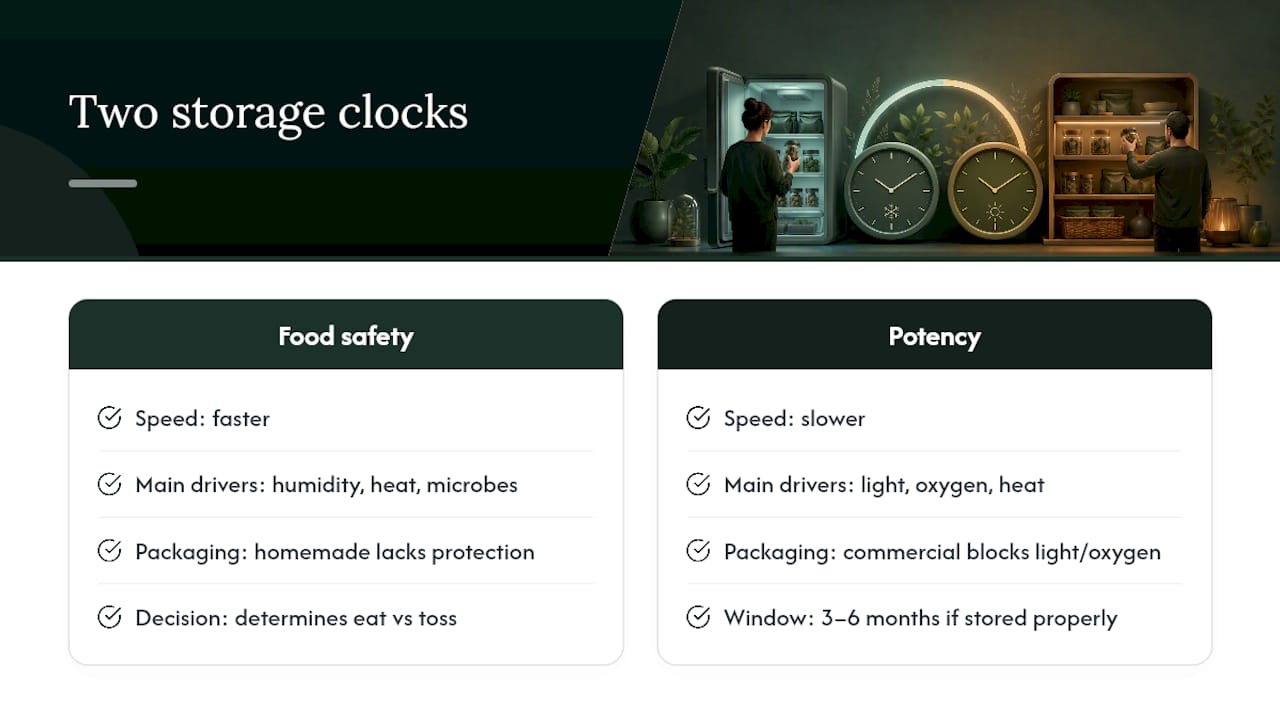
Commercially packaged edibles and homemade ones don’t play by the same rules, either. A licensed producer’s packaging is engineered to block light and oxygen and usually carries a best-by date. A batch of homemade cannabutter cookies has none of that protection, which means the food safety clock runs faster and matters more.
Core Rules for Keeping Edibles Fresh and Potent
Most storage mistakes come down to ignoring one of four variables: temperature, light, air, and humidity.
- Keep it below 70°F and stable. Big temperature swings, like a countertop near a stove or a car trunk in summer, do more damage than steady warmth. Consistency matters as much as the number itself.
- Store in the dark. UV light breaks down THC over time, so a cabinet or drawer beats a windowsill every time.
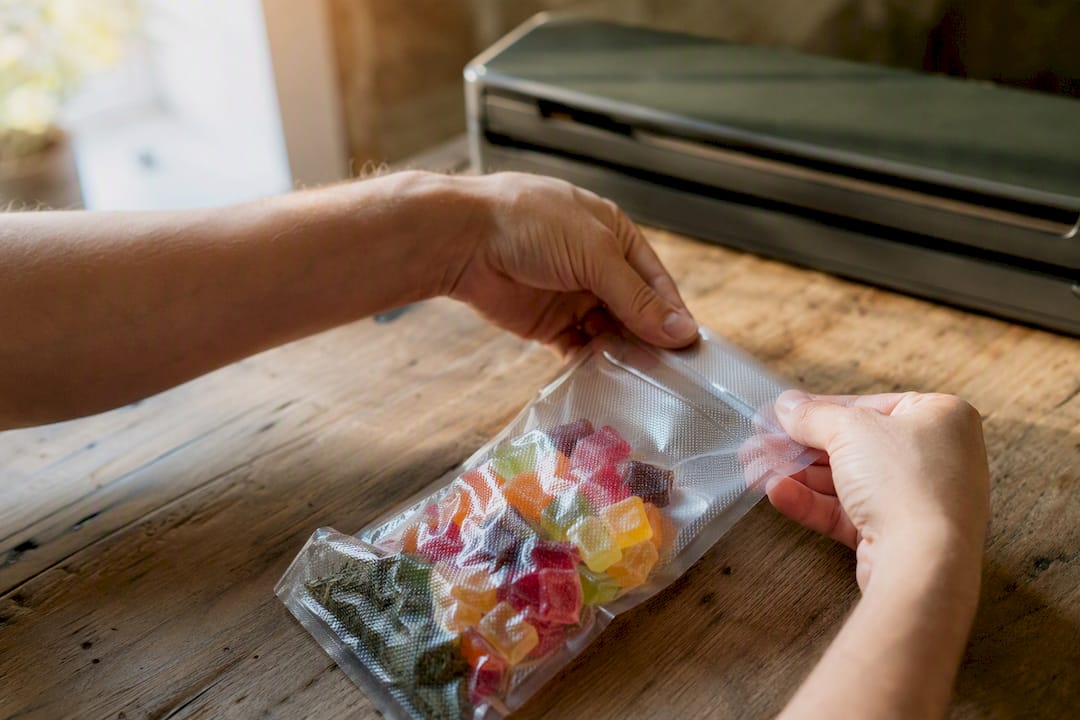
- Go airtight. Oxygen drives cannabinoid oxidation and fat rancidity, so mason jars, vacuum-sealed bags, or resealable containers with a tight gasket all outperform a folded-over bag clipped shut.
- Control humidity. Gummies and hard candies absorb moisture and turn sticky or grow mold in a damp kitchen. A food-grade silica packet dropped into the jar solves this cheaply.
Refrigeration and freezing help, but they come with a catch: condensation. Moving a container from cold to warm air fast causes moisture to form inside the packaging, which damages texture and can invite mold on baked goods. Keep containers sealed while they come to room temperature, and you avoid most of that problem entirely.
Pro Tip: If you’re vacuum-sealing gummies for long-term storage, toss in a small silica packet before sealing. It absorbs whatever residual moisture gets trapped and keeps the texture from turning gummy-on-gummy sticky six months later.
How Storage Changes by Edible Type
Not every edible ages the same way, and treating a chocolate bar like a bag of gummies is how you end up with a grainy, bloomed mess in the freezer.
- Gummies: Room temperature in an airtight container works fine short-term. Refrigerate for anything past a month, but freeze only if you’re prepared for a slightly firmer, less chewy texture on the other end.
- Chocolate: Temperature swings are the enemy here. Constant moving between fridge and counter causes fat bloom, that dusty white film that’s harmless but looks off-putting. If freezing for the long haul, double-wrap in plastic and foil to block moisture and odor transfer.
- Baked goods: Cool completely before packing, or trapped steam creates condensation and mold risk fast. Portion into individual servings, refrigerate for short-term use, and freeze anything you won’t eat within a week.
- Oils and tinctures: Follow the label first. Most do best in a dark, cool cabinet rather than the fridge. Alcohol-based tinctures generally shouldn’t be frozen, since the alcohol can separate or the bottle can crack.
- Beverages: Refrigerate after opening, and treat any separation, cloudiness, or off-smell as a sign to toss it rather than shake it up and hope.
- Capsules: Keep them in the original bottle, sealed and away from humidity. A bathroom medicine cabinet is actually one of the worst spots because of the moisture from showers.
When Should You Refrigerate or Freeze Edibles?
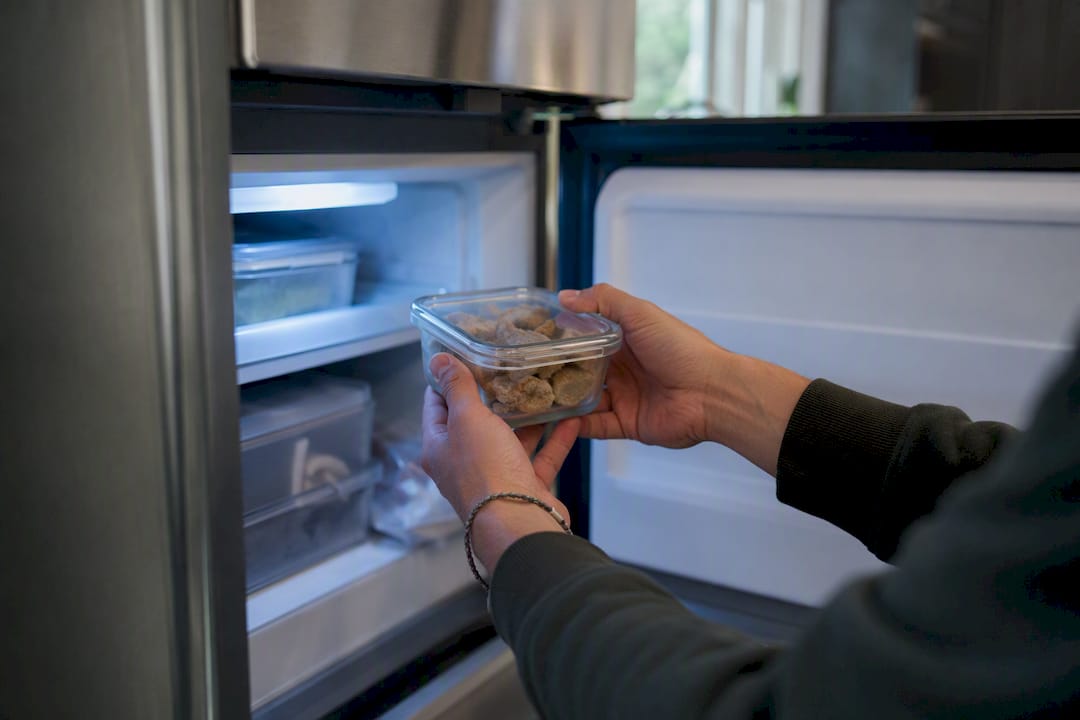
Refrigerate anything perishable, meaning baked goods, dairy-infused drinks, or homemade items without preservatives. Freeze when you’re storing something for more than a month or two and potency preservation matters more than perfect texture.
- Cool completely before packing anything, especially baked goods, to prevent trapped steam.
- Wrap individually so you can grab one portion without exposing the rest to air.
- Vacuum-seal or use heavy-duty freezer bags, pressing out as much air as possible before sealing.
- Label with dose and date directly on the bag or container, not just on a sticky note that’ll fall off.
- Thaw in the refrigerator, not on the counter, since a slow temperature change reduces condensation that would otherwise soak into the product.
Avoid refreezing something once it’s thawed. Each cycle stresses the fat and sugar structure further, and that’s on top of the moisture damage.
Pro Tip: Freezing genuinely is the best option for long-term potency, but it’s a trade-off. Cannabutter freezes beautifully with almost no downside, while a gummy loses some of its chew. Pick freezing when the alternative is the edible going bad before you’d finish it otherwise.
How Long Do Edibles Actually Last?
Shelf life depends heavily on what you’re storing and how it’s packaged, but here’s a realistic breakdown:
- Sealed gummies and hard candies: 6 to 12 months at room temperature in a cool, dark spot.
- Baked goods: A few days at room temperature, a couple of weeks refrigerated, and a few months frozen.
- Chocolates: Several months if kept away from heat and humidity swings.
- Oils and tinctures: Often a year or more unopened, shorter once opened and exposed to air repeatedly.
- Beverages: Days to a couple of weeks once opened, similar to any perishable drink.
- Cannabutter: Freezes well for months when portioned properly.
A useful mental model: under a month is short-term, one to six months is medium-term, and beyond that counts as long-term storage where you want to disturb the product as little as possible. None of these ranges matter, though, if the edible shows visible mold or smells off. Spoilage always overrides the calendar.
Keeping Edibles Safe From Accidental Ingestion
Original packaging exists for a reason beyond marketing. It’s usually child-resistant, and it carries the dose, batch number, and expiration info you’d otherwise lose the moment you dump gummies into a random jar.
- Keep edibles in their original container whenever you can, especially anything with a child-resistant cap.
- If you do transfer to a new container, label it clearly with the dose per piece, the date, and a plain “contains cannabis” warning.
- Store separately from regular snacks, ideally in a locked box or a high shelf a curious kid or houseguest wouldn’t think to check.
- Hold onto batch or lot numbers. If a product ever gets recalled, that number is how you’d know it applies to you.
Is This Edible Still Good? How to Tell
Trust your senses before you trust the calendar. A few clear signs mean toss it, no debate:
- Visible mold, fuzzy spots, or an unusual color change
- A sour, rancid, or “off” smell, especially in chocolate or baked items
- Packaging that’s swollen, leaking, or torn
Some changes are cosmetic, not dangerous. Sugar crystallizing on a gummy’s surface or a dusty white bloom on chocolate looks unappealing but usually just means a texture or storage issue, not spoilage. When in doubt: if it smells wrong or shows mold, it goes in the trash regardless of how much THC might still be in it.
Where to Find Lab-Tested Edibles You Can Trust
Good storage only works if you’re starting with a quality product. Lab-tested edibles with clear labeling take the guesswork out of dosing and shelf life, since the packaging tells you exactly what you’re working with from day one.
- Browse lab-tested edible options with verified potency and clear expiration guidance.
- Check dosing details against a beginner-friendly mg chart before deciding how to portion and store leftovers.
- Read up on realistic edible expiration timelines for the specific product type you bought.
- Save your batch number and reach out to Saylessny directly if you have questions about how a specific product should be stored.
A Note From the Dispensary Floor
Most storage mistakes I’ve seen aren’t about ignorance, they’re about convenience. Someone tosses gummies in a junk drawer because the original bag is bulky, and three months later they’re wondering why the edible tastes off. The fix is almost always boring: keep the label, keep it airtight, keep it out of the sun. If you’re buying from Saylessny, check the product page for manufacturer storage notes before you improvise your own system.
Frequently Asked Questions
What’s the best way to keep edibles fresh long term?
Store them cool, dark, and airtight, and freeze anything you won’t finish within a month or two. Vacuum-sealing before freezing gives the best protection against both moisture and oxygen.
Do edibles need to be refrigerated?
Only perishable ones, like baked goods or dairy-based beverages. Gummies, chocolates, and tinctures generally do fine in a cool, dark cabinet unless you’re storing them for several months.
Can you freeze cannabis gummies?
Yes, though the texture usually gets firmer and slightly less chewy. Freezing is worth it if potency matters more to you than a perfect chew, especially for gummies you won’t eat within a couple months.
How can you tell if an edible has gone bad?
Look for mold, a sour or rancid smell, or packaging that’s swollen or leaking. Cosmetic changes like sugar crystals on a gummy or a white film on chocolate usually aren’t dangerous, just a sign of storage stress.
Does storage affect how strong an edible is?
Yes. Heat, light, and oxygen all speed up cannabinoid breakdown, which is why properly stored edibles retain potency for roughly 3 to 6 months while poorly stored ones can weaken sooner.
Sources
- Cannabis Edible Shelf Life and Storage Guide | Learn | This Is Why I’m High
- Do Edibles Expire? Shelf Life, Potency & Safety Explained — Leafly
- Do Edibles Expire? Shelf Life, Potency & Safety Explained (2026) — MMJHealth