
An infused pre-roll is a rolled joint made from ground flower combined with an added cannabis concentrate, either mixed into the flower, packed into a core, coated on the outside, or some blend of all three. The practical result is higher THC per gram than a standard pre-roll, a different burn, and a stronger, sometimes faster-hitting experience. That extra potency is the whole point, but it also means pacing yourself matters more than it does with regular flower.
TL;DR:
- Infused pre-rolls often contain higher THC levels than standard pre-rolls, sometimes exceeding 40%, which results in faster and stronger effects.
- The production method—mixed-in, cored, coated, or hybrid—significantly influences burn behavior, flavor, and dosing predictability.
- Concentrates used in infused joints vary from distillate, which is cost-effective and consistent, to live resin and rosin, which preserve flavor and terpene profiles but cost more.
- A single infused joint can deliver several hundred milligrams of THC, increasing the risk of overconsumption and stronger intoxication than regular flower.
- Always verify lab test results, including a certificate of analysis and milligram THC count, before purchasing infused pre-rolls to ensure quality and accurate potency.
Table of Contents
- How Infused Pre-Rolls Differ From Regular Pre-Rolls
- How Infused Pre-Rolls Are Made: Mixed-In, Cored, Coated, and Hybrid Methods
- Concentrate Types Used in Infused Pre-Rolls
- Effects, Dosing, and Safety With Infused Pre-Rolls
- How to Choose Infused Pre-Rolls at the Dispensary
- Why Lab-Tested Infused Pre-Rolls Matter More Than the Marketing
- Where to Find Lab-Tested Infused Pre-Rolls in NYC
- Sources
How Infused Pre-Rolls Differ From Regular Pre-Rolls
Standard flower pre-rolls typically test in the 15% to 25% THC range, depending on the strain and cultivation quality. Infused versions routinely have notably higher THC content once concentrate is factored in, sometimes reaching very high potency translating to a large amount of THC in a single joint.
That gap changes more than the number on the label. Concentrates burn differently than flower, which shifts onset, peak intensity, and how long the high lasts. Here’s what a consumer actually notices when switching from standard to infused:
- Onset: Infused sticks often hit faster and harder, especially with concentrate near the surface or mixed evenly throughout.
- Flavor: Concentrate-heavy joints can taste more intense (or more muted, depending on the extract) than pure flower.
- Burn behavior: Poorly made infused pre-rolls are prone to canoeing (uneven burning down one side) and harsher smoke if concentrate saturates the paper unevenly.
- Price per stick: Infused pre-rolls usually cost more, but the price per milligram of THC can actually be competitive once you do the math against buying flower and concentrate separately.
How Infused Pre-Rolls Are Made: Mixed-In, Cored, Coated, and Hybrid Methods
Manufacturers use a handful of core techniques, and the method matters almost as much as the concentrate itself for how the final joint smokes. According to Weedmaps’ breakdown of infusion methods, placement changes burn rate, flavor release, and how evenly THC hits you draw after draw.
- Mixed-in infusion: Concentrate, often distillate or kief, gets blended directly into the ground flower before rolling. This tends to produce the steadiest, most predictable burn.
- Cored or “worm” infusion: A rope of concentrate (frequently live resin or hash oil) runs through the center of the joint like a wick. Intensity usually ramps up as the joint burns down and reaches the core.
- Outside coating or dusting: The rolled joint gets coated in concentrate, then rolled in kief for texture. This method delivers a strong initial hit but can burn hotter and harsher.
- Hybrid or stacked methods: Some premium brands combine two techniques, such as a cored joint that’s also kief-dusted, for maximum potency per stick.
Pro Tip: A joint that burns unevenly or tunnels down one side (canoeing) often signals concentrate that wasn’t distributed properly, not a strain problem. Check for a visible, consistent coating and ask if a certificate of analysis (COA) is available before buying.
Even distribution generally means more predictable dosing draw to draw, while cored designs give you a slower ramp that some people prefer for social smoking.
Concentrate Types Used in Infused Pre-Rolls
The concentrate determines flavor, potency ceiling, and price more than almost any other variable. A 2025 study on extraction methods found measurable differences in how well solventless extracts preserve terpenes compared to distillate, which explains why some infused joints taste like the original strain and others taste flatter but hit harder.
- Distillate: Nearly pure THC with terpenes stripped out during processing; cheap, potent, and consistent, but flavor is usually added back synthetically.
- Live resin and live rosin: Extracted to preserve the plant’s original terpene profile; pricier, but flavor and “entourage” character are noticeably stronger.
- Kief: The trichome dust sifted from dried flower; moderate potency, often used as an outer coating.
- Hash: Pressed kief or resin, mid-range potency with a more traditional smoke.
- THCa diamonds: Crystallized THC that can test above 90% potency on its own, often paired with a terpene sauce for flavor.
Distillate wins on cost and dosing consistency. Rosin and live resin cost more but preserve the terpenes that give a strain its actual character, which is the tradeoff between chasing a number and chasing an experience.
Effects, Dosing, and Safety With Infused Pre-Rolls
A standard pre-roll might deliver somewhere around 100 to 200 milligrams of total THC in the whole joint, spread across a 20% THC gram of flower. An infused stick testing at 40% with concentrate added can carry several hundred milligrams of THC in a single pre-roll, meaning a few draws can equal what used to take half a joint.
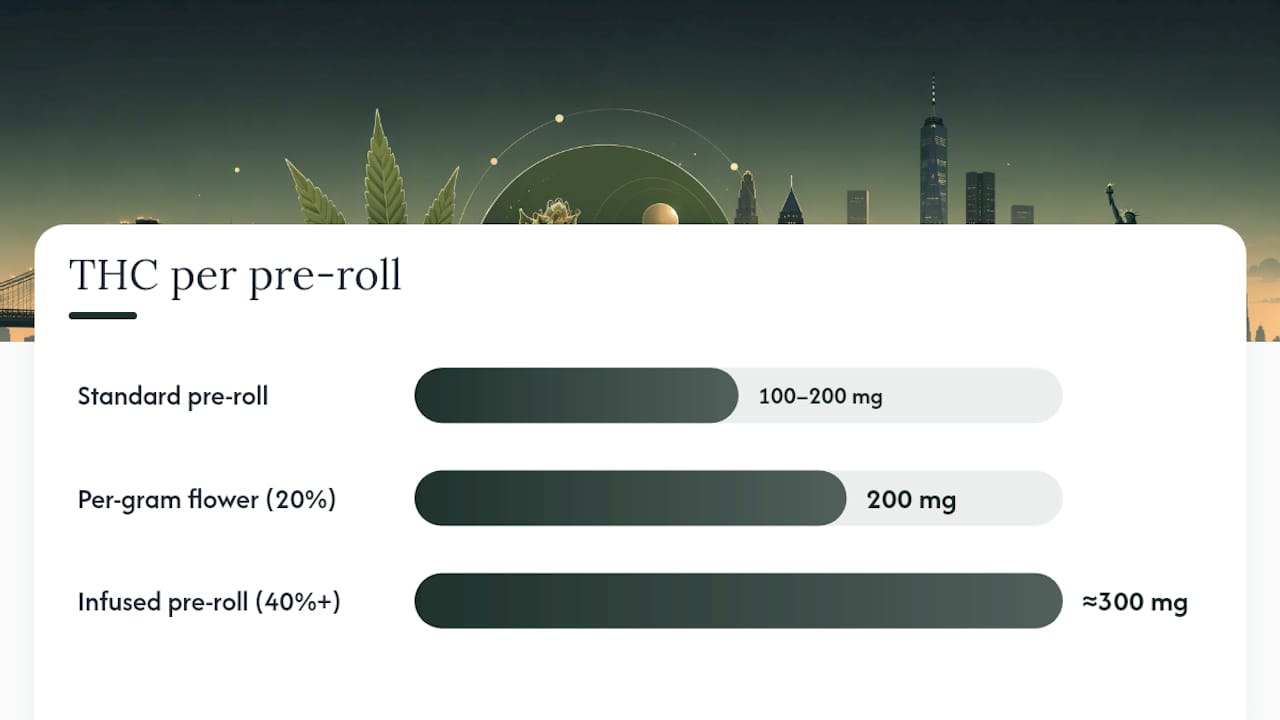
That difference isn’t just about quantity. Concentrates produce faster blood-THC peaks and higher intoxication ratings than flower alone, and peer-reviewed research confirms concentrate use is linked to stronger subjective highs compared to smoking flower at similar THC percentages. In practice, that means the “wait and see” approach matters more with an infused joint than it does with regular flower.
A few rules make infused pre-rolls safer to enjoy; for helpful advice, consult this CBD usage tips checklist for safe, effective wellness.
- Start small. Take one or two draws, then wait several minutes before deciding whether to continue.
- Share when possible. A single infused stick can reasonably serve two or three people at a lower-tolerance dose.
- Know your tolerance. Budget a rough milligram target per session rather than smoking to a fixed number of joints.
- Never drive impaired. The CDC warns that cannabis use impairs driving and that higher-potency products raise that risk, and driving after use is never safe, regardless of experience level.
If you overconsume, the standard advice applies: stay hydrated, sit somewhere comfortable, and let it pass. It will.
How to Choose Infused Pre-Rolls at the Dispensary
A reliable infused pre-roll should list its lab results plainly. Check the label or ask a budtender for these five things before buying:
- Certificate of analysis (COA) from a licensed lab
- Milligrams of THC per stick, not just a percentage
- Net weight of the product
- Concentrate type used (distillate, rosin, live resin, kief)
- Batch number for traceability
Pro Tip: If a product is labeled “infused” with no mg-THC number and no COA available, treat that as a red flag. A suspiciously low price on a joint claiming 40%+ potency usually means the testing or the concentrate claim doesn’t hold up. Choose distillate when you want predictable, budget-friendly potency, and reach for live resin or rosin when flavor and strain character matter more than raw strength.
Why Lab-Tested Infused Pre-Rolls Matter More Than the Marketing
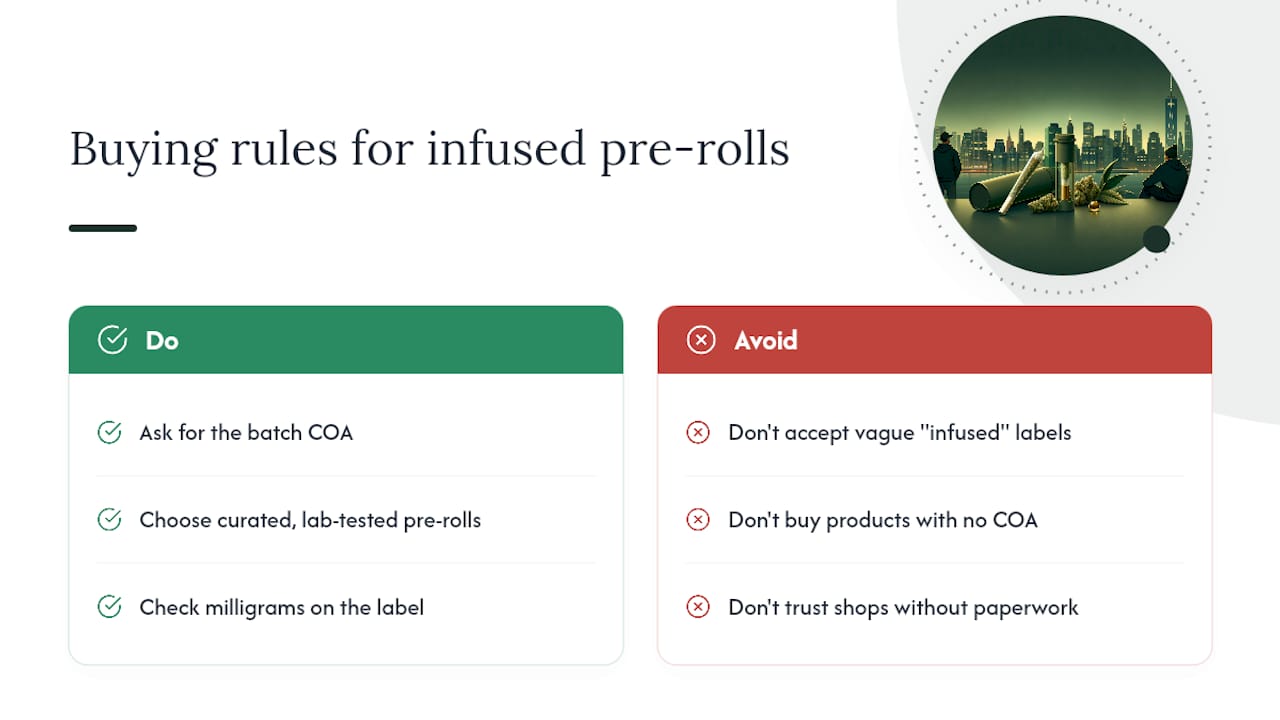
Infused pre-rolls vary wildly between brands, and the biggest risk isn’t the concentrate itself, it’s not knowing what’s actually in the joint. Saylessny carries curated, lab-tested infused pre-rolls specifically because potency claims without a COA are guesswork dressed up as a product spec.
Lab testing catches inconsistent potency, contamination, and mislabeled concentrate content before it reaches a shelf, which is exactly the variability that makes infused joints unpredictable in the first place. When you’re buying, ask for the batch’s COA and don’t settle for a vague “infused” label with no milligram figure attached. A dispensary that can’t produce that paperwork on request isn’t one worth trusting with a concentrate-heavy product.
— Jake
Where to Find Lab-Tested Infused Pre-Rolls in NYC
Saylessny stocks infused pre-rolls that skip the guesswork on potency, with COAs available for the concentrate-heavy brands on the menu, including CRU Cannabis’s infused lineup, which pairs live resin and rosin builds with clear mg-THC labeling per stick.

That matters most for infused products, where a mislabeled concentrate or missing COA turns a strong joint into an unpredictable one. Every infused pre-roll on the dispensary menu ships with lab data attached, whether you’re picking up locally or having it delivered same-day across NYC. If you’re newer to infused options and want help matching potency to your tolerance, the guide to choosing cannabis products breaks down how to read labels before you order. Browse the current infused pre-roll selection and place an order for pickup or delivery today.
Sources
- What are infused pre-rolls and how are they made? | Weedmaps
- NIDA — Marijuana concentrates factsheet
- CDC — Health effects of cannabis
- PubMed study on cannabis concentrates and subjective effects