
Flower grades like “top shelf,” “mids,” and “smalls” are marketing terms each dispensary defines for itself, not a regulated scale. The one rule worth remembering: check the certificate of analysis (COA) for total terpene percentage and contaminant results, confirm the harvest or pack date, then trust your nose and eyes at the counter. Skip that, and you’re buying a label, not a product.
TL;DR:
- The quality of flower grades depends more on harvest and curing practices than on appearance or tier labels like top shelf or mids.
- Checking the batch-specific COA for terpene percentage, contaminant results, and harvest date offers more accurate insight into potency than relying solely on the grade.
- Proper storage in a cool, dark, airtight container can preserve terpene aroma and quality for weeks or months after purchase.
- Faster, controlled-atmosphere drying and careful trimming improve flower potency and flavor, reducing the risk of mold and terpene loss.
- Dispensaries that prioritize lab-tested data and batch traceability provide more reliable product quality than those relying on marketing labels alone.
Table of Contents
- Understanding Flower Grades: Top Shelf, Mids, and Smalls
- How to Read a Cannabis COA Without Wasting Time
- What to Ask and Check Before You Buy
- Why Drying and Curing Change a Flower’s Grade
- Storing Flower So It Stays Premium
- How Say Less Handles Grades and Lab Transparency
- Skip the Marketing, Order With the Data
- The Real Problem With Grading Systems
- Sources
Understanding Flower Grades: Top Shelf, Mids, and Smalls
There’s no government agency stamping “top shelf” on a jar. Every dispensary sets its own internal grading, which is why the same strain can sit in the premium case at one shop and the value bin at another. Grade labels aren’t standardized or regulated anywhere, so understanding flower grades starts with treating every tier name as a seller’s shorthand, not a promise.
That said, the terms map to real, observable differences most of the time:
- Top shelf / premium: Dense, well-formed colas with heavy trichome coverage, hand-trimmed, and typically backed by strong terpene numbers on the COA.
- Mids: Solid mid-size buds, decent trichome presence, often machine-trimmed, with average potency and terpene content.
- Value / smalls / popcorn: Smaller buds broken off during processing of larger colas, often from the exact same plant and batch as the top-shelf product next to it.
- Shake / trim: Loose leaf and bud fragments that fell off during handling, best suited for pre-rolls or edibles rather than smoking on their own.
Here’s the part that trips people up: appearance tells you about cosmetics, not chemistry. A dense, frosty-looking bug can still test low on terpenes if it was dried too fast or stored badly. And a batch of smalls can carry identical potency and terpene numbers to the top-shelf flower it was trimmed from, because it came off the same plant. If a budtender confirms the smalls share a batch number with the premium flower, you’re often looking at the same weed for less money.
The physical grade categories are useful for setting expectations. They’re a starting point, not a verdict. The COA is what tells you whether the jar backs up the label.
How to Read a Cannabis COA Without Wasting Time
You don’t need a chemistry degree to read a COA. You need four numbers and a date, checked in about ninety seconds.
- Total terpene percentage. This is often a better first filter than THC. Aroma and flavor come from terpenes, and they’re harder to fake than a potency number. A rough industry heuristic: terpene content above roughly 2% reads as genuinely aromatic, while anything above 3% is uncommon and worth noticing.
- Total cannabinoid content, not just THC. THC percentage alone is a weak predictor of effect. One cross-market analysis found higher THC correlates with higher price but not consistently with stronger reported intoxication. A full cannabinoid panel, including minor compounds like CBG and CBN, gives a fuller picture than one headline number.
- Contaminant screens. Insist on results for microbials, pesticides, heavy metals, and residual solvents. Microbial testing in particular catches mold and bacteria that cosmetic inspection can miss entirely, which is why independent microbial testing standards matter as much as the potency panel.
- Batch ID, lab name, and pack date. A COA tied to a specific batch number, from an accredited lab, dated recently, is worth far more than a generic sheet with no traceability.
Pro Tip: If a budtender can’t produce a batch-matched COA within a minute of asking, that’s your answer. Move on or negotiate the price down.
Trichome integrity and cure quality explain sensory experience more reliably than THC alone, according to a widely cited comparison of top-shelf and mid-tier cannabis. The COA gives you the data half of that equation.
What to Ask and Check Before You Buy
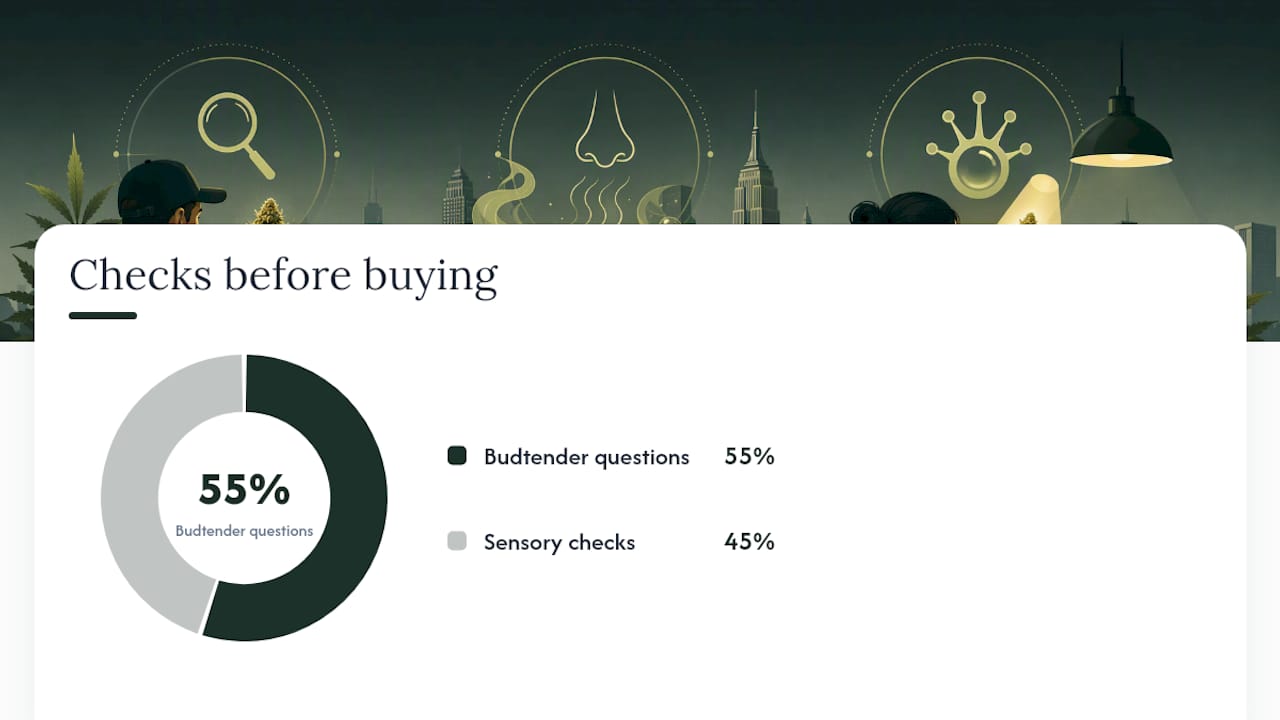
Six questions and five checks turn “flower grading explained” into a routine you can run in under two minutes at any counter.
Ask the budtender:
- Can I see the COA for this specific batch?
- What’s the harvest date, and when was it packaged?
- Was this hand-trimmed or machine-trimmed?
- How was it cured, and for how long?
- Do the smalls or popcorn come from this same batch?
- How is it stored here, and how long has this batch been on the shelf?
Check with your own senses:
- Smell: A sharp, distinct aroma signals live terpenes. Faint or grassy smell suggests degradation or a rushed dry.
- Trichomes: Frosty, glassy coverage under light indicates a well-preserved crop. Learning to spot what trichomes actually look like makes this check almost instant.
- Springiness: Gently squeeze a bud. It should have slight give, not crumble to dust or feel damp and spongy.
- Trim consistency: Even trimming across the batch suggests careful processing, not corner cutting.
- Off odors: Any hint of hay, ammonia, or mustiness is a mold or improper cure warning. Walk away.
If a shop can’t answer the COA question, that’s not a dealbreaker on its own, but it should lower what you’re willing to pay. No traceability means no way to verify the tier you’re paying for.
Why Drying and Curing Change a Flower’s Grade
Grade isn’t fixed at harvest. It’s shaped by everything that happens after the plant comes down, and that’s where a lot of “premium” genetics quietly lose their edge.
Drying speed matters enormously. Traditional open-air drying takes days and exposes trichomes to fluctuating humidity, which invites mold and lets terpenes evaporate. Controlled-atmosphere methods, using regulated nitrogen environments, cut drying and curing time dramatically while preserving more of the original terpene and cannabinoid profile.
Controlled atmosphere drying reduced total drying and curing time by at least 60% compared with traditional methods, while better preserving THCA and reducing mold risk in tested cannabis chemovars.
Trimming timing adds another layer. Research on trimming timing found that mild trimming before drying raised total cannabinoid content, while trimming after drying preserved more terpenes across most compounds tested. There’s a real trade-off here, and it means a vendor’s cure description tells you something concrete about what you’re buying, not just marketing flavor text.
Storing Flower So It Stays Premium
Terpenes are volatile. Heat, light, and oxygen break them down steadily, which means that jar of top-shelf flower has a shelf life even after you get it home. Aroma noticeably fades within weeks to a few months if it’s stored poorly, since terpene degradation accelerates with exposure to heat, light, and air.
Simple rules keep quality intact:
- Store in a cool, dark spot, away from direct sunlight or heat sources like a windowsill or a car.
- Use an airtight container, glass over plastic, and avoid opening it repeatedly.
- Buy only what you’ll finish in a reasonable window rather than stocking up on flower that will sit for months.
How Say Less Handles Grades and Lab Transparency
Say Less is The Bronx’s premier recreational dispensary, and the approach here is simple: let the lab data do the talking instead of leaning on tier names alone. Every product on the menu is lab-tested, and product pages spell out COA results, harvest information, and trichome quality so you’re not guessing at the counter.
The curated menu features brands like Florist Farms, chosen because their testing and cure practices hold up under scrutiny, not just because the packaging looks premium. When smalls or popcorn from a batch are available, they’re priced to reflect the batch match, not treated as a separate, lesser product. Reviews like the Leal flower breakdown walk through exactly what a strong COA and cure look like in practice.
Skip the Marketing, Order With the Data
Say Less makes it simple to shop by the numbers instead of the label. Every product listed carries lab results you can check before you order, whether you’re picking up in The Bronx or getting same-day delivery across NYC.

Start with the CRU Cannabis flower and pre-roll lineup or browse Florist Farms for full-spectrum options with transparent testing behind every batch. Not sure which tier or strain fits what you’re looking for? The guide to choosing cannabis products that actually fit you walks through matching potency and terpene profiles to what you actually want from a session. Whatever you order, ask for the batch COA and harvest date before checkout. If Say Less has it listed, you’ll see it right on the product page, no digging required.
The Real Problem With Grading Systems
Most flower grading conversations get stuck arguing about whether “top shelf” should mean X or Y, as if the industry just needs better vocabulary. That’s the wrong fight. The actual problem is that grade names give shoppers a false sense of precision. A word like “premium” sounds objective. It isn’t. It’s a sales category, and treating it as anything more just hands your judgment over to whoever wrote the menu.
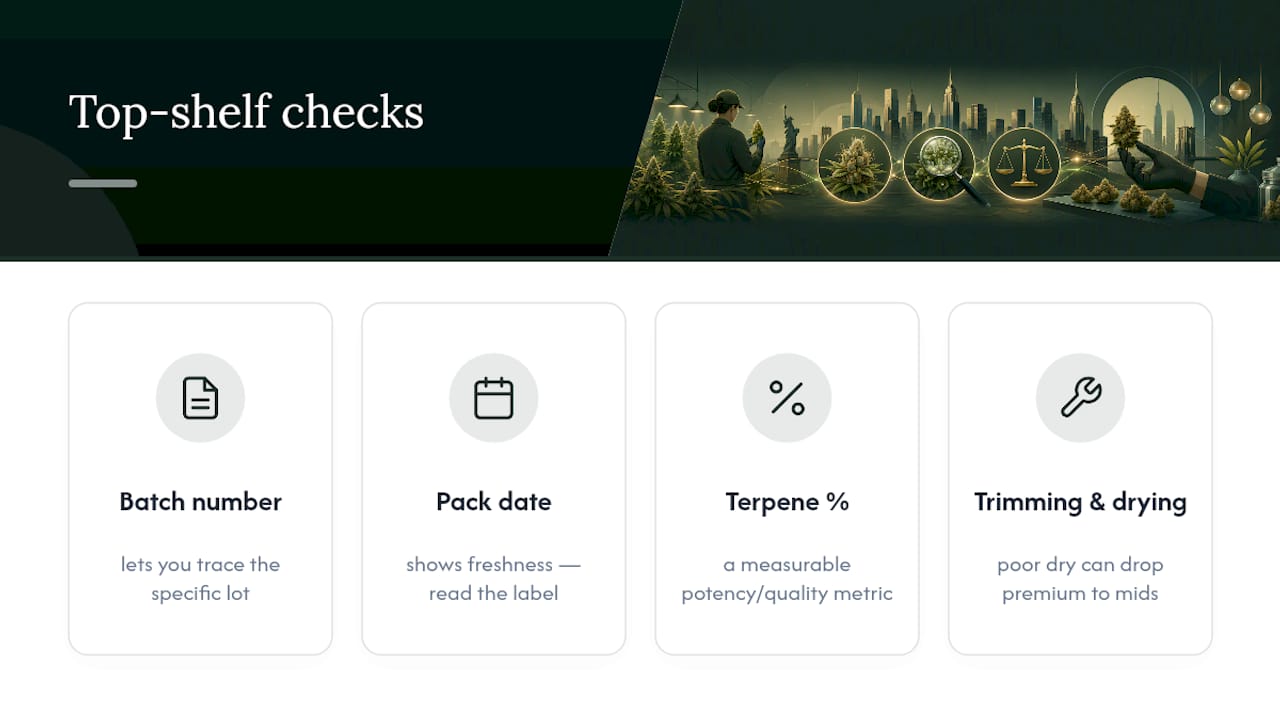
What’s underrated here is how much power sits in three questions: batch number, pack date, terpene percentage. Ask for those, and you’ve done more due diligence than most people do in a year of shopping. You don’t need to become a chemist. You need to stop letting a tier name substitute for five seconds of label reading.
The trimming and drying research is the part I think gets ignored most. A strain with excellent genetics can still land in the mids pile if it was rushed through a bad dry, while a modest cultivar handled with a careful cure can outperform its own reputation. Grade, in other words, is partly a story about the plant and partly a story about what happened to it after harvest. Shoppers who only look at the jar are missing half the picture.
— Jake
Sources
- Controlled atmosphere drying preserves cannabinoids and terpenes while reducing mold (PMC11013261)
- A stability–chemodiversity–quality framework linking post-harvest handling to terpene/cannabinoid outcomes (Springer, 2026)
- Top shelf weed vs mids: What actually matters | Weedmaps