
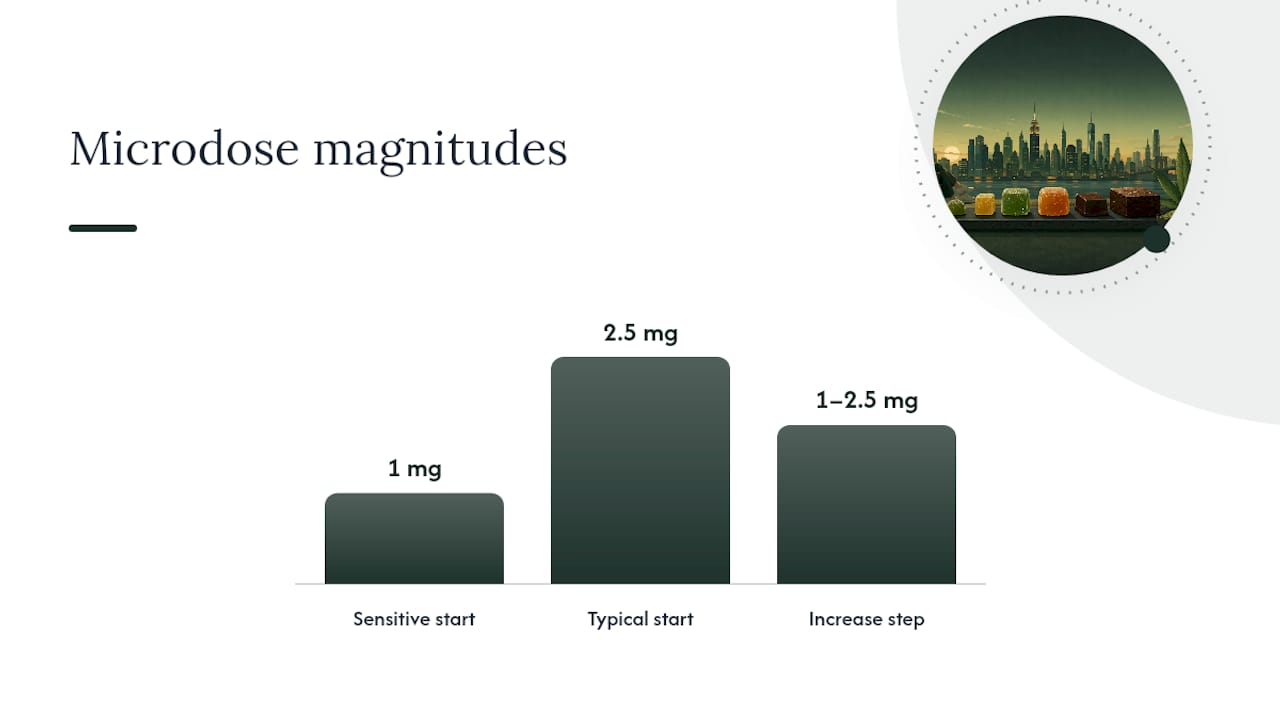
Microdosing THC edibles works when you treat it like an experiment, not a snack. Start at 1 to 2.5 milligrams (2.5 mg is the practical sweet spot for most adults, 1 mg if you’re highly sensitive), wait 60 to 120 minutes before deciding whether to take more, and write down what happens. Everything else in this guide exists to make that one rule easier to follow.
TL;DR:
- Dosing starts at 1 to 2.5 mg of THC, with patience and waiting 60 to 120 minutes for effects before redosing, to avoid taking too much.
- Effects vary widely based on body weight, metabolism, and whether food is present, making consistent logging essential during microdosing.
- Edibles convert to more potent and longer-lasting metabolites, so even small doses can produce significant effects that last four to eight hours.
- Accurate labeling, third-party testing, and proper storage are crucial to ensure safety and potency, especially when choosing products and batches.
- Avoid microdosing if pregnant, on medications metabolized through CYP enzymes, or with health conditions sensitive to THC’s effects.
Table of Contents
- What Does It Mean to Microdose THC Edibles?
- What Do 1 mg, 2.5 mg, 5 mg, and 10 mg Actually Feel Like?
- How Do You Titrate Your Way to the Right Microdose?
- What Does Research Say About Microdose THC Benefits?
- When Should You Avoid Microdosing THC?
- How Do You Choose a Safe, Accurately Labeled Edible?
- How Should You Store THC Edibles to Keep Them Safe?
- Is Microdosing THC Edibles Legal Where You Live?
- How Say Less Approaches Microdosing Education
- Where to Start Shopping for a Low-Dose Edible
- Sources
What Does It Mean to Microdose THC Edibles?
A microdose is 1 to 2.5 mg of THC, low enough to skip the high while still nudging mood, focus, or tension. Compare that to a low dose (2.5 to 5 mg) or a standard dose (5 to 10 mg), and the gap in experience is significant, according to Leafly’s dosing framework.
Edibles behave differently than smoking or vaping because of how your liver processes them. When THC passes through the gut and liver before reaching your bloodstream, it converts into 11-hydroxy-THC, a metabolite that crosses the blood-brain barrier more efficiently and produces stronger, longer effects than inhaled cannabis, per NCBI’s pharmacology review. That’s why 5 mg of a gummy can hit differently than 5 mg from a vape.
Onset runs 30 to 120 minutes, and effects can last 4 to 8 hours, according to pharmacokinetic research published in PMC. Food in your stomach, your body composition, and even your metabolism speed all shift that window, which is exactly why patience matters more with edibles than with any other format.
What Do 1 mg, 2.5 mg, 5 mg, and 10 mg Actually Feel Like?
Milligrams don’t map onto experience the same way for everyone. Body weight, tolerance, metabolism, and even what you ate that day all change how a given dose lands, according to Cannabis Pharmacy’s breakdown of dose-specific effects. Still, there are patterns worth knowing before you buy anything.
- 1 to 2.5 mg (microdose): A subtle lift in mood or focus, maybe a slight loosening of tension. Most people function completely normally, and many first-timers wonder if anything happened at all.
- 2.5 to 5 mg (low dose): More noticeable relaxation or mild euphoria. Five milligrams gets referenced constantly in dosing guides as a common baseline for adults with some tolerance, though it sits above true microdosing territory.
- 5 to 10 mg (standard dose): A clearer psychoactive effect, including possible impairment, altered time perception, or increased appetite. This range works for experienced consumers seeking a full effect, not beginners chasing a subtle wellness boost.
- Above 10 mg: Increasingly unpredictable, especially for anyone new to edibles, and the risk of an uncomfortable experience rises sharply.
None of these numbers are guarantees. Two people eating the identical 5 mg gummy on the same day can walk away with completely different experiences, which is the entire argument for starting low regardless of what a label promises.
How Do You Titrate Your Way to the Right Microdose?
Finding your personal microdose takes a few sessions, not one lucky guess. Dosing guides consistently recommend logging results and adjusting slowly across days rather than chasing an effect within a single sitting, according to Floral’s THC dosing guide.
- Pick your starting dose. Go with 1 mg if you’re highly sensitive, new to cannabis entirely, or have a small body frame. Otherwise, 2.5 mg is a reasonable first experiment, backed by dosing recommendations from VICE.
- Take it, then set a timer. Wait a minimum of 60 to 120 minutes before even considering more. Peak effects from an edible can take up to two hours to fully arrive, so redosing early is the single most common beginner mistake.
- Log the session. Note the dose, product format, whether you ate beforehand, onset time, peak time, how you felt, and any side effects. A simple notes app entry works fine.
- Hold that dose for at least one more session. Don’t change variables. Repeat the same amount to confirm the effect wasn’t a fluke.
- Increase gradually if needed. Raise your dose by 1 to 2.5 mg every 3 to 4 days, never within the same day. This slow climb is what separates microdosing from guessing.
Pro Tip: If you want faster feedback while you’re still calibrating, try a tincture, sublingual, or nano-emulsion drink instead of a gummy. Gummies commit you to the entire piece the moment you bite it, while drops and drinks let you sip or dose in smaller increments as you go.
Say Less breaks down this exact process, along with product-specific dosing examples, in its practical microdosing guide.
What Does Research Say About Microdose THC Benefits?
The evidence for microdose THC benefits is real but conditional on getting the dose right. A study on oral THC and stress response found that low doses reduced perceived stress, while higher doses in the same study produced the opposite effect, according to research from UIC Today. That’s a biphasic curve: helpful at the bottom, counterproductive near the top, and the whole reason dose precision matters more than enthusiasm.
Pain and sleep show a similar pattern. Reviews of cannabinoid research point to low-to-moderate doses easing pain and shortening the time it takes to fall asleep, while higher doses can disrupt sleep architecture, including REM cycles, per a review published on PubMed. Some people also report a mild boost in focus or creative thinking at very low doses, though that effect is less consistently studied than pain and sleep outcomes.
None of this makes THC a guaranteed fix for anxiety, pain, or insomnia. The research base is still developing, doses in studies vary widely, and individual response differs enough that what helps one person can do nothing, or worse, for another. Treat these findings as a reason to experiment carefully, not a promise of results.
When Should You Avoid Microdosing THC?
Higher doses carry predictable risks: anxiety, nausea, dizziness, and noticeable impairment top the list. THC is metabolized through liver enzymes in the CYP450 family, the same pathway responsible for processing many common medications, which means interactions are possible with certain prescriptions.
Certain groups should skip microdosing entirely or talk to a doctor first:
- Pregnant or breastfeeding individuals
- Anyone with a personal or family history of psychosis or schizophrenia
- People taking medications metabolized through CYP3A4 or CYP2C9 pathways
- Anyone with a heart condition sensitive to THC’s effect on heart rate
The biphasic stress study referenced above found that the same compound shown to reduce stress at low doses reversed that effect at higher amounts, a sharp reminder that “more” is never automatically “better” with THC.
If you accidentally take too much, hydration, a calm and familiar environment, and time are your best tools. Some people report that CBD helps take the edge off an uncomfortable high, though that’s anecdotal rather than clinically proven. If symptoms include chest pain, severe confusion, or vomiting that won’t stop, seek medical attention rather than waiting it out.
How Do You Choose a Safe, Accurately Labeled Edible?
Format matters more than most beginners realize. Gummies give you precise per-piece milligrams, which makes math easy but locks you into whatever the manufacturer decided a single piece contains. Tinctures let you measure drops for finer control. Drinks allow sip-by-sip pacing. Sublinguals tend to onset faster than anything you swallow.
Reading the label correctly matters just as much as picking the format. Check the milligrams per serving, not just per package, since a single edible can contain multiple servings. Look for a lot or batch number and an expiration date, both signs of a product actually tracked through a regulated supply chain.
Before buying, look for a certificate of analysis (COA), a lab report showing potency and screening for pesticides, solvents, and heavy metals, along with the testing date and lab name. Accurate labeling and third-party testing directly reduce the risk of misjudging your dose, according to RethinkTHC’s cannabis dosing guide.
| What to Check | Why It Matters |
|---|---|
| mg per serving vs. per package | Prevents accidentally taking multiple doses at once |
| Lot or batch number | Confirms the product is traceable through testing |
| COA potency results | Verifies the label matches actual THC content |
| Contaminant screening | Flags pesticides, solvents, or heavy metals |
| Testing date and lab name | Confirms testing is recent and from a real lab |
Buy the smallest-dose SKU available when you’re starting out, and stick to regulated dispensaries that publish their COAs openly rather than burying them or skipping testing altogether.
How Should You Store THC Edibles to Keep Them Safe?
THC degrades over time, especially with exposure to heat, light, and air, and edibles carry the added risk of ingredients like chocolate, gummies, or baked goods spoiling before the cannabinoids do. Storage isn’t just about potency retention. It’s about food safety too.
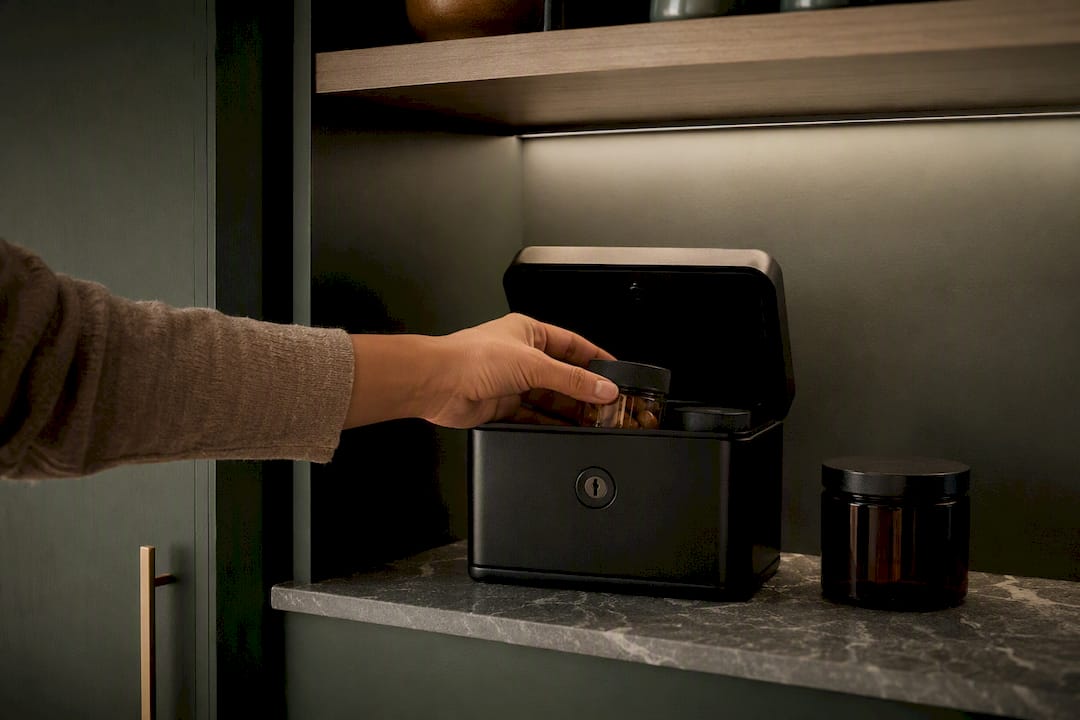
Keep edibles in their original, labeled packaging whenever possible. That packaging carries your dosing information, batch number, and expiration date, all of which matter if you need to reference them later or if anyone else in your household accidentally encounters the product. A cool, dark place, like a pantry shelf or a lockbox away from direct sunlight, works better than a spot near a window or stove.
Gummies and hard candies generally hold up for several months to a year unopened if stored properly, while baked goods and anything containing dairy or fresh ingredients have a much shorter window, often just days to a couple of weeks, similar to any perishable food. Tinctures and drinks tend to have longer shelf lives than baked edibles since they typically skip perishable ingredients entirely.
Always store edibles well out of reach of children and pets, ideally in a container that doesn’t resemble regular candy or snacks. Label homemade batches clearly if you ever make your own, since an unlabeled edible in a shared fridge is a genuine hazard, not just an inconvenience. If a product ever smells off, looks discolored, or has passed its printed expiration date, don’t gamble on it, potency loss is the least of your concerns at that point.
Is Microdosing THC Edibles Legal Where You Live?
Legal status depends entirely on your state and, in some cases, your city. Even in states where recreational cannabis is legal, purchase, possession, and consumption rules vary, including minimum age requirements (typically 21), possession limits, and restrictions on where you can legally consume THC products.
Buying from a licensed dispensary matters beyond convenience. Regulated retailers are required to sell lab-tested products with accurate labeling, which directly supports the safe dosing practices covered throughout this guide. Unregulated or illicit-market edibles carry no such guarantee, and mislabeled potency is far more common outside licensed channels.
If you’re new to your local legal cannabis market, it’s worth reading up on what licensed purchase actually looks like in practice, including what to expect at a legal dispensary. Rules can also change year to year as state programs mature, so checking current regulations before you buy or travel with any THC product is always the safer move. Never assume legality in one state extends to another, and never transport THC products across state lines, even between two legal states, since federal law still classifies cannabis differently than most state programs do.
How Say Less Approaches Microdosing Education
Say Less built its reputation in The Bronx on lab-tested products and a shopping experience that takes the guesswork out of cannabis, whether you’re picking up in person or ordering delivery. The curated menu features brands like Jeeter and Florist Farms, chosen for consistency in potency and flavor, not just shelf appeal. That consistency matters more for microdosing than for almost any other use case, since your entire titration process depends on knowing exactly what you’re taking. Say Less treats dosing education as part of the product, not an afterthought.
— Jake
Where to Start Shopping for a Low-Dose Edible
If everything above has you ready to actually try this, the next move is picking a product built for microdosing, not one that forces you into a standard dose from the first bite. Say Less stocks options where a single piece lands in the 2.5 mg range, plus sippable formats that let you pace yourself far more precisely than a full gummy allows.

Start with the edible dosage guide, which breaks down milligram charts by product type so you’re not doing math in your head at checkout. From there, browse lab-tested edible picks built around the same start-low philosophy covered in this guide. If you’re unsure which format fits your goals, the staff at Say Less can walk you through dosing on the spot, whether you’re picking up in The Bronx or ordering delivery across NYC. Buy from a licensed source, check the COA before you commit, and follow the same rule that opened this whole guide: start low, wait it out, and let the data from your own body decide what comes next.
This article is general information, not a substitute for advice from a qualified doctor. Consult a qualified healthcare professional about your own circumstances before acting on anything here.
Sources
- Selected review article on cannabinoids and pain | PubMed
- Cannabis: Pharmacology and adverse effects | NCBI Bookshelf
- Edible dosing guide | Leafly
- Review of Cannabis Pharmacokinetics and Pharmacodynamics | PMC