
Jeeter is worth buying for most U.S. consumers who want consistent, flavor-forward cannabis at mid-premium prices. The live-resin carts and infused pre-rolls are the standout lines. Here are the quick picks:
- Jeeter Juice live-resin carts — 70–85% THC with 4–8% terpenes, strain-specific flavor that distillate carts rarely match
- Quad-infused pre-rolls — four-layer infusion for high-tolerance users who want a slow, potent burn
- Baby Jeeter infused minis — five-pack format, great for social sessions or microdosing without committing to a full joint
- Chrome / Chrome Dome pre-rolls — premium flower, tighter construction, for consumers who want a cleaner smoke
One trust anchor before you buy: always verify the batch COA (Certificate of Analysis) and check the batch number against state recall portals. A voluntary recall on January 30, 2025 covered certain Jeeter and Baby Jeeter pre-roll batches for microbial contamination and inaccurate labeling. Buying from a licensed dispensary like Saylessny means the inventory has already cleared state compliance checks.
Table of Contents
- Jeeter reviews: what each product line actually delivers
- What to expect from Jeeter: potency, flavor, and effects
- Safety, lab testing, and how to spot a fake Jeeter
- How Jeeter compares across formats and categories
- Where to buy Jeeter safely in the U.S.
- Key Takeaways
- A dispensary operator’s take on selling Jeeter
- Jeeter at Saylessny: same-day delivery and in-store pickup in NYC
- Useful sources for COAs, recalls, and lab reporting
Jeeter reviews: what each product line actually delivers
Jeeter Juice live-resin carts
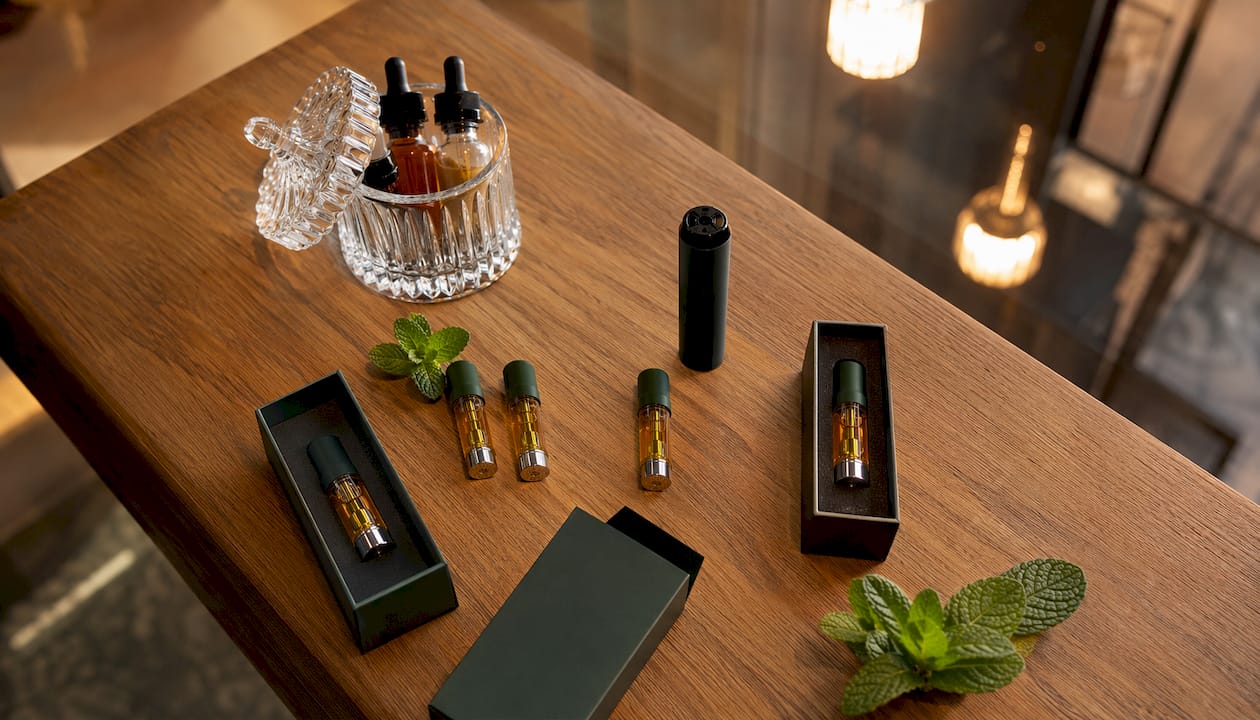
Jeeter Juice is the brand’s flagship vape line. The oil is live-resin extracted, meaning the plant was frozen fresh before processing to preserve volatile terpenes. The result is a noticeably more complex flavor than a standard distillate cart. Typical THC potency is high. Expect a fast onset, medium-to-heavy intensity, and a session that runs about an hour or more for most users.
Pros: Strain-specific flavor, consistent fill weight, widely available at licensed dispensaries
Cons: Hardware is mid-tier (510-thread, standard ceramic coil), not the smoothest draw at high temps
Best for: experienced consumers who prioritize flavor and want reliable potency without hunting for boutique brands.
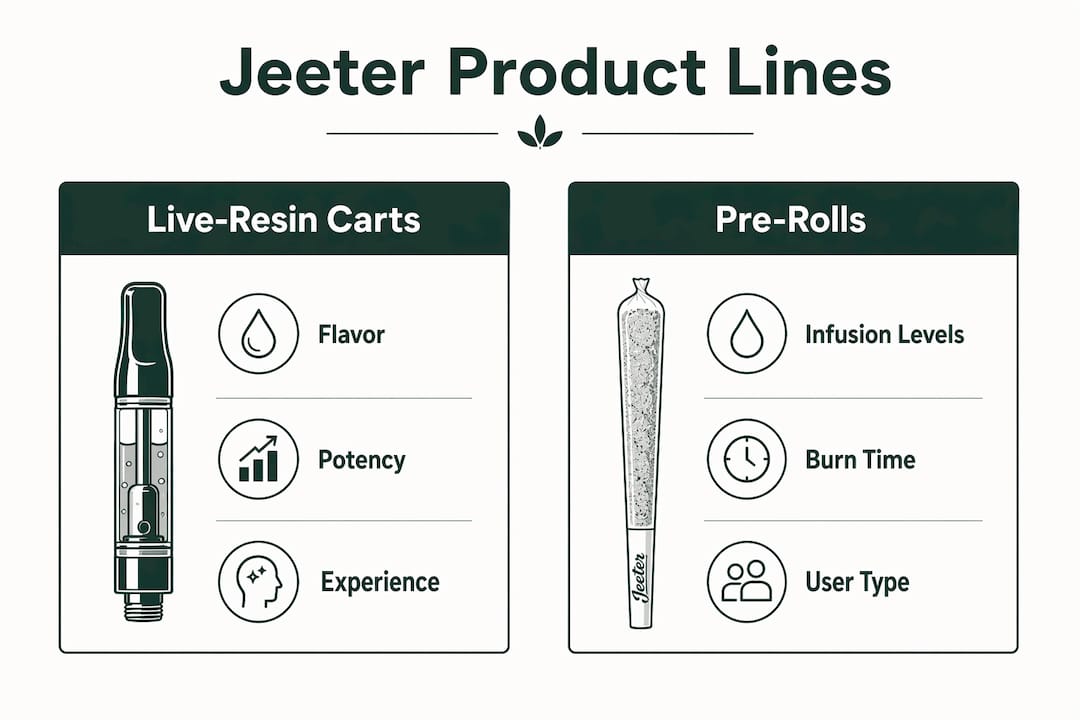
Jeeter disposable carts
The disposable line uses the same live-resin oil in an all-in-one device. No battery required, no threading issues. The tradeoff is that you cannot swap the hardware if the coil underperforms, and the device is not rechargeable on older versions.
Pros: Convenient, no setup, same oil quality as the cart line
Cons: Non-rechargeable versions waste oil if the battery dies early; slightly higher cost-per-mg than the refillable cart
Best for: occasional users or anyone who wants a grab-and-go option without carrying a separate battery.
Quad-infused pre-rolls
These are Jeeter’s heaviest hitters. The construction layers flower, kief, concentrate, and a wax coating. THC percentages on the label typically indicate moderate to high combined potency in the 40–45% range for Quad-infused pre-rolls, though independent testing has found label figures can run high — which is exactly why checking the COA matters here more than anywhere else in the lineup.

Pros: Long burn, intense effect, impressive presentation
Cons: Potency labeling has been disputed in litigation; not for low-tolerance users; burns faster if not kept dry
Best for: high-tolerance consumers who want a full-session pre-roll and are comfortable verifying the COA before lighting up.
Baby Jeeter infused minis
Five small infused pre-rolls per pack, each about a half gram. The format is genuinely practical: you get a full flavor experience without committing to a gram-plus joint. Batch-to-batch consistency is notably strong compared to smaller brands, which matters when you’re buying a five-pack.
Pros: Shareable, consistent, good entry point for infused pre-rolls
Cons: Covered by the January 2025 recall — always check the batch number before purchasing
Best for: social smokers and anyone who wants to try infused pre-rolls without a large upfront spend.
Chrome / Chrome Dome pre-rolls
Chrome is Jeeter’s premium flower-forward line. Less infusion, more emphasis on the quality of the underlying cannabis. The construction is tighter than the standard line, the burn is cleaner, and the flavor reflects the strain more directly.
Pros: Better flower quality, cleaner smoke, strain character comes through
Cons: Less widely distributed than Baby Jeeter; higher price point
Best for: consumers who prefer a traditional pre-roll experience with better-than-average flower.
What to expect from Jeeter: potency, flavor, and effects
The live-resin extraction process freezes fresh plant material to lock in volatile terpenes before they can degrade. That single step explains why Jeeter Juice carts taste noticeably different from distillate-based alternatives.
| Format | Typical THC % | Terpene % | Onset | Best use case |
|---|---|---|---|---|
| Jeeter Juice live-resin cart | 70–85% | 4–8% | Under 5 min | Flavor-focused sessions, strain exploration |
| Distillate cart (category avg.) | 70–85% | 0.8–2.1% | Under 5 min | Pure potency, less flavor complexity |
| Infused pre-roll (Quad) | 40–45% combined | Varies | about 5 min | High-tolerance, long sessions |
| Baby Jeeter infused mini | 30–45% combined | Varies | about 5 min | Social, moderate-to-high tolerance |
Live resin trades a few percentage points of peak THC for terpene retention in the 4–8% range, versus the 0.8–2.1% typical of distillate carts that reintroduce terpenes after extraction. For many users, that difference shows up as fuller flavor and more strain-specific effects rather than a raw potency ceiling.
Use-case guide:
- Daytime microdosing: Baby Jeeter minis, one or two draws from a Jeeter Juice cart
- Social sessions: Baby Jeeter five-pack, Chrome pre-rolls for a cleaner group smoke
- Heavy sessions / high tolerance: Quad-infused pre-rolls, full Jeeter Juice cart
- Strain exploration: Jeeter Juice live-resin carts, where terpene-driven entourage effects are most pronounced
Safety, lab testing, and how to spot a fake Jeeter
The single most important thing to know: counterfeit Jeeter products are widespread in unregulated markets. Counterfeiters copy the packaging closely but skip the COA entirely, and their oils have been found to contain dangerous cutting agents including Vitamin E acetate.
What a real COA covers:
- Cannabinoid panel (actual THC/CBD percentages)
- Terpene profile
- Pesticide residue screen
- Heavy metals
- Residual solvents
- Microbial contaminants (the panel that caught the 2025 recall)
The January 2025 voluntary recall flagged certain Jeeter and Baby Jeeter pre-roll batches for Aspergillus spp. contamination and inaccurate cannabinoid labeling. A separate class-action lawsuit filed in 2022 alleges that independent testing found some Jeeter pre-rolls contained significantly less THC than the label stated. The lawsuit remains pending in Los Angeles County Superior Court as of the most recent available reporting. Neither situation means the brand is categorically unsafe, but both mean the COA is not optional.
How to verify your Jeeter product:
- Find the batch number on the packaging (usually a white sticker or printed on the side panel).
- Scan the QR code if present — it should link to a state-compliant COA.
- Cross-check the batch UID against your state’s cannabis recall portal (California: DCC recall listings).
- Confirm the retailer is licensed — ask for a receipt that shows the dispensary license number.
Pro Tip: Three packaging red flags that reliably signal a counterfeit: THC percentage printed directly in the cardboard (not on a separate lab sticker), no batch number anywhere on the package, and a price that’s 30–40% below what licensed dispensaries charge. If any one of these is true, don’t buy it.
How Jeeter compares across formats and categories
Jeeter’s market position is built on distribution scale and lifestyle branding as much as formulation. That combination means you’ll find it at most licensed dispensaries in California, Arizona, Michigan, and expanding markets — but it also means Jeeter is a mass-market brand, not a boutique one.
| Category | THC % | Terpene notes | Pack size / price tier | COA availability |
|---|---|---|---|---|
| Live-resin cart (Jeeter Juice) | 70–85% | 4–8%, strain-specific | 1g; mid-premium | Yes, via QR on packaging |
| Disposable live-resin | 70–85% | 4–8% | 1g all-in-one; mid-premium | Yes, via QR on packaging |
| Infused pre-roll (Quad) | 40–45% combined | Varies by strain | Single / 2-pack; mid-to-high | Yes, batch sticker |
| Baby Jeeter infused minis | 30–45% combined | Varies | 5-pack; mid | Yes, batch sticker |
Practical tradeoffs to know:
- Jeeter live-resin carts offer more flavor complexity than distillate alternatives at a similar price, but the hardware is standard 510-thread ceramic, not the premium hardware some boutique brands use.
- The infused pre-roll lines are among the most consistent in their category, but the potency-labeling litigation means you should treat the printed THC number as an estimate until you’ve seen the COA.
- If you want absolute peak THC numbers, high-end distillate carts will often print higher. If you want a fuller, more strain-specific experience, live resin wins on flavor.
Where to buy Jeeter safely in the U.S.
Licensed dispensaries are the only reliable channel. Buying from unlicensed sellers — smoke shops, unverified online stores, or street sources — removes every safety layer the legal market provides.
Buying channel checklist:
- Confirm the dispensary holds a current state cannabis retail license (check your state’s cannabis authority website).
- Ask to see the COA for the specific batch you’re buying, not just a generic brand COA.
- Inspect the packaging: batch number present, QR code functional, lab sticker separate from the printed cardboard.
- Keep your receipt — it ties your purchase to a specific batch number if a recall is issued later.
- If ordering for delivery, verify the service operates under a licensed retailer’s delivery permit, not a third-party gray-market app.
Saylessny, The Bronx’s licensed recreational dispensary, carries Jeeter products and keeps batch records in its point-of-sale system. Staff can pull the COA for any batch on request, and purchase receipts include the dispensary license number for your records. That’s the standard you should expect from any licensed retailer. If a dispensary can’t produce a COA on request, that’s a reason to pause.
Why smoke shops are risky: They are not required to verify cannabis product authenticity, they don’t hold cannabis retail licenses, and they have no legal obligation to pull a recalled product from shelves. The counterfeit problem is most concentrated in exactly these channels.
Key Takeaways
Jeeter’s live-resin products deliver consistent, flavor-forward cannabis at mid-premium prices, but the COA is non-negotiable given the brand’s recall and litigation history.
| Point | Details |
|---|---|
| Verdict: worth buying | Jeeter Juice carts and Baby Jeeter minis offer reliable flavor and potency when purchased from a licensed dispensary. |
| Top SKUs to try | Jeeter Juice live-resin cart, Baby Jeeter infused minis, Quad-infused pre-rolls, Chrome pre-rolls. |
| COA is mandatory | The January 2025 recall and pending potency lawsuit make batch-level COA verification essential before use. |
| Counterfeit risk is real | Missing batch sticker, no QR code, or a price 30–40% below dispensary retail are reliable fake signals. |
| Buy at Saylessny | Saylessny stocks Jeeter with batch records on file and COAs available on request at its Bronx dispensary or via NYC delivery. |
A dispensary operator’s take on selling Jeeter
The most common question staff at Saylessny field about Jeeter is some version of: “Is this the real thing?” That question tells you everything about where the brand sits in the market. Jeeter is recognizable enough that people ask for it by name, but it’s also counterfeited aggressively enough that experienced buyers have learned to be skeptical.
The second most common question is about potency. Customers see a Quad-infused pre-roll labeled at 40–45% THC and want to know if that number is real. The honest answer is: check the COA. The printed label is a starting point, not a guarantee. That’s true across the cannabis industry, not just for Jeeter, but the pending litigation makes it especially relevant here.
In terms of buyer profiles, the Jeeter Juice cart tends to go to consumers who’ve already tried distillate vapes and want something with more flavor. Baby Jeeters are the social-session pick, especially for groups where not everyone has the same tolerance. The Quad-infused pre-rolls are almost exclusively for high-tolerance regulars who want a long, heavy session. Chrome pre-rolls attract the flower-first crowd who want a premium smoke without the infusion complexity.
On returns: if a customer brings in a product they believe is counterfeit or has a quality issue, the first step is always to check the batch number against the state recall database. If the batch is recalled or the COA doesn’t match, the dispensary handles it from there. That process only works because the purchase was made at a licensed retailer with a receipt. There’s no equivalent path for something bought at an unlicensed shop.
Jeeter at Saylessny: same-day delivery and in-store pickup in NYC

Saylessny carries Jeeter Quad-Infused Pre-Rolls and other Jeeter SKUs at its licensed Bronx dispensary, with same-day delivery across NYC and in-store pickup available. Every product on the menu has cleared state compliance checks, and batch COAs are available on request at the counter or through the delivery service. That means you’re not guessing about what’s in the package.
If you want to compare options, Saylessny also stocks live-resin infused minis from Koa Cannabis Co. and premium infused pre-rolls from CRU Cannabis for buyers who want to see what else is in the category before committing to Jeeter. The menu updates regularly as new batches arrive.
Ready to order? Browse the full Jeeter menu at Saylessny, or place your order online for same-day NYC delivery. COA requests and product questions can be directed to staff at the dispensary directly.
This article is general information about Jeeter cannabis products and is not professional medical or legal advice. Confirm current product availability, batch status, and applicable state regulations with a licensed dispensary or your state cannabis authority before purchasing.
Useful sources for COAs, recalls, and lab reporting
These are the primary places to verify Jeeter product safety before or after purchase:
- California DCC recall listings — the Department of Cannabis Control maintains a searchable recall database by brand, batch UID, and packaged date. Cross-check any Jeeter batch number here before use. Start at real.cannabis.ca.gov for licensed premises verification.
- Phenominal.io recall tracker — aggregates California cannabis recall notices with batch-level detail, including the January 2025 Jeeter and Baby Jeeter recall for microbial contamination and labeling issues.
- LegalClarity.org — covers the Jeeter potency-inflation lawsuit and broader industry testing standardization issues; useful for understanding the litigation context.
- State cannabis authority websites — every legal state publishes a licensed retailer lookup and recall notice board. Use these to confirm your dispensary’s license and check for active recalls in your state.
- Dispensary COA request — the most direct route. Ask your budtender for the COA tied to the specific batch number on your product. A licensed dispensary should be able to produce it on the spot or within one business day.
- P65Warnings.ca.gov — California’s Proposition 65 warning database; relevant for California buyers who want to understand chemical exposure disclosures on cannabis packaging. See p65warnings.ca.gov for the full database.
Keep your purchase receipt. It ties your transaction to a specific batch number, which is the only way to act quickly if a recall is issued after you’ve already bought the product.