
Have you ever opened a fresh jar of flower and marvelled at the deep, royal purple hues painted across the buds? Many people wonder why does weed turn purple, and the answer lies in a fascinating group of natural plant pigments called anthocyanins. Far from being a chemical trick, these purple shades are the result of complex plant genetics and environmental triggers reacting together.
Understanding how these striking colors develop can help you choose higher-quality buds and shop smarter.
What is Anthocyanin? The Science Behind the Purple Hue
At its core, the color of any cannabis plant is determined by its active pigments. While green is the dominant color for most of the plant’s life cycle, a hidden chemical process is waiting to take over as harvest season approaches.
Flavonoids vs. Chlorophyll: How Plant Pigments Work
During the spring and summer, plants are packed with chlorophyll. This is the pigment responsible for capturing sunlight and turning it into energy through photosynthesis. Because chlorophyll is incredibly strong, it easily masks other pigments, making the plant look vibrant green.
However, as the nights grow longer and the weather cools, cannabis plants naturally slow down their chlorophyll production. As the green fades, other compounds called flavonoids finally get their chance to shine. One specific family of water-soluble flavonoids, known as anthocyanins, is responsible for creating the blue, red, and deep purple colors we see in exotic strains.
The Role of pH in Shifting Colors
Anthocyanins are highly sensitive to their chemical environment, particularly the pH level (acidic versus alkaline balance) within the plant’s cell sap.
- Acidic environments (low pH) tend to coax out vibrant reds and pinks.
- Neutral environments (mid-level pH) result in deep, royal purples.
- Alkaline environments (high pH) can actually cause the plant to display blue or even yellow shades.
Because cannabis cells generally sit in a neutral to slightly acidic range, purple is the most common deep color variation to show up in mature buds.
Evolutionary Purpose: Why Cannabis Plants Evolved to Turn Purple
Plants do not spend valuable energy producing anthocyanins just to look pretty. In the wild, these pigments serve three critical survival functions:
- Natural Sunscreen: Just like human skin, plants can get damaged by excessive radiation. Anthocyanins absorb high-energy ultraviolet (UV) light, protecting the delicate internal structures of the cannabis flower from sun damage.
- Cold Tolerance: Anthocyanins act like a mild, organic antifreeze. They help the plant’s cells retain water and resist freezing when autumn temperatures drop unexpectedly.
- Pest Deterrence and Pollinator Attraction: Bright purple colors can confuse or deter certain harmful pests while attracting helpful pollinators, giving the plant a better chance of successfully finishing its life cycle.
The Genetics of Purple Cannabis
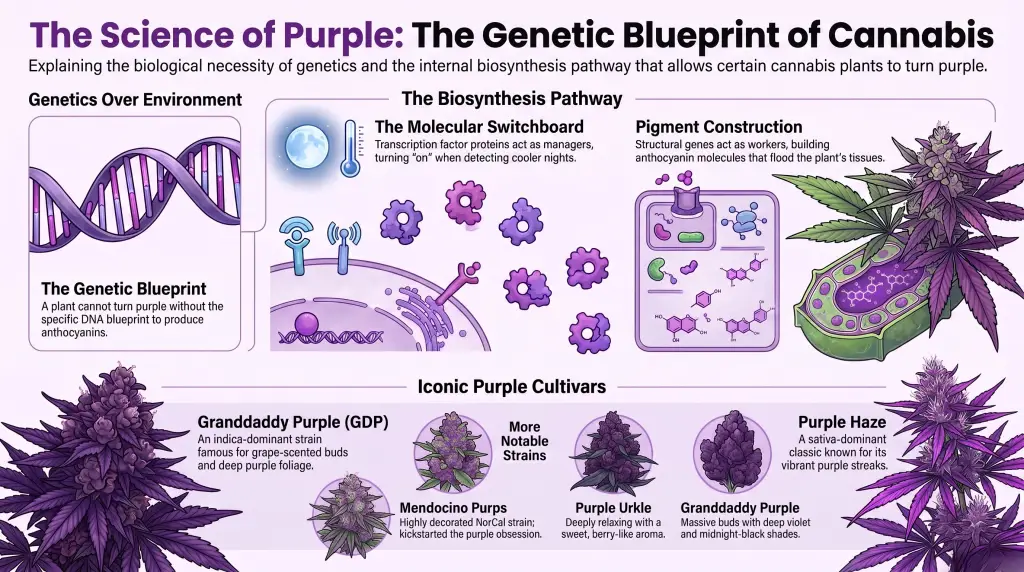
No matter how hard you try, you cannot force a plant to turn purple if it does not have the genetic blueprint to do so.
Inherited Genomes: Why Some Strains Turn Purple Automatically
Every plant inherits specific DNA from its parent strains. Some cannabis cultivars contain incredibly high baseline concentrations of anthocyanins. For these genetically predisposed plants, turning purple is an inevitability. As they reach maturity, they will fade into deep violet and midnight-black shades regardless of the room temperature or light cycles.
Structural Genes and Transcription Factors (The Biosynthesis Pathway)
In academic circles, researchers look closely at the molecular switchboard of the plant. Deep within the plant’s genome are structural genes that act as the construction workers building anthocyanin molecules.
These workers are turned “on” or “off” by transcription factors—proteins that act as managers. When these protein managers detect changes in the environment (like shorter days or cooler nights), they instruct the structural genes to start producing anthocyanins rapidly, flooding the plant’s tissues with purple pigments.
Popular Purple Cannabis Strains & Cultivars
If you are looking for classic purple genetics, several legendary strains are famous for carrying these traits:
- Granddaddy Purple (GDP): A famous indica-dominant strain known for massive, grape-scented buds with deep purple foliage.
- Purple Haze: A sativa-dominant classic popularized in the 1960s, featuring vibrant purple streaks.
- Mendocino Purps: A highly decorated Northern California strain that helped kickstart the modern obsession with purple bud.
- Purple Urkle: A deeply relaxing strain displaying rich purple hues and a sweet, berry-like aroma.
How to Turn Cannabis Purple: Environmental Triggers for Growers
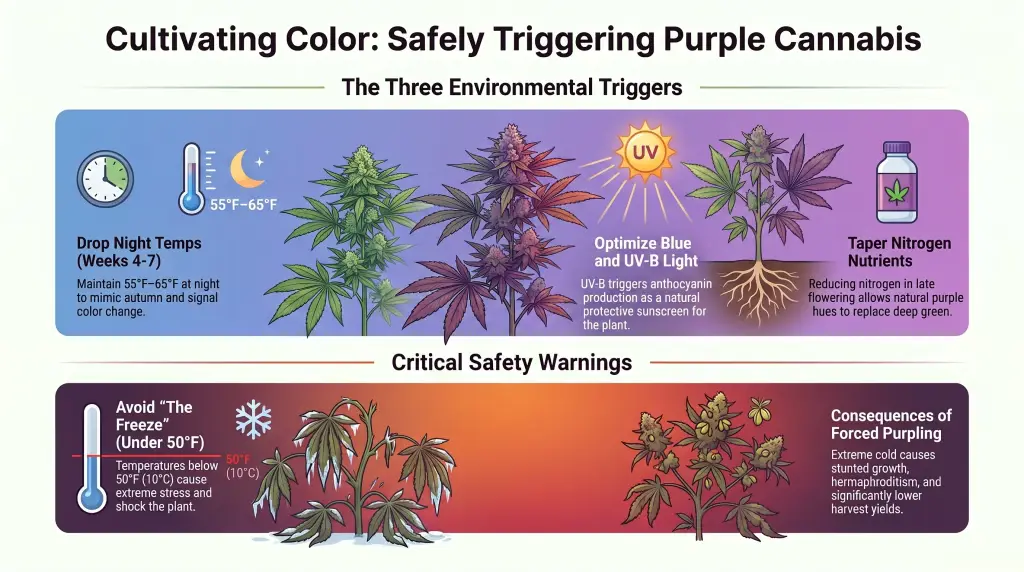
If a grower is working with a strain that possesses the right genetics, they can use specific environmental triggers to safely encourage the plant to express its purple potential.
1.Drop Nighttime Temperatures Safely:Weeks 4-7 of Flowering.
Wait until the middle of the flowering cycle. Slowly lower your grow room’s nighttime temperature so it sits between 55°F and 65°F (13°C to 18°C). The daytime temperature should remain warm. This temperature gap mimics autumn, signaling the plant to break down green chlorophyll and let the purple anthocyanins emerge.
2.Optimize Your Light Spectrum:Throughout Flowering.
Ensure your plants are exposed to high-intensity light with adequate blue and UV-B spectrums. UV-B light triggers a stress response in cannabis, prompting the plant to produce anthocyanins as a protective sunscreen.
3.Taper Nitrogen Nutrients:Late Flowering.
As you approach harvest, reduce the amount of nitrogen you feed the plants. High levels of nitrogen keep plants locked in a vegetative, deep-green state. Tapering nitrogen encourages the natural fading process, allowing purple colors to take over.
The Risks of “Forced” Purpling: Never subject your plants to freezing cold temperatures (below 50°F / 10°C) to force a color change. Shocking your plants with extreme cold will stunt their growth, stress them into hermaphroditism, and drastically reduce your final harvest yield.
Potential Health and Therapeutic Benefits of Anthocyanins
Beyond their stunning visual appeal, anthocyanins are highly valued for what they offer to the human body.
Antioxidant and Anti-inflammatory Properties
In the human diet, anthocyanins are the prized antioxidants found in superfoods like blueberries, blackberries, and red cabbage. When consumed, these compounds help neutralize free radicals (unstable molecules that damage cells) and reduce systemic inflammation throughout the body.
The Entourage Effect: Do Anthocyanins Interact with Cannabinoids?
The entourage effect is the scientific theory that cannabinoids (like THC and CBD), terpenes (essential oils), and flavonoids work together synergistically to produce a more balanced, therapeutic high. While research is ongoing, many scientists believe that anthocyanins play a supportive role in this pathway, smoothing out the psychoactive experience and enhancing physical relaxation.
Purple Weed Potency: Myth vs. Reality
Let’s bust a major industry myth: purple weed is not automatically stronger than green weed.
A flower’s THC, CBD, and terpene content is determined by its overall health, maturity, and genetics—not its color. A poorly grown purple strain can easily be weaker than a masterfully grown green strain. When shopping, always prioritize lab-tested cannabinoid percentages and terpene profiles over color alone.
Where to Find Premium, Lab-Tested Purple Weed in New York
Navigating the bustling New York cannabis scene can feel overwhelming, especially with unlicensed smoke shops popping up on every corner. If you want genuine, clean purple flower that lives up to the hype, you must source it from a trusted, licensed adult-use retailer.
Skip the Shady Guesswork: Why Safe, Lab-Testing Matters
Unlicensed, illicit vendors often sell unregulated products that may contain heavy metals, mold, or pesticides. Even worse, some bad actors artificially dye low-quality bud purple to sell it at a premium. Licensed dispensaries are legally required to provide a Certificate of Analysis (COA) for every product, proving it has been rigorously tested in a state-approved lab for safety, purity, and exact potency.
Shop the Best Purple Flower at Say Less NYC
For authentic, top-tier cannabis, Say Less is the premier licensed dispensary located right in the Throgs Neck neighborhood of the Bronx. Conveniently situated at 3764 E Tremont Ave, Say Less curates a premium selection of legal adult-use products from New York’s finest growers.
Whether you are looking for classic, deep-purple flower or hard-hitting infused pre-rolls, Say Less carries elite, compliant brands like Jeeter and Florist Farms. Their expert budtenders can walk you through the laboratory testing paperwork, helping you find clean, purple genetics that offer the exact therapeutic effects you desire.
Fast Bronx Pickup & Reliable Same-Day NYC Delivery
No time to visit the E Tremont storefront? Say Less makes buying premium weed incredibly easy:
- In-Store Pickup: Order online and your items will be packed and ready for a quick, seamless pickup.
- Same-Day Delivery: Say Less offers fast, discreet delivery across the Bronx and surrounding NYC neighborhoods, bringing legal, lab-tested cannabis straight to your doorstep.
Troubleshooting: Why Is My Weed “Bleeding” Purple?
If you have ever noticed purple colors “bleeding” into your ice water during bubble hash extraction, or staining your fingers when rolling, you might have worried that your flower was artificially dyed.
Water Solubility vs. Solvent Solubility
To understand why this happens, we have to look at simple chemistry:
| Compound Type | Soluble In | Will it “Bleed” in Ice Water? |
| Anthocyanins (Purple) | Water | Yes (Water-Soluble) |
| Chlorophyll (Green) | Lipids / Solvents (Alcohol) | No (Fat-Soluble) |
| Cannabinoids & Terpenes | Lipids / Oils / Solvents | No (Hydrophobic) |
Because anthocyanins are entirely water-soluble, they dissolve easily in water. When you wash bud in ice water to make hash, the cold water ruptures the plant’s cells, causing the purple pigments to dissolve into the liquid and turn your wash water a stunning shade of violet or pink. This is a completely natural chemical reaction and a sign of rich anthocyanin content, not artificial dye!
How to Spot Artificially Dyed “Fake” Purple Bud
While natural bleeding in water is normal, artificial dye is a major health hazard. You can easily spot fake, dyed bud by looking for these warning signs:
- Stained Stems: On a naturally purple plant, the stems and inner branches usually remain a healthy light green or woody brown. If the thick stems are stained deep purple or pink, the flower has likely been artificially dyed.
- Unnatural Uniformity: Natural purple buds have color variations—patches of green, orange pistils, and purple sugar leaves. If the entire bud is a solid, dull, uniform shade of purple with zero green or orange visible, proceed with extreme caution.
- No Lab Paperwork: The easiest way to avoid dyed weed is to never buy from unlicensed street vendors. Always shop at licensed dispensaries like Say Less, where every batch is backed by official state lab results.
Frequently Asked Questions (FAQ)
Is purple weed naturally better than green weed?
No. The purple color is simply a genetic and environmental trait caused by anthocyanin pigments. It does not make the cannabis inherently stronger, more potent, or higher in THC. Potency depends entirely on the strain’s overall genetics, cultivation quality, and cure.
At what week of flower does cannabis start turning purple?
For strains with purple genetics, the color transformation usually begins around weeks 4 to 6 of the flowering stage. This is when the plant’s natural production of green chlorophyll begins to slow down, allowing the underlying anthocyanin pigments to show through.
Can any cannabis strain turn purple if exposed to cold?
No. While cold temperatures can encourage anthocyanin expression, the plant must have the genetic capability to produce these pigments in the first place. If a strain lacks the necessary “purple genes,” exposing it to cold will only stress, damage, or kill the plant without changing its color.
Does Say Less deliver purple weed strains to my NYC neighborhood?
Yes! Say Less offers fast, legal, and discreet same-day cannabis delivery to the Bronx and select surrounding NYC areas. You can browse their live menu online to see which premium purple strains are currently in stock for delivery or in-store pickup.
Is the purple wash water from making bubble hash safe?
Absolutely. The purple color in your extraction water is just natural, water-soluble anthocyanin pigments bleeding out of the plant cells. It is completely non-toxic and is the exact same natural pigment that turns blueberry juice blue.
Experience the Best Purple Flower in New York
Ready to explore the aromatic, deeply relaxing world of authentic purple cannabis? Do not risk your health on untested, unregulated street products.
Head over to the Say Less Menu right now to browse their selection of lab-tested, premium purple flower, pre-rolls, and concentrates. Whether you want to stop by their welcoming shop at 3764 E Tremont Ave in the Bronx or order fast, reliable same-day delivery straight to your door, Say Less has you covered. Shop safe, shop legal, and experience top-shelf New York cannabis today!