
Choosing between live resin or live rosin is the most common dilemma facing modern cannabis enthusiasts before they take a dab. While both offer a “live” experience that captures the plant’s peak profile, the way they get from the farm to your rig involves two very different paths. Understanding these nuances is the key to spending your money wisely and finding the high that fits your lifestyle.
The Core Difference: Why One Letter Changes Everything
The term “live” refers to the starting material. Unlike traditional waxes or shatters made from dried, cured buds, “live” concentrates are made from plants that were flash-frozen immediately after harvest. This process preserves the delicate terpenes that usually evaporate during the drying process.
However, the difference between “Resin” and “Rosin” comes down to how those oils are pulled from the plant:
- Live Resin: Uses chemical solvents (like butane or propane) to “wash” the cannabinoids and terpenes off the plant.
- Live Rosin: Uses only heat and pressure (a mechanical process) to squeeze the oil out. It is 100% solventless.
Quick-Reference Comparison Table
| Feature | Live Resin | Live Rosin |
| Extraction Method | Chemical Solvents (BHO/PHO) | Heat & Pressure (Solventless) |
| Price Point | Budget-Friendly to Mid-Tier | Premium / Luxury |
| Flavor | Bold and Pungent | Authentic and Complex |
| Purity | Lab-tested for residual solvents | Naturally pure; no chemicals used |
| Best For | Everyday dabbing & potency | Flavor connoisseurs & purists |
What is Live Resin? (The High-Tech Extraction)
Live resin is the result of advanced laboratory science. By using hydrocarbon solvents, extractors can target specific compounds within the frozen cannabis plant with surgical precision. This results in a product that is often incredibly potent and bursting with “loud” aromas.
The Science: Hydrocarbon Extraction (BHO/PHO)
In a professional lab setting, frozen flower is placed in a closed-loop system. Solvents like butane or propane pass through the material, binding to the THC and terpenes. The solvent is then purged away using vacuum ovens, leaving behind a concentrated oil. Because the solvent is so efficient, it captures a massive amount of the plant’s active ingredients.
Consistency Spectrum: From Diamonds & Sauce to Badder and Sugar
One of the best things about live resin is its versatility. Depending on how the oil is treated after extraction, it can take many forms:
- Diamonds & Sauce: High-THC crystals swimming in a pool of liquid terpenes.
- Badder/Budder: A whipped, creamy consistency that is easy to handle with a dab tool.
- Sugar: A grainy, wet texture that offers a great balance of flavor and ease of use.
The CRC Controversy
When shopping for live resin, you may hear the term CRC (Color Remediation Column). This is a filtration process where the oil is passed through materials like silica or activated charcoal to remove impurities and lighten the color.
While CRC is safe when done correctly, it is sometimes used to make low-quality, “dark” oil look like premium, golden resin. If a live resin looks ghostly white or lacks a natural “hempy” smell despite looking beautiful, it may have been heavily remediated. At Say Less NY, the focus is always on transparency, ensuring you get products where the quality is in the plant, not the filtration.
What is Live Rosin? (The Artisan Choice)
If live resin is a high-tech lab creation, live rosin is a craft, handmade product. It is often referred to as the “cleanest” concentrate on the market because no chemicals ever touch the plant during the process.
The Process: Ice Water Hash to Heat & Pressure
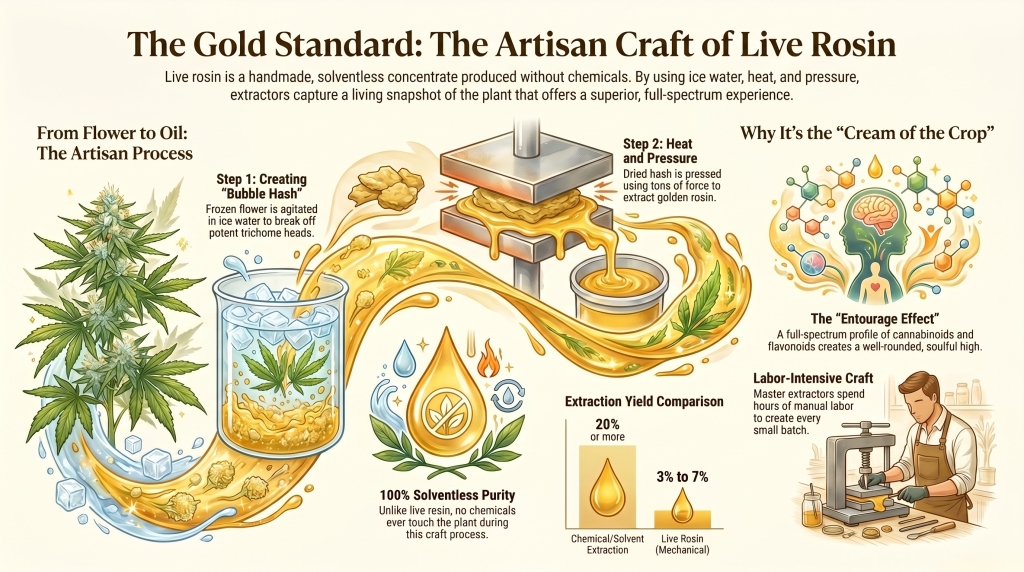
Making live rosin is a multi-step labor of love. First, the frozen flower is agitated in ice water to break off the trichome heads (the crystals on the bud). This creates “bubble hash.” Once the hash is dried, it is placed into a specialized press that applies specific amounts of heat and tons of pressure. The golden oil that oozes out is the live rosin.
Why It’s Considered “Full Spectrum”
Because no solvents are used to “select” certain molecules, the resulting rosin is a true “snapshot” of the living plant. It contains a wider array of minor cannabinoids and flavonoids that solvent-based extractions might miss. This leads to the “Entourage Effect,” where the high feels more well-rounded and “soulful” than just a standard THC blast.
Why the Price Tag is Higher: Yields and Labor
Live rosin is expensive for two reasons: labor and yield. It takes a master extractor hours of manual work to create a small batch. Furthermore, while chemicals can pull 20% or more oil from a plant, mechanical pressing might only yield 3% to 7%. You are paying for the “cream of the crop.”
Head-to-Head: Which One Should You Choose?
Flavor Profiles: Terpene Retention vs. Chemical Purity
Live resin often has a very sharp, distinct smell—think of it like a high-definition photograph. Live rosin, however, has a “deeper” flavor. It tastes exactly like the fresh plant smells in the field. If you want a punchy, citrus or skunky blast, resin is great. If you want to taste the subtle earthy, floral, and spicy notes of the strain, rosin is the winner.
Potency & The High: Is One Actually “Stronger”?
In terms of raw THC percentages, live resin often wins. It is not uncommon to see resins at 85% THC or higher. Live rosin usually sits between 65% and 80%. However, many users report that the rosin high lasts longer and feels “heavier” because of the full-spectrum cannabinoid profile.
Consuming Resin and Rosin: Best Practices
Temperature Matters: Cold Starts and Low-Temp Dabs
Both of these concentrates are delicate. If you drop them onto a red-hot nail, you will burn away the flavor and potentially inhale harmful carcinogens.
- Pro Tip: Aim for temperatures between 450°F and 550°F. Use a “cold start” method (putting the concentrate in the bucket first, then heating it) to ensure you capture every terpene.
The “Clog” Factor: Why Rosin Vapes Behave Differently
Many people prefer the convenience of vape carts. However, live rosin is thicker and contains more natural plant waxes than live resin. This means rosin carts are more prone to clogging, especially in cold weather. If you use a rosin vape, take shorter draws and keep the pen upright. Live resin vapes tend to flow more easily and are generally more compatible with standard 510-thread batteries.
How to Read the Label Like a Pro
Don’t let flashy packaging fool you. To get the best experience, you need to know what the labels actually mean.
- “Solvent-Free” vs. “Solventless”: This is a huge point of confusion. Solvent-free means chemicals were used, but they were removed later. Solventless (Rosin) means chemicals were never used. If you want the purest experience, always look for “Solventless.”
- Analyzing the COA (Certificate of Analysis): Any reputable shop, like Say Less NY, provides lab results. Check the “Residual Solvents” section for resin to ensure it’s clean. For rosin, look at the “Terpene Profile” to see which flavors dominate.
- Tier Systems: You might see “Tier 1” or “90u” on rosin jars. This refers to the size of the filter bags used. Lower “u” (micron) numbers generally mean a more refined, cleaner melt.
Storage and Longevity: Keeping the Terps Alive
The “Fridge vs. Room Temp” Debate
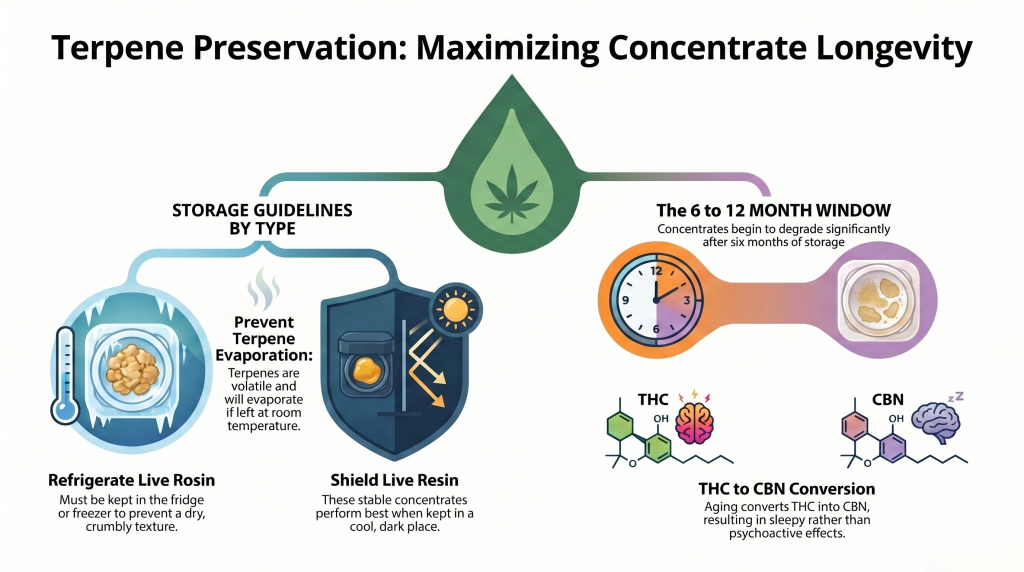
Terpenes are volatile; they evaporate at room temperature.
- Live Rosin: MUST be kept in the fridge (or freezer for long-term). If left out, it will “cure” and turn into a dry, crumbly texture.
- Live Resin: More stable, but still best kept in a cool, dark place.
Shelf Life: When Does it Actually Expire?
Concentrates don’t “spoil” like milk, but they do degrade. After about 6 to 12 months, THC begins to convert into CBN, which makes you feel sleepy rather than high. If your oil has lost its smell or sizzles when it hits the heat (indicating moisture or chemical breakdown), it’s time to head back to Say Less NY for a fresh batch.
Value Breakdown: Is Rosin Worth the “Luxury” Tax?
Is live rosin worth double the price of live resin? It depends on your “dabbing goals.”
- If you dab multiple times a day and want an affordable, potent experience, Live Resin is your best friend.
- If you treat dabbing like fine wine tasting—focusing on the ritual, the purity, and the nuanced effects—Live Rosin is worth every penny.
People Also Ask (FAQ)
Is rosin a resin?
Technically, “resin” is a general term for the sticky stuff on the plant. However, in a dispensary, “Resin” refers to the solvent-based product, while “Rosin” refers to the solventless product.
Is live resin safe to inhale?
Yes, provided it is purchased from a licensed source like Say Less NY. Legal products must pass rigorous “Residual Solvent” testing to ensure all chemicals have been removed.
Why is my live rosin turning white and crumbly?
This is called “buddering” or “crashing out.” It happens when the terpenes evaporate or separate from the THC. It is still safe to smoke, but it won’t be as flavorful as when it was fresh.
Can you smoke live rosin in a bowl of flower?
You can, but it’s a waste of money. The high heat of a lighter destroys the delicate flavors that make rosin special. It is best enjoyed in a dab rig or a dedicated concentrate vape.
Does live resin smell more than regular wax?
Generally, yes. Because “live” products preserve more terpenes, they tend to have a much stronger “skunky” or “fruity” aroma that can be smelled through the jar.
Experience the Best with Say Less NY
Whether you are looking for the high-octane power of a premium Live Resin or the artisan purity of a 90u Live Rosin, quality starts with the source. Don’t settle for mystery oils or heavily remediated products that leave you with a headache.
At Say Less NY, we curate the finest concentrates in the state, ensuring every jar is lab-tested, fresh, and authentic. Ready to elevate your dabbing game?
Contact Say Less NY today and discover the difference for yourself!