
Choosing between vaping and smoking isn’t just about preference; it is about the science of “Vaping vs. Combustion” and how the transformation of terpenes at different temperatures dictates your entire experience. Whether you want a boost of energy or a deep night’s sleep, the temperature you choose acts as a thermostat for your mood. By understanding how heat changes these delicate compounds, you can finally unlock the full potential of your cannabis flower.
The Anatomy of Flavor: What are Terpenes?
Terpenes are the essential oils found in the cannabis plant that provide its unique smell and taste. If you have ever noticed that one strain smells like a pine forest while another smells like a bowl of lemons, you are smelling terpenes.
Beyond just scent, these compounds are “aromatherapeutics.” They work alongside THC and CBD in what scientists call the Entourage Effect. This means terpenes don’t just provide flavor—they actually guide the effects of the cannabis. For example, a strain high in the terpene Linalool (also found in lavender) will likely feel much more relaxing than one high in Limonene (found in citrus).
However, terpenes are incredibly fragile. They are the most volatile parts of the plant, meaning they are the very first things to disappear when exposed to excessive heat.
The Chemistry of Destruction: What Happens During Combustion?
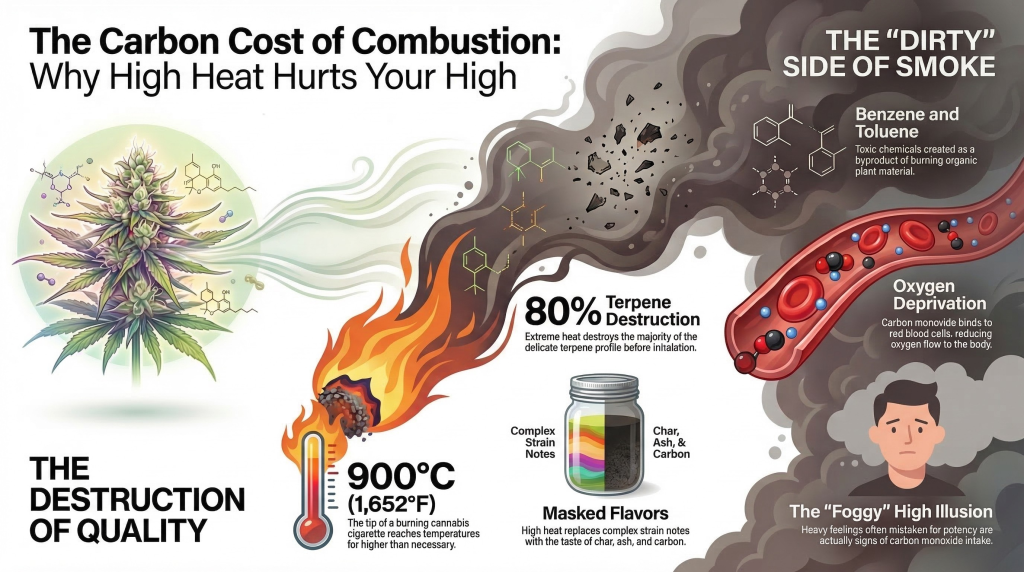
When you light a joint or a bowl, you are using combustion. The tip of a burning cannabis cigarette can reach temperatures as high as 900°C (1,652°F). This is far higher than necessary to enjoy the benefits of the plant.
The Carbonization Point
At these extreme temperatures, you aren’t just “activating” the plant; you are destroying it. Research shows that combustion can destroy up to 80% of the delicate terpene profile before you even inhale. Instead of tasting the complex notes of the strain, you taste “masking flavors” like char, ash, and carbon.
The “Dirty” Side of Smoke
Combustion creates several harmful byproducts that have nothing to do with cannabis itself:
- Benzene and Toluene: These are toxic chemicals created when organic material burns.
- Carbon Monoxide: This gas binds to your red blood cells, reducing oxygen. This often creates a “heavy” or “foggy” feeling that people mistake for a strong high, but it is actually a sign of oxygen deprivation.
The Science of Preservation: How Vaporization Works
Vaporization is a “phase shift.” It heats the flower just enough to turn the oils into a mist without actually burning the plant material (the cellulose). This is often called Flash Evaporation.
By staying below the point of smoke, you can target specific boiling points.
- Low-Temp (150°C – 175°C): This is the “Flavor Zone.” You get sharp, crisp tastes of pine and citrus.
- Medium-Temp (175°C – 200°C): The “Balance Zone.” This is where you get the best mix of flavor and physical effects.
- High-Temp (200°C – 230°C): The “Extraction Zone.” The vapor is thicker and feels more like smoke, but the flavor begins to fade into a toasted-nut taste.
The “Chemical Morph”: How Heat Literally Changes Terpene Structure
When you apply too much heat, terpenes don’t just disappear—they change. In chemistry, this is called Isomerization. Extreme heat can cause the atoms in a terpene to rearrange themselves, turning a helpful compound into something else entirely.
For example, Myrcene (the “couch-lock” terpene) is very sensitive. Under the high heat of a lighter, it can undergo Oxidative Degradation. This creates new metabolites that may not have the same anti-inflammatory or anti-anxiety benefits. When you “burn” your terpenes, you aren’t just losing flavor; you are losing the medicine.
Conduction vs. Convection: Impact on Terpene “Longevity”
Not all vaporizers are created equal. The way your device applies heat determines how long your flavor lasts.
- Conduction (The “Skillet” Method): Your flower touches a hot surface directly. This is common in cheaper or smaller vapes. It heats up fast, but it can create “hot spots,” meaning the flower touching the walls might burn while the middle stays green.
- Convection (The “Air Fryer” Method): Hot air moves through the flower. This is the gold standard for flavor. Because no hot surface touches the herb, the terpenes are released evenly and gently.
- Hybrid: Many modern high-end devices use both to give you a quick start with a flavorful finish.
The Terpene Temperature Map
To get the most out of your sessions, use this guide to set your device based on your goals:
| Terpene | Boiling Point | Primary Aroma | Therapeutic Goal |
| Pinene | 155°C (311°F) | Pine needles | Focus & Alertness |
| Caryophyllene | 160°C (320°F) | Black Pepper | Pain & Inflammation |
| Myrcene | 167°C (332°F) | Earthy / Musk | Sedation & Muscle Relief |
| Limonene | 176°C (349°F) | Citrus | Mood Boost / Anti-Anxiety |
| Linalool | 198°C (388°F) | Lavender | Deep Sleep / Calming |
Optimizing Your Experience: A Pro’s Guide to “Temp Stepping”
If you want the ultimate experience, don’t just pick one temperature. Try Temp Stepping.
The Flavor Run (160°C): Take your first two hits here. It will taste like a fresh garden.
The Activation Run (185°C): Turn it up to get the THC moving. The vapor will get thicker.
The Clean-Up (210°C): Finish the bowl at this high temp to ensure you haven’t wasted any cannabinoids.
Health and Respiratory Considerations
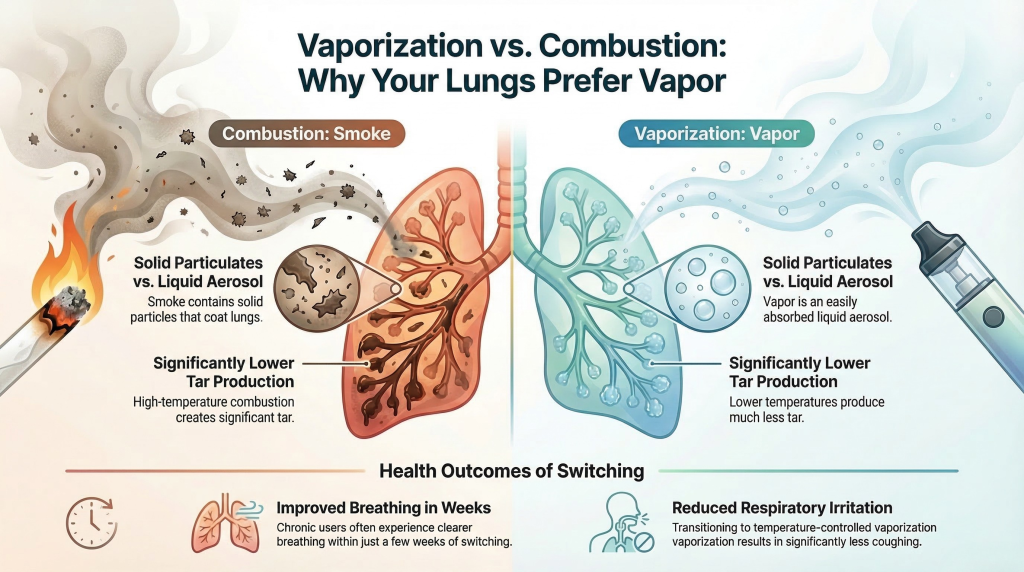
Because vaporization happens at lower temperatures, it produces significantly less tar. Smoke contains solid particulates that coat the lungs; vapor is a liquid aerosol that the body absorbs much more easily. For chronic users, switching to a temperature-controlled method often results in less coughing and clearer breathing within just a few weeks.
Reach the Next Level with Say Less NY
Mastering the science of cannabis shouldn’t be a solo mission. At Say Less NY, we specialize in the art of curation and storytelling. Whether you are a brand looking to educate your audience on the nuances of terpene science or a creator looking to build a community around high-quality experiences, we help you bridge the gap between “just a hobby” and a refined lifestyle. Our team understands that in a world of noise, the best way to be heard is to Say Less and do more.
People Also Ask (FAQ)
Does vaping get you “higher” than smoking?
Vaping is more efficient. Because combustion destroys a large portion of THC and terpenes, you actually get more active compounds into your system with a vaporizer using the same amount of flower.
Why does my vape taste like burnt popcorn?
This is a sign that your terpenes have been fully evaporated. The “popcorn” taste comes from the remaining toasted plant material (cellulose). When you reach this stage, it’s time to reload.
Is 220°C too hot for vaping?
220°C (428°F) is near the edge of combustion. While it provides very thick vapor and heavy effects, you will lose almost all the unique flavors of the strain.
Can I use the “Already Vaped Bud” (AVB) for anything?
Yes! Because you didn’t burn the flower, the brown “leftovers” still contain some cannabinoids. Many people use AVB to make edibles or tinctures.
Does a lower temperature reduce the smell?
Yes. Since you aren’t creating smoke (which lingers on clothes and hair) and you are keeping temperatures low, the aroma is much more discreet and dissipates quickly.
What is the best temperature for beginners?
Starting at 180°C (356°F) is usually the sweet spot. It provides visible vapor and a clear taste without being too harsh on the throat.
Ready to elevate your brand’s story?
If you want to create high-impact content that resonates with the modern cannabis connoisseur, contact Say Less NY today. Let’s build something unforgettable together.