
Understanding the difference between THC vs. THCA is essential for anyone exploring the modern cannabis landscape. While they share a similar name, these two compounds offer completely different experiences and legal realities. In this guide, we dive deep into the science of decarboxylation to help you navigate the world of cannabinoids with confidence.
What is THCA? (Tetrahydrocannabinolic Acid)
Before there is THC, there is THCA. This is the “raw” form of the molecule found in the living cannabis plant.
- The Molecular Structure: THCA is a large, 3-D molecule with an extra “carboxyl” group (a ring of carbon, hydrogen, and oxygen).
- Non-Psychoactive Nature: Because of its size, THCA cannot fit into your brain’s CB1 receptors. This means it will not get you “high” if consumed raw.
- Natural Synthesis: The plant naturally produces THCA in its trichomes—the sticky, crystal-like structures on the flower—to protect itself from UV rays and pests.
What is THC? (Delta-9-Tetrahydrocannabinol)
THC is the “active” or neutral form of the molecule. It is what most people think of when they talk about the effects of cannabis.
- Receptor Interaction: Once the carboxyl group is removed, the molecule becomes small enough to bind to CB1 receptors in the brain.
- The Psychoactive Experience: This binding is what triggers the euphoric, relaxing, and sensory-altering effects associated with marijuana.
- Versatility: While THCA is found in the plant, THC is what dominates products like oils, gummies, and vapes.
The Science of Decarboxylation: How It Works
Decarboxylation sounds like a complex lab term, but it’s actually a simple chemical reaction triggered by heat and time.
The Chemical Reaction
When you apply heat to THCA, it releases carbon dioxide (CO2) as a gas. This “losing” of a carboxyl group transforms the acidic THCA into the active THC.
The Decarboxylation Formula
In the cannabis industry, labs use a specific math formula to calculate how much “Total THC” a product will have once it is heated.
Total THC = (%THCA x 0.877) + % A9-THC
The 0.877 represents the mass lost when the CO2 is removed.
Degradation vs. Activation
It is a common myth that more heat is always better. However, there is a “tipping point.” If you heat your cannabis too long or at too high a temperature, the THC begins to break down into CBN (Cannabinol). While CBN is known for helping with sleep, it loses the psychoactive potency of THC. Finding the balance is the key to a high-quality experience.
The 2026 Legal Landscape: The End of the “Loophole”?
For years, the “THCA loophole” allowed many shops to sell THCA flower by claiming it was technically “hemp” under the 2018 Farm Bill (which only restricted Delta-9 THC). However, the rules have changed significantly.
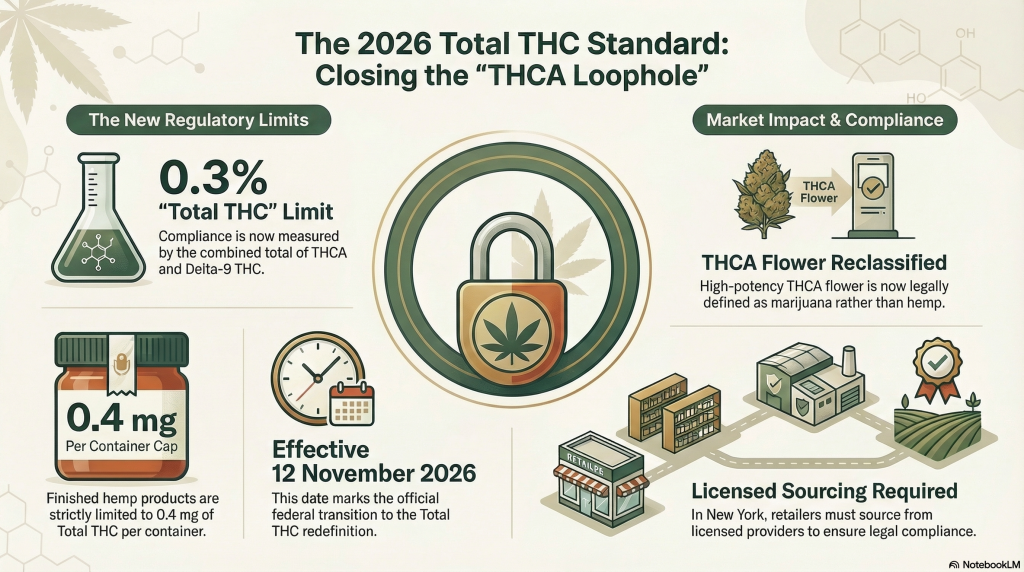
The 2026 Hemp Redefinition
As of November 12, 2026, federal law has officially moved to a “Total THC” standard. This means that for a product to be classified as legal hemp, the combined total of THCA and THC must be below 0.3%. Additionally, federal law now limits finished products to no more than 0.4 mg of Total THC per container.
This change effectively classifies high-potency THCA flower as “marijuana,” moving it into the regulated state-licensed market. In New York, this means you should only source your products from licensed, reputable providers like Say Less NY to ensure you are staying within the law.
Practical Guide: How to Decarboxylate at Home
If you are making your own edibles or tinctures, you need to “decarb” your flower first.
Optimal Temperature Chart
To get the most out of your flower without destroying the delicate compounds, follow these guidelines:
| Method | Temperature | Time | Best For |
| Oven (Low) | 220°F | 45–60 mins | Preserving Terpenes |
| Oven (Standard) | 240°F | 30–40 mins | Max Potency |
| Sous Vide | 200°F | 90–120 mins | Odorless/Precision |
Preserving Terpenes During Decarb
Terpenes are the essential oils that give cannabis its smell and flavor. They also play a huge role in the “entourage effect”—the way different compounds work together to enhance your mood. If you use a temperature above 300°F, you risk boiling away these terpenes. Stick to the “low and slow” method to keep your flower flavorful and effective.
THCA vs. THC for Wellness: Which Should You Choose?
Choosing between the two depends entirely on your goals.
- Therapeutic Benefits of THCA: Research suggests raw THCA may help with inflammation, nausea, and protecting brain cells. It’s a great option for those who want the benefits of the plant without the “high.”
- Therapeutic Benefits of THC: THC is widely used for chronic pain relief, appetite stimulation, and deep sleep.
- Internal Decarboxylation: Can your body turn THCA into THC? Scientists are still debating this. While stomach acid is acidic (not heat-based), some evidence suggests that a tiny percentage of THCA might convert in the gut. However, it is not enough to produce a noticeable psychoactive effect.
Drug Testing: The Hidden Risks
If you have a drug test coming up, don’t assume that “non-psychoactive” means “safe.”
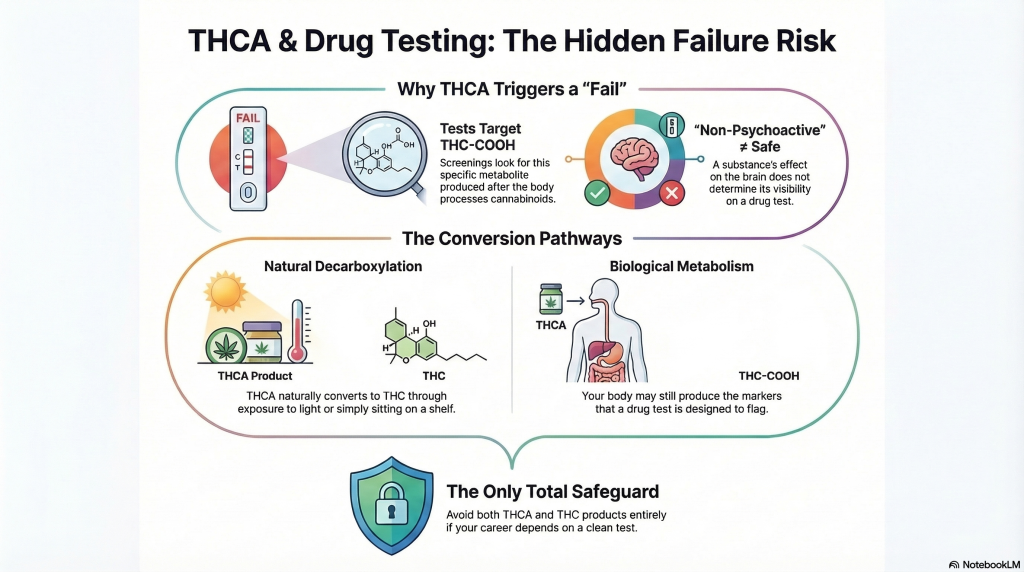
The Cross-Contamination Risk
Drug tests look for a metabolite called THC-COOH, which the body produces after processing cannabinoids. Even if you only consume “raw” THCA, two things can happen:
Partial Conversion: A small amount of THCA naturally decarboxylates into THC over time just from sitting on a shelf or being exposed to light.
Metabolism: Your body may still produce the markers that a drug test is designed to flag.
If your career depends on a clean test, it is best to avoid both THCA and THC products entirely.
Say Less NY: Your Trusted New York Partner
Navigating the science of cannabis shouldn’t feel like a chemistry exam. Whether you’re looking for the raw benefits of THCA or the classic effects of THC, you deserve products that are safe, lab-tested, and legal.
Say Less NY is New York’s premier solution for high-quality cannabis products. We cut through the noise to provide you with clear information and premium selections that meet the strict 2026 standards. Don’t settle for “loophole” products of the past—choose the professional standard.
People Also Ask (FAQ)
Is THCA stronger than THC?
Not necessarily. THCA is not psychoactive on its own. However, high-THCA flower can produce a very strong “high” once it is smoked or vaped because it converts into THC instantly.
Can I get high from eating raw cannabis?
No. Raw cannabis contains THCA. Without heat (decarboxylation), the molecule cannot bind to the receptors in your brain that cause a high.
Does THCA show up on a drug test?
Yes, it is very likely. Drug tests look for the metabolites of THC, and consuming THCA can still trigger a positive result due to natural conversion or how your body processes the plant.
Why do my gummies say “THCA” if they are already active?
This is often a marketing error or a way for brands to bypass older laws. If a gummy is meant to get you high, it should contain THC. True THCA gummies are “raw” and won’t be psychoactive.
What is the best way to consume THCA?
Most people consume THCA by juicing raw cannabis leaves or taking cold-pressed tinctures and capsules. This preserves the molecule in its acidic form.
Experience the Best of New York Cannabis
Ready to explore the perfect balance of science and relaxation? Whether you have more questions about decarboxylation or you’re ready to find your new favorite strain, we are here to help.
Contact Say Less NY today to browse our curated selection and experience the gold standard of New York cannabis delivery.